Visit Nikko with the Nikko Pass
Nikko is a mountain day trip from Tokyo, best known for Toshogu Shrine’s ornate carvings and the dramatic shift from cedar-shaded temples to waterfalls and lake views in the same day. It’s very doable, but it only feels smooth if you leave early and decide in advance whether you want a shrine-focused day or the full culture-and-nature loop. This guide helps you time the trains, avoid the worst queues, and build a route that fits the day you actually have.
Quick overview: Nikko day trips at a glance
If you only remember one thing, make it this: Nikko rewards an early start more than a complicated plan.
- When to visit: Most shrine sites run roughly 9am–5pm from spring through fall and 9am–4pm in winter; the first train in on a Tuesday, Wednesday, or Thursday is noticeably calmer than 10am–1pm or October weekends, when coach groups bunch up at Toshogu and the mountain road slows later in the day.
- Getting in: From $20 for the Tobu NIKKO PASS World Heritage Area, plus shrine entry; guided day tours start from about $100. You can still go last-minute in June or winter, but October weekends and Golden Week are much safer booked ahead of time.
- How long to allow: 10–12 hours door-to-door is realistic for most visitors. Adding Lake Chuzenji, Kegon Falls, or Akechidaira pushes you to the longer end fast.
- What most people miss: Rinnō-ji’s giant golden Buddhas and the Akechidaira lookout are the two stops that make Nikko feel richer than just a shrine photo stop.
- Is a guide worth it? Yes, if you want both Toshogu context and a smooth shrine-to-lake route; no if you’re only doing the World Heritage area and are happy managing trains and buses yourself.
🎟️ Tours for Nikko sell out a few days in advance during October weekends and Golden Week. Lock in your visit before the departure you want is gone.
Jump to what you need
🕒 Where and when to go
🗓️ How much time do you need?
🎟️ Which ticket is right for you?
🗺️ Getting around
🌲 What to see
♿ Facilities and accessibility
Where and when to go
How do you get to Nikko?
Nikko is about 125km north of Tokyo, and most day-trippers arrive through Tobu-Nikko Station before heading uphill to the World Heritage area.
- Train: Tobu Limited Express from Asakusa → Tobu-Nikko Station → direct and usually the easiest option for a day trip.
- Train: JR Shinkansen to Utsunomiya + JR Nikko Line → JR Nikko Station → best if you’re already using a JR Pass.
- Bus: Highway bus from Tokyo → Nikko station area → cheaper than rail, but more vulnerable to return traffic delays.
- Local bus: Tobu World Heritage Loop → Shinkyo/Toshogu area → quickest way to save your legs for the shrine steps.
Getting here from nearby cities
Visitors usually come from Tokyo, but Nikko also works well from Utsunomiya or Kinugawa if you’re already moving through Tochigi.
From Tokyo
- Distance: 125km
- Travel time: About 1 hr 50 min–2 hr via Tobu Limited Express or JR via Utsunomiya
- Time to budget: This still leaves a full sightseeing day, but you need an early departure if you want both Toshogu and the lake
From Utsunomiya
- Distance: 35km
- Travel time: About 45 min via the JR Nikko Line
- Time to budget: Good if you want a less rushed shrine-first day with time for a late lake detour
From Kinugawa Onsen
- Distance: 15km
- Travel time: About 35 min by Tobu local train
- Time to budget: Easy to combine with central Nikko, but only ambitious itineraries fit Edo Wonderland on the same day
Which entrance should you use?
Nikko itself has no single gate, but the part of the day that slows people down is the paid entry at Toshogu — and most visitors lose time at the ticket booth when they could already be inside.
- Pre-booked voucher / combo ticket line: For visitors who’ve already sorted entry. Expect 5–10 min waits outside peak weekends.
- On-the-day ticket booth: For same-day buyers. Expect 20–30 min waits during 10am–1pm, and longer in October or on holiday weekends.
When is Nikko open?
- April–October: 9am–5pm at the main shrine sites
- November–March: 9am–4pm at the main shrine sites
- Last entry: About 30 min before closing
- Lake and waterfall area: Scenic stops are accessible longer than the shrine sites, but bus schedules still shape your day
When is it busiest? Weekends in October, Golden Week, and the 10am–1pm window are the hardest times to move smoothly, because shrine queues peak just as buses and tour groups stack up.
When should you actually go? Take the first departure from Tokyo and do Toshogu before late morning — you’ll get quieter paths, shorter ticket lines, and more buffer before mountain-road traffic starts building.
How much time do you need?
| Visit type | Route | Duration | Walking distance | What you get |
|---|---|---|---|---|
Highlights only | Tobu-Nikko Station → Shinkyo Bridge → Toshogu Shrine → Rinnō-ji → station | 8–9 hrs total | ~3km | You cover Nikko’s core UNESCO sights without feeling rushed, but you skip Lake Chuzenji, Kegon Falls, and the best mountain views |
Balanced visit | Station → Shinkyo → Toshogu → Rinnō-ji → Irohazaka → Kegon Falls → Lake Chuzenji → station | 10–11 hrs total | ~5km | This gives you the classic first-time Nikko day: shrine detail in the morning, waterfall and lake in the afternoon, with just enough time for photos and lunch |
Full exploration | Station → shrine area → Akechidaira → Kegon Falls → Lake Chuzenji lakeside stop → extra temple or gorge stop → station | 12+ hrs total | ~6–7km | You see Nikko’s layers properly, but it’s a long day with more transfers, more steps, and less room for slow wandering if traffic turns bad |
Which Nikko day trip ticket is best for you
| Ticket type | What's included | Best for | Price range |
|---|---|---|---|
Nikko Pass World Heritage Area Pass | 2-day access to trains and buses around the World Heritage area, plus shopping and attraction discounts | A shorter Nikko trip focused on Toshogu Shrine, historic temples, and the central heritage district without traveling into the wider mountain region | From ¥3,000 |
Nikko Pass All Area Pass | 4-day expanded transport coverage including ropeways, seasonal sightseeing cruises, additional buses, and access across the wider Nikko and Kinugawa region | Exploring Lake Chuzenji, Kegon Falls, Kinugawa Onsen, highland sightseeing areas, and seasonal attractions over multiple days without planning separate transport tickets | From ¥8,000 |
Seasonal and sightseeing transport access | Selected seasonal transport services and additional sightseeing connections included with the wider-area coverage | Traveling during spring, autumn, or winter when lake cruises, mountain buses, and regional sightseeing routes become part of the trip itself rather than just transport between attractions | Included with All Area Pass |
How do you get around Nikko day trips?
Nikko is best explored as two linked zones: the walkable World Heritage area around Toshogu, and the mountain section around Kegon Falls and Lake Chuzenji that depends on bus timing. The shrine district sits uphill from the stations, while the lake-and-falls area is about 30km west up the Irohazaka road.
Maps and navigation tools
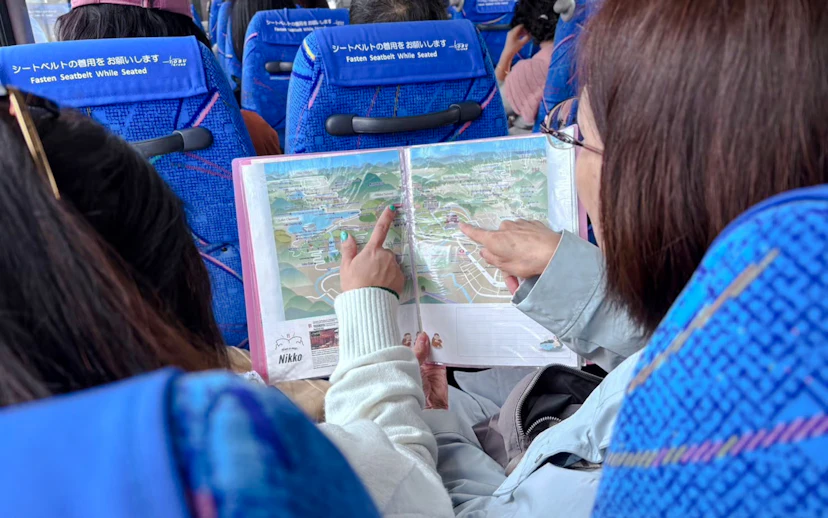
- Map: Download a Nikko area map before arrival or pick one up at the Tobu-Nikko Station tourist information center.
- Signage: Wayfinding is decent in the World Heritage area, but bus-stop navigation and return timing are much easier with a downloaded map.
- Audio guide / app: An audio guide helps most at Toshogu; for the rest of the day, route clarity matters more than narration.
- Large outdoor POIs: If you plan any hiking beyond the standard day-trip stops, use offline maps — signal is strong in town and at the lake, but weaker on some trails.
💡 Pro tip: Don’t ride straight past Akechidaira if the weather is clear — it’s the one stop that lets you understand how Lake Chuzenji, Kegon Falls, and the mountain road fit together before you reach them.
Getting around the route
- World Heritage area: Shinkyo, Toshogu, Rinnō-ji, and Futarasan are clustered together → budget 2–3 hrs if you want more than a photo stop.
- Kegon Falls: Main waterfall viewpoint and elevator deck → budget 30–45 min depending on the queue.
- Lake Chuzenji: Lakeside photo stop, short walk, cafés, and optional boat time → budget 30–60 min.
- Akechidaira lookout: Ropeway and panoramic view over the lake and falls → budget 20–30 min if lines are short.
Suggested route: Start with Toshogu and the shrine cluster first, then head uphill after lunch — it works because Toshogu is busiest late morning, while the mountain views don’t lose value in the afternoon unless road traffic is severe.
What is Nikko worth visiting for?

Toshogu Shrine
Type: UNESCO shrine complex
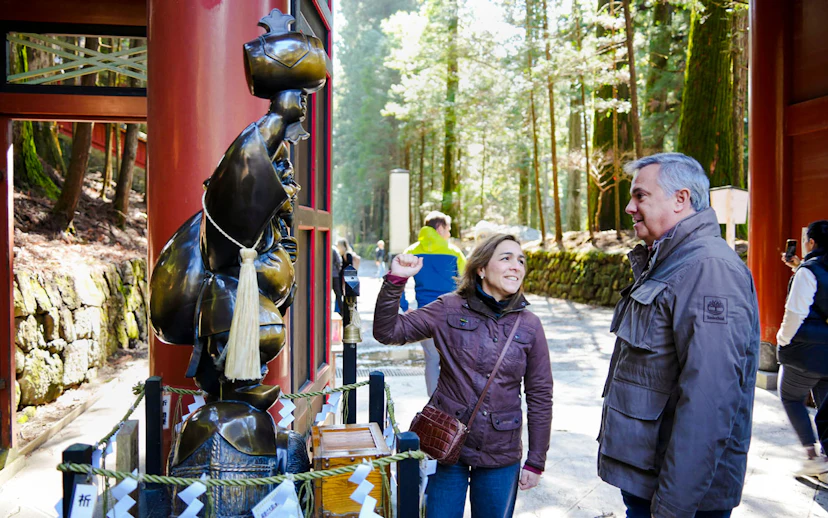
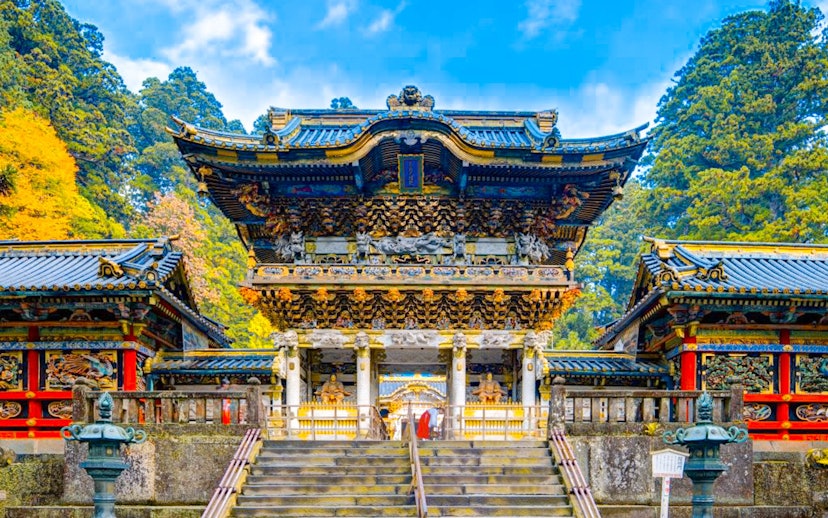
Toshogu is the reason most people come to Nikko, and it earns the reputation. The complex is dense with lacquer, gold leaf, carved animals, and layered symbolism, so it rewards slowing down rather than just photographing the Yomeimon Gate and moving on. Most visitors rush past the smaller carvings after the Three Wise Monkeys, but that’s where the craftsmanship really starts to feel personal.
Where to find it: In the World Heritage area uphill from Shinkyo Bridge, about 10 minutes by bus from Tobu-Nikko Station
Shinkyo Bridge
Type: Sacred bridge and photo stop
Shinkyo is a short stop, but it frames the day well because it marks the transition from modern Nikko into the shrine district. The bright red arch over the Daiya River is one of the best quick photos in the area, especially when the river is high or autumn color is behind it. Many people pay to step onto it, but the best wide-angle view is usually from the roadside.
Where to find it: At the foot of the shrine area on the road between Nikko station and Toshogu
Rinnō-ji Temple
Type: Buddhist temple
Rinnō-ji is easy to skip once you’ve seen Toshogu, but that would be a mistake. The huge gilded Buddhas inside Sanbutsudo change the rhythm of the day — it’s quieter, darker, and more contemplative than Toshogu’s carved excess. Most visitors underestimate how much it adds because the exterior feels restrained compared to Toshogu.
Where to find it: A short walk from Toshogu within the same World Heritage precinct
Kegon Falls
Type: Waterfall
Kegon Falls is Nikko’s most dramatic natural stop, with water dropping 97m from Lake Chuzenji into a rocky basin. It’s worth slowing down here because the sound, spray, and scale land better in person than from photos. Most people only glance from the upper platform, but the lower observation deck is what makes the waterfall feel close and powerful.
Where to find it: Beside the Chuzenji-ko bus area in Okunikko, reached from central Nikko via the Irohazaka road
Lake Chuzenji
Type: Volcanic lake
Lake Chuzenji is the calm counterweight to Toshogu. After a crowded morning, the open water, cooler air, and wide mountain views make the day feel bigger and less rushed. Most visitors treat it as a bus-stop photo break, but even a 20-minute lakeside walk changes the tone of the trip more than people expect.
Where to find it: Just beyond Kegon Falls in the Okunikko highland area
Akechidaira lookout
Type: Ropeway viewpoint
Akechidaira is the best single overview of Nikko’s mountain scenery, especially if you want one image that ties the lake, falls, and Mt. Nantai together. It’s especially strong in fall, but it’s worth it in any clear season because it helps the geography of Nikko make sense. Many visitors skip it because they’re focused on the waterfall, which is exactly why it stays more memorable.
Where to find it: Midway up the Irohazaka route between central Nikko and Lake Chuzenji
Facilities and accessibility
- ℹ️ Tourist information: Tobu-Nikko Station’s tourist information center is the best first stop for maps, pass pickup, and basic English help before you head uphill.
- 🍽️ Restaurants and cafés: Most day-trippers eat near the station, around Shinkyo, or by Lake Chuzenji, where yuba dishes, soba, curry rice, and quick café stops are easy to fit between sights.
- 🛍️ Gift shops and souvenirs: Small stalls near Toshogu and shops on the station-to-shrine route are the easiest places to buy shrine charms, crackers, sweets, and simple local gifts without adding another detour.
- 🅿️ Parking: Parking exists around the shrine district and the lake area, but it becomes a weak point on fall weekends, when lots fill early and road traffic can undo the advantage of driving.
- 🪑 Rest stops: The easiest natural pauses are around the station area, temple forecourts, and the Lake Chuzenji waterfront rather than inside the busiest shrine paths.
- 🌦️ Weather buffer spaces: The station area and lakefront cafés are the best fallback if rain or fog disrupts the outdoor part of the day.
- ♿ Mobility: Accessibility is partial rather than full — the station area and lakeside stops are easier, but Toshogu has many steps and steep sections that can make a full route difficult for wheelchair users or anyone with limited mobility.
- 👁️ Visual impairments: Major areas have decent signage, but the experience is highly visual and detail-heavy, so a live guide or audio support is more useful here than relying only on plaques.
- 🧠 Cognitive and sensory needs: The quietest window is the first hour after opening; the loudest and most crowded stretch is usually 10am–1pm around Toshogu, when school groups and coaches overlap.
- 👨👩👧 Families and strollers: Families can do Nikko, but not every route is stroller-friendly end to end because the shrine area includes stairs, slopes, and uneven pacing between bus transfers and walking sections.
- 🪨 Terrain: Expect stone paths, stairs, uphill walks, and long transfer gaps rather than one flat attraction route.
Nikko works well for children if you keep expectations realistic: most kids enjoy the bridge, carvings, waterfall spray, and lake views more than long stretches of shrine history.
- 🕐 Time: With younger children, plan for a shrine-first route plus one nature stop rather than trying to force the full shrine, waterfall, and lake circuit.
- 🏠 Facilities: Food stops and breaks are easier around the station and lake area than inside the busiest shrine section, so don’t wait too long to stop.
- 💡 Engagement: Give kids a mini mission at Toshogu — spotting the Three Wise Monkeys and the Sleeping Cat works better than trying to explain the full Tokugawa backstory on the move.
- 🎒 Logistics: Bring one light layer more than you’d wear in Tokyo, because Lake Chuzenji is cooler and bus delays feel longer when children get cold.
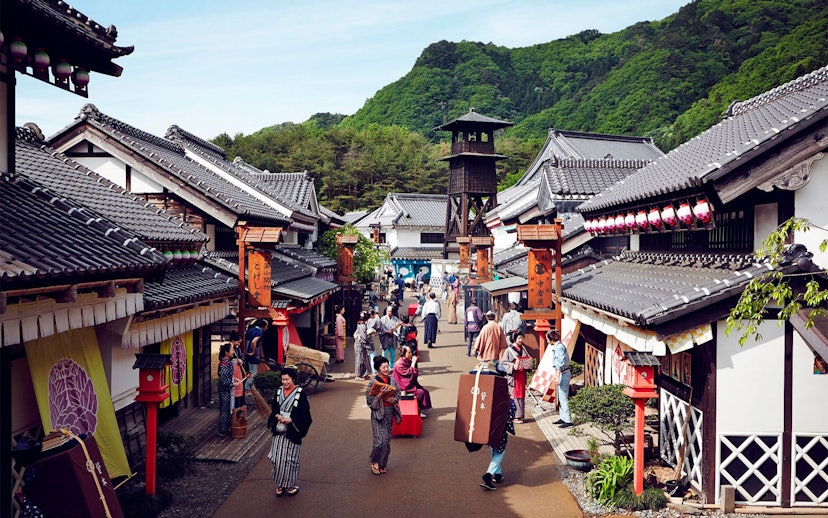
- 📍 After your visit: Edo Wonderland is the easiest child-friendly follow-up in the wider Nikko area if you’re staying longer or extending beyond a standard day trip.
Rules and restrictions
What you need to know before you go
- Entry requirement: A Nikko day trip doesn’t need one master ticket, but Toshogu and other major paid sites do, so decide early whether you’re using a pass, a pre-booked voucher, or buying on the day.
- Bag policy: A small day bag is easiest because shrine steps, buses, and crowded platforms all get noticeably slower with large luggage.
- Re-entry policy: The day itself is flexible, but once you leave the main sightseeing flow for a long meal or shop stop, it’s hard to recover that time and still reach the lake comfortably.
Not allowed
- 🚫 Food and drink: Save snacks for the station, town, or lake area rather than eating inside the most sacred shrine spaces.
- 🚬 Smoking and vaping: Don’t assume shrine paths or queue areas allow smoking; use marked outdoor smoking areas only.
- 🖐️ Touching buildings and carvings: Decorative woodwork, sacred objects, and protected structures are for viewing only, and staff will stop anyone leaning on barriers or climbing where they shouldn’t.
Photography
Outdoor photography is generally fine at Shinkyo, along shrine approaches, and at the main waterfall and lake viewpoints. The rules get stricter inside selected halls — especially at Rinnō-ji and other sacred interiors — so follow the posted signs instead of assuming one blanket policy applies everywhere. Personal cameras are normal, but bulky setups slow already-crowded paths and are a bad fit on busy days.
Good to know
- Ticket queue surprise: Toshogu is not timed entry, but the on-site ticket line can still cost you 20–30 min at mid-morning, which matters on a one-day schedule.
- Return timing: The day usually ends because of buses and daylight, not because you’ve run out of things to see.
Practical tips
- Booking and arrival: If you’re traveling on an October weekend, during Golden Week, or on a guided tour, book a few days ahead at minimum; midweek in June or winter is much easier to plan last-minute.
- Pacing: Do Toshogu while your energy is high, because the stairs and carving-heavy details reward concentration more than the lakefront does.
- Crowd management: The best crowd dodge is not just ‘go early’ — it’s reaching Toshogu before the late-morning coach wave, then letting everyone else clog the shrine while you’re already on the road to Kegon Falls.
- What to bring or leave behind: Bring a light extra layer even in summer, because Lake Chuzenji sits much higher and feels cooler than Tokyo; leave full-size luggage at your hotel or station if you can.
- Food and drink: Eat before or right after the shrine block, not once you’re already on the mountain route, because a slow lunch can be the difference between catching Kegon Falls in good light and missing it in traffic.
- Weather planning: If fog or rain kills the lake views, make the day more culture-heavy instead of forcing every outdoor stop — Nikko still works well as a shrine-and-temple day.
What else is worth visiting nearby?
Commonly paired: Kinugawa Onsen
Distance: 15km — about 35 min by train
Why people combine them: It’s the easiest way to add a hot spring stop or overnight stay after a long Nikko sightseeing day.
Commonly paired: Edo Wonderland
Distance: 15km — about 30 min by train or shuttle
Why people combine them: It gives families and history fans a more playful second half to the day, especially if shrine fatigue sets in early.
Also nearby
Kanmangafuchi Abyss
Distance: 1.5km — about 20 min walk
Worth knowing: This quiet riverside path lined with Jizō statues is one of the few central Nikko stops that feels genuinely calm even when Toshogu is busy.
Akechidaira lookout
Distance: 18km — about 30 min by bus
Worth knowing: If the weather is clear, this is the best single overview of Nikko’s mountain scenery and one of the smartest short additions to a standard route.
Eat, shop and stay near Nikko day trips
- On-site: Nikko isn’t one gated venue, so your easiest meal windows are the station area, the streets near Shinkyo, and the Lake Chuzenji waterfront rather than one official on-site restaurant.
- Shinkyo-area yuba restaurants: Around the bridge approach and main road uphill from the stations, these are your best bet for a proper Nikko lunch without breaking the sightseeing flow.
- Station-front cafés and bakeries: Best for a fast breakfast, coffee, or backup snack if you’re arriving early and want to start sightseeing straight away.
- Lake Chuzenji eateries: Better for a later lunch or warm drink once you’ve finished the shrine block and want a view with your break.
- 💡 Pro tip: If you want the full shrine-and-lake route, eat before heading up the Irohazaka road — the mountain section is where a slow lunch hurts your schedule most.
- Toshogu approach stalls: Best for shrine charms, simple souvenirs, and the kinds of small purchases that make sense on a day trip.
- Station-area souvenir shops: Better if you’d rather buy snacks or gifts at the end of the day instead of carrying them uphill and onto buses.
If your only goal is a single Nikko day trip, staying overnight nearby is helpful but not essential. The area suits travelers who want a slower pace, an early start before crowds, or an onsen finish after a long day. For most short Tokyo trips, Nikko is still easiest as a day trip unless you’re traveling in peak autumn or want to add Kinugawa.
- Price point: The area skews mid-range to ryokan pricing rather than budget convenience, especially in foliage season.
- Best for: Travelers who want first access to Toshogu, a calmer evening, or time to add Kinugawa Onsen or Edo Wonderland the next day.
- Consider instead: Stay in Tokyo for maximum rail convenience, or choose Kinugawa if you want hot springs and more of a resort base than a shrine-focused one.
Frequently asked questions about visiting Nikko day trips
Most Nikko day trips take 10–12 hours door-to-door from Tokyo. If you only cover the World Heritage area around Toshogu, you can manage a shorter 8–9-hour day, but once you add Kegon Falls and Lake Chuzenji, it becomes a full-day outing with very little slack.
No, you don’t always need to book in advance, but it helps a lot in peak periods. Midweek in winter or June is usually manageable last-minute, while October weekends, Golden Week, and popular guided tours are much safer booked a few days ahead so you don’t lose time or miss out.
Yes, it’s worth it if you’re visiting Toshogu in the late morning or during peak foliage season. The main time saver is avoiding the on-site ticket booth, which can cost you 20–30 minutes at exactly the point in the day when your bus schedule and mountain route are least flexible.
Aim to leave Tokyo early enough to reach Nikko before late morning, even though Toshogu itself is not strictly timed. The practical target is getting to the shrine area before the biggest coach-group wave, because that saves time at the ticket line and makes the rest of the day less rushed.
Yes, a small backpack is fine and makes the day much easier. What you want to avoid is full-size luggage, because Nikko involves steps, buses, and crowded station areas, and a big bag slows you down more here than at a single-city museum or landmark.
Yes, you can take photos in most outdoor areas, including Shinkyo viewpoints, shrine approaches, and the lake-and-waterfall stops. The restrictions usually apply inside selected temple and shrine interiors, so check signs carefully instead of assuming photography rules stay the same from one building to the next.
Yes, Nikko works very well as a group day trip, and many visitors do it that way. The trade-off is pace: large groups make transport and explanations easier, but they also move more slowly at stops, so private or small-group trips suit travelers who care more about flexibility.
Yes, Nikko can work well for families if you don’t try to do everything. Most children enjoy the bridge, the animal carvings at Toshogu, the waterfall, and the lake more than a long history-heavy route, so a shorter shrine block plus one scenic stop is usually the sweet spot.
Nikko is only partly wheelchair accessible. The station area and some lakefront viewpoints are easier to manage, but Toshogu and parts of the World Heritage area involve many steps, slopes, and uneven sections, so the full classic route is challenging without planning around those limitations.
Yes, food is easy to find near the station, around Shinkyo, and by Lake Chuzenji. The main thing to plan is timing rather than availability, because a slow lunch in the middle of the day can cut into the scenic part of the route more than most first-time visitors expect.
Wear what you’d wear for a long walking day in Tokyo, then add one extra light layer. The shrine area includes steps and stone paths, and Lake Chuzenji sits higher and cooler than the city, so visitors who dress only for Tokyo often end up cold by the lake.
Nikko is usually better if you care more about UNESCO heritage, shrine architecture, and a strong culture-and-nature mix in the same day. Hakone is the easier pick if your priority is Mt. Fuji views, hot springs, and a more transport-loop style day rather than a history-heavy one.