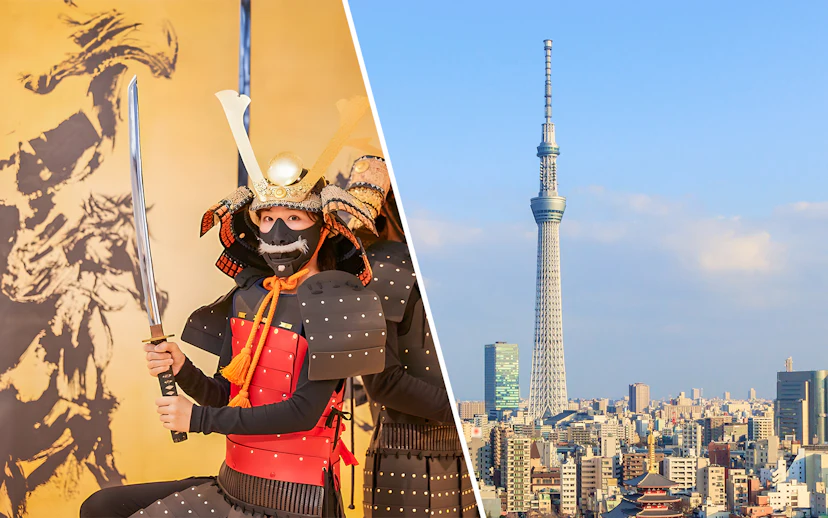
Visiting Samurai Experience: Your Complete Guide
Samurai Experience in Tokyo is a hands-on cultural activity built around sword training, costume moments, live demonstrations, and samurai history. Most visits are compact rather than sprawling, so the experience rises or falls on choosing the right format — a short museum-style stop, a training class, or a fuller combo. The original Samurai Museum in Shinjuku has remained closed, which catches people out, so most bookable options now are studio-based classes and themed shows. This guide covers timing, neighborhoods, tickets, and what’s genuinely worth prioritizing.
Quick overview: Samurai Experience at a glance
If you want something more immersive than a standard museum stop, this is one of Tokyo’s easiest cultural activities to book into a half-day.
- When to visit: Most sword classes and combo experiences run daily from late morning to early evening, with dinner shows after 7pm; weekday late-morning slots are noticeably calmer than 2pm–5pm because that’s when same-day planners and families tend to pile in.
- Getting in: From about ¥10,000 for a standard group sword class, with private or combo experiences usually starting higher; book ahead for weekends and for April, October, and November because small-group slots fill faster than weekday sessions.
- How long to allow: 1–2 hours works for most visitors, while a class plus a dinner show or a second themed stop turns it into a half-day.
- What most people miss: The dress-up photo moment, etiquette briefing, and any calligraphy or culture add-on are usually what make the session feel memorable rather than gimmicky.
- Is a guide worth it? Yes, because instruction and context are the point here; without a live teacher or host, a short samurai activity can feel thin very quickly.
🎟️ Weekend slots for Samurai Experience often fill 3–7 days ahead in spring and autumn. Lock in your visit before the time you want is gone.
Jump to what you need
🕒 Where and when to go
🗓️ How much time do you need?
🎟️ Which ticket is right for you?
⚔️ What happens inside
♿ Facilities and accessibility
Where and when to go
How do you get to Samurai Experience?
Most bookable samurai activities are clustered in central Tokyo — especially Harajuku/Sendagaya, Asakusa, and Shinjuku — so the easiest plan is to book first and travel to that neighborhood rather than assume there’s one single venue.
- JR: Harajuku Station → 8-minute walk → best for sword-class studios near Sendagaya.
- Metro: Kitasando Station Exit 2 → 4-minute walk → the easiest approach for Harajuku-area training sessions.
- Metro: Asakusa Station Exit A4 → 5–7-minute walk → best for samurai-and-ninja combo venues near Senso-ji.
- JR / Metro: Shinjuku Station East Exit → 8–10-minute walk → useful for Kabukicho evening samurai shows.
Which entrance should you use?
There isn’t one grand entrance for Samurai Experience in Tokyo, and that’s what catches people out. The biggest mistake is going to the old Shinjuku Samurai Museum address instead of the exact studio or show venue on your booking confirmation.
- Harajuku / Sendagaya studio entrances: Located inside small multi-tenant buildings near Harajuku or Kitasando. Best for pre-booked sword classes. Expect 0–10 min wait.
- Asakusa combo venues: Located on side streets near the Senso-ji area. Best for samurai and ninja experiences. Expect 5–15 min wait.
- Kabukicho show venues: Located inside nightlife buildings rather than a street-front museum. Best for evening performance tickets. Expect 10–20 min check-in.
When is Samurai Experience open?
- Monday–Sunday: Most sword classes and combo experiences run from roughly 11am–6pm.
- Monday–Sunday: Evening shows and special workshops usually begin from 7pm onward.
- Last entry: Usually 10–15 minutes before your booked slot.
When is it busiest? Weekends, school-holiday afternoons, and April plus October–November are the hardest times to book, especially for late-morning and mid-afternoon sessions.
When should you actually go? Weekday 11am–12 noon sessions usually give you more room to move and more instructor attention because groups are smaller and fewer visitors are stacking multiple Tokyo sights into the same afternoon.
How much time do you need?
| Visit type | Route | Duration | Walking distance | What you get |
|---|---|---|---|---|
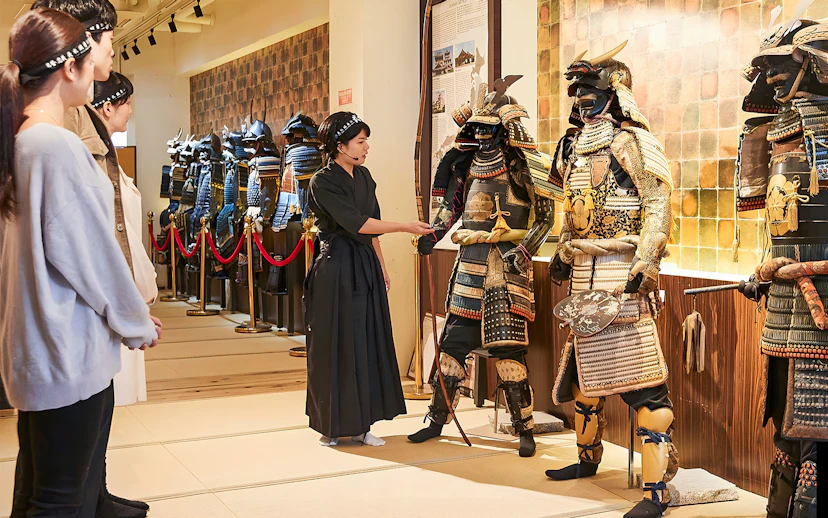
Highlights only | Entrance → guided samurai exhibits → ninja weapons display → shuriken activity → exit | 45–60 mins | ~0.5 km | Best if you’re short on time and mainly want to see the museum’s key displays and try basic ninja activities. You’ll move quickly through the galleries and spend less time on costumes and photos. |
Balanced visit | Full guided museum route → samurai armor displays → ninja tools → shuriken throwing → costume try-ons → photos | 1–1.5 hrs | ~0.8 km | The most popular option. You’ll have enough time to enjoy the guided storytelling, interactive experiences, and photo opportunities without feeling rushed. |
Full exploration | Guided museum experience → extended photo time → repeat activity sessions → souvenir browsing → nearby Asakusa stroll | 2+ hrs | ~1.5 km | Ideal for families, history fans, or anyone who enjoys immersive cultural experiences. This gives you time to fully engage with the activities and explore the surrounding Asakusa area afterward. |
Which Samurai Experience ticket is best for you
| Ticket type | What's included | Best for | Price |
|---|---|---|---|
Samurai Ninja Museum guided tour | Skip-the-line entry to the Samurai Ninja Museum, English-guided tour, samurai and ninja exhibits, shuriken-throwing activity, and costume try-ons | A short but interactive cultural stop in Asakusa where you want hands-on activities alongside historical exhibits | From ¥3,960 |
Samurai Ninja Museum guided tour with photo time | Guided museum access with extra time for costume photos, exploring exhibits, and interactive activities | Visitors who want a more relaxed pace for photos, family moments, and hands-on experiences without rushing through the museum | From ¥3,960 |
Combo: Samurai Ninja Museum + TOKYO SKYTREE | Skip-the-line museum entry, guided samurai and ninja experience, interactive activities, plus admission to the TOKYO SKYTREE Tembo Deck | Seeing both traditional and modern Tokyo in one day without booking separate attractions | From ¥7,000+ |
Japanese cabaret theatre tickets | Entry to a live cabaret performance in Asakusa with traditional costumes, music, dance, samurai-era reenactments, and one complimentary drink | Extending your cultural itinerary into the evening with live entertainment after exploring Asakusa during the day | From ¥7,700+ |
How do you get around Samurai Experience?
How is Samurai Experience laid out?
Most samurai experiences in Tokyo are compact and linear: check-in first, costume or briefing area second, then the main training floor, and finally photos or a short show segment. That makes them easy to self-navigate, but late arrivals miss the setup that makes the choreography and etiquette make sense.
- Briefing area: Waiver, timing, and costume prep → budget 10–15 min.
- Training floor: Sword handling, stance work, and partner choreography → budget 45–60 min.
- Photo corner: Helmet, coat, or full armor try-on → budget 10–15 min.
- Mini exhibit or show space: Armor displays or a short live demo if your venue includes one → budget 15–30 min.
Suggested route: Arrive early enough for the costume and etiquette intro, stay through the final duel or photo segment, and don’t leave as soon as the practice ends because the best photos usually come last.
Maps and navigation tools
- Map: Most operators send a station map or building directions in your confirmation email; screenshot it before you leave because several venues are inside low-key office buildings.
- Signage: Street-level wayfinding is often minimal, so a downloaded pin matters more here than it would at a major museum.
- Audio guide / app: Not usually necessary for class-based experiences because the instructor explains everything live and in sequence.
💡 Pro tip: Download the building directions before you get on the train — the hardest part is usually identifying the right entrance once you’re on the correct street.
What happens inside Samurai Experience?

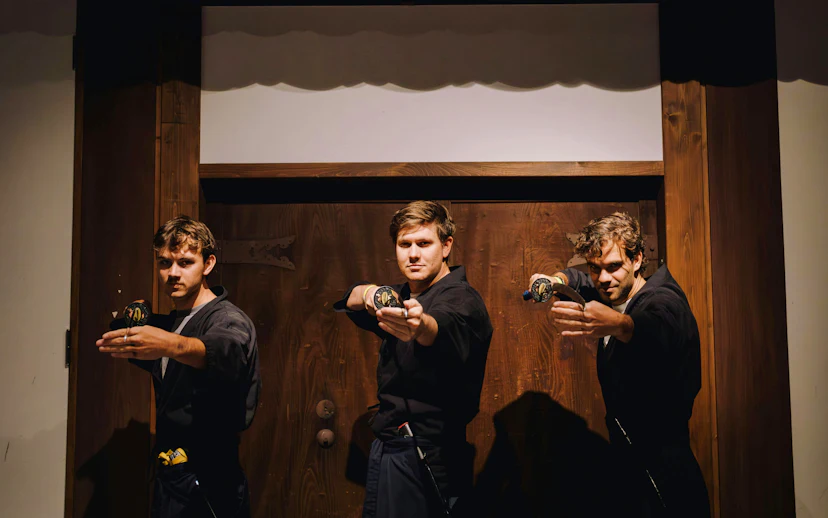
Sword etiquette and first draw
Format: Instructor-led lesson
This is where the experience stops feeling like a photo op and starts feeling disciplined. You’ll usually begin with a bow, a short etiquette introduction, and the basics of how to hold and draw a training sword safely. Most visitors rush through this part, but it’s the section that makes the later choreography look intentional instead of random.
Where to find it: On the main training floor, immediately after costume prep and the safety briefing.
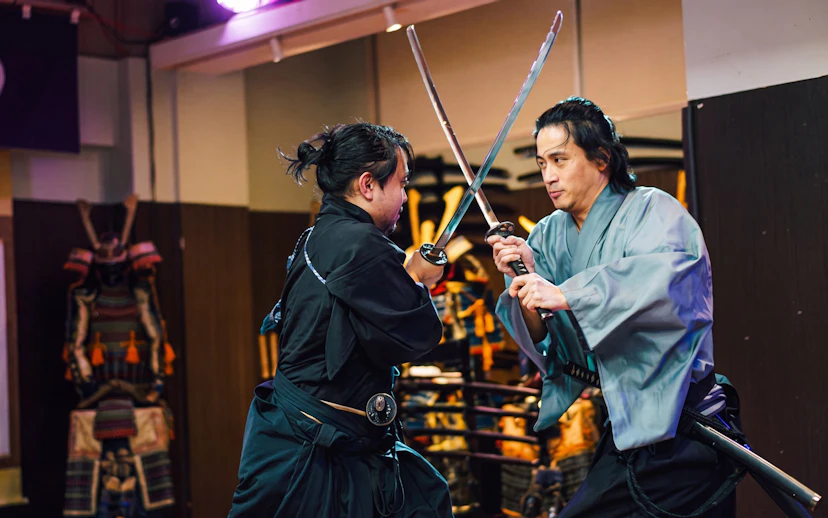
The choreographed duel
Format: Stage-combat sequence
The final duel is usually the moment everyone remembers, because it turns a few simple moves into something cinematic. You’ll practice blocks, strikes, and timing with a partner or instructor, then run the whole sequence through in one go. What most people miss is that the goal isn’t speed — it’s control, posture, and clean movement.
Where to find it: Near the end of class, after the stance and swing drills have been repeated a few times.
Armor and photo moment
Format: Costume and posed photography
Even when the training is the main draw, the photo corner is what gives you the best keepsake. Depending on the venue, you may wear a kabuto helmet, battle coat, or full replica armor and pose with a safe sword while staff help with angles. Visitors often treat this as an afterthought, but it’s usually the most shareable part of the entire session.
Where to find it: In a separate dress-up area or at the edge of the studio, usually after the lesson ends.
Live sword demonstration
Format: Performance
If your booking includes a live demo, don’t skip it. Watching trained performers run through a choreographed fight gives you a much better sense of timing, distance, and theatrical katana movement than static displays ever can. The detail most people overlook is the footwork — the performers’ lower-body control is what makes the upper-body action feel sharp.
Where to find it: In a small show space or demo corner, usually scheduled after or between guided groups.
Calligraphy or cultural add-on
Format: Hands-on workshop
The strongest samurai experiences aren’t only about combat. A calligraphy or etiquette add-on gives the session more depth by connecting sword discipline to focus, balance, and self-control — ideas that sit at the core of the samurai image. People often skip these extras, but they’re what stop the activity from feeling purely theatrical.
Where to find it: As an evening add-on or separate workshop slot rather than on the main training floor.
Samurai dinner show
Format: Evening performance
If daytime classes are about doing, the dinner show is about spectacle. Expect stylized sword fights, music, lights, and a much more theatrical take on samurai culture than you get in a class. The thing people often miss is that this works best as entertainment, not as their main historical experience, so it is smarter paired with a daytime class or museum stop.
Where to find it: In Kabukicho and other nightlife-oriented venues in Shinjuku.
Facilities and accessibility
- 👘 Costume rental: Most sword classes include a light samurai outfit or over-clothes costume, so you can get the look without a full wardrobe change.
- 📸 Photo support: Staff often help stage the final shots and will usually take photos on your phone so the whole group can be in frame.
- 👟 Shoe removal area: Tatami rooms and dojo-style spaces may require shoes off, so wear socks you’re comfortable standing and posing in.
- 🛍️ Gift shop / merchandise: Museum-style venues commonly sell swords, armor-themed souvenirs, and small replica items after the tour.
- 🪑 Waiting area: Expect compact check-in spaces rather than a full lobby, because many venues are inside small central Tokyo buildings.
- 🧑🏫 Live instruction: The most useful on-site feature is the instructor, with English-friendly guidance built into many sessions for international visitors.
- ♿ Mobility: Accessibility varies a lot, but older museum-style venues and small upper-floor studios can involve stairs, so contact the operator before booking if you need step-free access.
- 🧦 Flooring: Tatami rooms and shoe-free spaces can be awkward if balance or floor seating is difficult, so flag this in advance if you need chair-based alternatives.
- 👁️ Visual impairments: Live verbal demos help more than static labels here, but these experiences are built around movement rather than dedicated tactile interpretation.
- 🧠 Cognitive and sensory needs: Quiet weekday morning classes are the easiest option, while afternoon live demos can feel loud and compressed in small rooms.
- 👨👩👧 Families and strollers: Family-friendly sessions work well for children about age 5 and up, but tight stairs and narrow training floors make it easier to park a stroller before class.
- 🧾 Advance contact: Small-group operators are often better at adapting than large attractions, so emailing ahead is the smartest move if you need extra setup time or seating.
Samurai Experience works well for school-age children because it gives them something active to do, not just something to look at, but the best sessions keep the pace tight and the rules simple.
- 🕐 Time: 60–90 minutes is realistic with younger children, and the sword basics plus final photo moment are the parts worth prioritizing.
- 🏠 Facilities: Costume try-ons, staff photo help, and small-group teaching are the most useful family features, but don’t expect play zones or stroller parking on a big-venue scale.
- 💡 Engagement: Kids usually stay focused longest when there’s a clear payoff, so frame the session around performing the final duel or earning the best samurai photo.
- 🎒 Logistics: Bring socks, keep bags small, and choose a morning slot if possible because children handle instructions better before Tokyo sightseeing fatigue sets in.
- 📍 After your visit: Meiji Shrine is an easy calm follow-up after Harajuku-area classes if you want outdoor space and a gentler reset.
Rules and restrictions
What you need to know before you go
- Entry requirement: Most experiences run on pre-booked time slots, and minors may need an adult to sign the waiver before training starts.
- Bag policy: Bring a small bag if you can, because studios and museum-style rooms are compact and large luggage gets awkward fast.
- Dress note: Wear comfortable clothes and closed-toe shoes unless your venue specifically says otherwise, because sword classes involve light movement and stance work.
- Re-entry policy: Once a class or live demo begins, leaving mid-session usually means missing the safety briefing or final choreography, so plan breaks before check-in.
Not allowed
- 🚫 Food and drink: Keep snacks and open drinks out of training and tatami areas so costumes, mats, and props stay clean.
- 🚬 Smoking and vaping: Indoor venues are non-smoking, and any smoking area will be outside the experience space rather than inside the studio.
- 🐾 Pets: Pets don’t fit well in compact training rooms, and service-animal access is something to confirm with the operator before booking.
- 🖐️ Weapons and props: Handle swords, armor, and display pieces only when staff invite you to, because some items are for supervised demos only.
Photography
Photos are usually allowed, and many venues actively encourage them, especially during dress-up and after the final routine. If your booking includes a live demo, keep flash off and stay out of performers’ sightlines while filming. In compact rooms, large tripods and selfie sticks are more likely to get in the way than help, so handheld photos are the safer plan.
Good to know
- Shoes: Some venues ask you to remove shoes on tatami floors, so easy slip-ons save time at check-in.
- What catches people out: A museum-only visit can feel very short, so add a class or live show if you want the experience to feel substantial.
Practical tips
- Booking and arrival: Book weekend or spring and fall sessions at least 3–7 days ahead, and arrive 10–15 minutes early because late arrivals lose the briefing first, not the photo time.
- Pacing: Save your energy for the final choreographed duel and photo segment, because the opening etiquette drills feel easy but the later stance work is where people start rushing.
- Crowd management: The best balance is usually a weekday 11am slot, when instructors have more time to correct posture and the room feels less cramped than after-lunch sessions.
- What to bring or leave behind: Bring socks and a phone with storage space for photos, and leave bulky backpacks or shopping bags elsewhere because compact rooms fill up fast.
- Food and drink: Eat before class unless you’re doing an evening dinner show, because most training sessions are short and structured enough that leaving for a snack breaks the flow.
- Expectation setting: If you care about historical depth, choose a class or combo that includes explanation, because pure photo or performance experiences lean more theatrical than educational.
- Venue choice: If you want the calmest setting, book a Harajuku or Sendagaya class; if you want the easiest pairing with classic sightseeing, choose Asakusa; if you want nightlife energy, save Kabukicho for evening shows.
What else is worth visiting nearby?
Commonly paired: Meiji Shrine
Distance: About 10 minutes on foot from Harajuku / Sendagaya class venues
Why people combine them: It gives you the opposite mood to the training session — quiet forest paths, shrine architecture, and a slower cultural stop before or after the action.
Commonly paired: Senso-ji Temple
Distance: About 5–10 minutes on foot from Asakusa-based samurai experiences
Why people combine them: Asakusa already feels more old-Tokyo than most districts, so pairing a samurai activity with Senso-ji makes the day feel geographically and thematically coherent.
Also nearby
Tokyo National Museum
Distance: About 20 minutes by train from Harajuku or Asakusa
Worth knowing: If the hands-on class leaves you wanting real historical depth, this is the place to see authentic armor, swords, and objects rather than replicas and stage props.
Ryogoku sumo morning practice
Distance: About 30 minutes by train from central Harajuku or Shinjuku samurai venues
Worth knowing: It’s a strong morning add-on if you want another Japan-only martial tradition on the same day, especially before an afternoon class.
Eat, shop and stay near Samurai Experience
- On-site: Most sword-class venues don’t include food, while dinner shows usually cover drinks and sometimes light snacks rather than a full meal.
- Cat Street cafés: 8–10-minute walk, Harajuku / Sendagaya; good for a quick coffee or light lunch before a midday class without committing to a long sit-down meal.
- Nakamise Street stalls: 5–10-minute walk, Asakusa; best if you want fast snacks before or after a samurai-and-sightseeing combo around Senso-ji.
- Omoide Yokocho: 10-minute walk, Shinjuku; a stronger post-show stop than pre-class meal, especially if you want atmosphere more than convenience.
- 💡 Pro tip: Eat before a class and after a show — training sessions are short enough that stopping mid-plan feels disruptive, while Kabukicho-style evening experiences work better when you leave dinner flexible.
- Nakamise Shopping Street: Traditional fans, snack gifts, and low-commitment souvenirs if your samurai activity is in Asakusa.
- Don Quijote Shinjuku: Useful for budget souvenirs, costume accessories, and last-minute travel extras near evening show venues.
- Takeshita Street: Better for fun browsing than serious souvenir shopping, but easy to add if your booking is in Harajuku.
If your booking is in Harajuku or Sendagaya, the area is pleasant and walkable but not always the smartest value base for a full Tokyo stay. Shinjuku works better if you’re pairing samurai activities with nightlife and rail convenience, while Asakusa is the stronger choice if you want a more traditional neighborhood feel around your sightseeing.
- Price point: Harajuku tends to skew pricier, while Shinjuku and Asakusa usually give you more range.
- Best for: Short-stay visitors who want easy rail access to more than one samurai venue without spending half the day in transit.
- Consider instead: Choose Shinjuku for late shows and transport convenience, or Asakusa for a slower, more old-Tokyo base that pairs naturally with temples and street food.
Frequently asked questions about visiting Samurai Experience
Most bookings take 1–2 hours from check-in to final photos. A simple sword class often lands around 60–90 minutes, while a combo experience or an evening show can stretch the plan into a half-day once you add travel and meal time.
Yes, booking ahead is the safer move, especially for weekends and for April, October, and November. Many travelers still book within 48 hours, but small-group classes have limited capacity, so the best time slots can disappear several days ahead.
Arrive 10–15 minutes early. That gives you enough time for check-in, costume prep, and the safety briefing, and those are usually the parts you lose first if you’re late.
Yes, but a small bag is much easier to manage than a large backpack or suitcase. Many samurai venues are compact, and once costumes, props, and other guests are in the room, bulky luggage becomes inconvenient very quickly.
Yes, photos are usually encouraged, especially during dress-up and after the final routine. If your session includes a live sword demo, keep flash off and avoid blocking the performers or other guests while filming.
Yes, and it works well for couples, families, and friend groups. Many providers run small-group classes, and some also offer private sessions if you want more flexible pacing or a booking tailored to your group.
Yes, most samurai experiences are family-friendly, and many accept children from about age 5 and up. The sweet spot is a 60–90-minute class with costumes and a clear final photo moment, rather than a long, explanation-heavy format.
Accessibility depends on the venue, and some older or smaller Tokyo locations involve stairs. If you need step-free access, it’s worth checking before booking because studio-based experiences vary far more than major museums do.
Food is usually available nearby rather than inside the experience itself. Harajuku, Asakusa, and Shinjuku all give you easy pre- or post-visit options, while dinner-show formats may include drinks and light snacks as part of the ticket.
The original Samurai Museum in Shinjuku has been closed, so most bookable samurai experiences in Tokyo now are studio classes, combo venues, and themed dinner shows. That’s the biggest planning detail many visitors miss when they start searching.
No, you don’t need Japanese to enjoy it. Many Tokyo samurai classes and museum-style experiences are built for international visitors, with English-speaking instructors, visual demonstrations, and straightforward step-by-step guidance.
Yes, beginner-friendly is the norm. These sessions are designed for first-timers, use imitation swords for safety, and focus on posture, timing, and choreography rather than real martial-arts experience.