From happy customers

Loved by 48 million+
Trustpilot rating: 4.5 out of 5
shannon almadrones
JP

Shannon

Japan
Dec 2025

review-image

review-image
I had a wonderful time at the Art Aquarium Museum in Ginza! The entire experience was beautiful, relaxing, and surprisingly immersive. The way the lighting, music, and art blended with the movement of the goldfish made each room feel magical. It’s unlike any other museum experience—both artistic and calming at the same time. The exhibits were thoughtfully designed, and I loved that every space had its own atmosphere and theme. It was easy to take great photos, but even better to just stand and enjoy the scenery. The ticket process was smooth, and the staff were very friendly. I definitely recommend visiting if you’re in Tokyo or looking for something unique and visually stunning. I truly enjoyed it!
Guillaume MULLER
FR

Guillaume

France
Oct 2025

review-image

review-image

review-image
We had an excellent evening. The food was outstanding, the service efficient and pleasant, and the experience with the sumos unique.
Sameeya Chogle
IN

Sameeya

India
Mar 2026
Extremely well explained and demonstrated.. Our MC was incredible - she explained the legacy of Sumos and wrestling very succinctly to us.. The wrestlers demonstrated all the moves very precisely to us.. The energy and vibe at the club was contagious and Ganbare is my new favourite word.
ANCELIN Nathalie
FR

Ancelin

France
Jan 2026
I could discover a little part of the daily life of the sumotori, rules of a fight, attend small fights . When the sumotoris were on the stage it was good. The voice of the lady who moderated the show was unbearable : too high, too hectic. Food was average. My table mates were pleasant. It was a good introduction of the sumo world.
Lars Karl-Anders Gustafsson
SE

Lars

Sweden
Sep 2025
A pleasure to watch one of the premier sports events in the world! The guide also went around the arena and explained the finer points of sumo. A great experience!
Vanessa Sejdini
BE

Vanessa

Belgium
Sep 2025
Yes, the guide and the tournament made the experience even more exceptional. I'll always have this day engraved in my mind.

Trusted by over 48M guests worldwide

100% booking protection

You are fully protected end-to-end. If anything is off, we'll fix it or refund you.

Know more

Enjoy flexible bookings

Book stress-free with free cancellation and pay-later options.

24/7 trip support

We're always a tap away - before, during and after your trip, in all languages.

Verified reviews from real travellers. Trusted by guests worldwide.


Quick overview

  • Ways to experience: Choose an English-led sumo show with audience participation, a real morning practice at a working stable, a premium dinner show with geisha performance, or reserved seats at the official Grand Sumo Tournament.
  • What’s common: All experiences feature live sumo action in or around Tokyo; seating class, group size, and setting shape how close and interactive it feels.
  • Food choices: Dinner shows include Kaiseki or wagyu meals; stable visits include chanko-nabe lunch; Shinjuku shows offer drinks only; tournament tickets include snacks only with select seat tiers.
  • Guidance levels: Ranges from English MC commentary to licensed expert guides with pre-event lectures, live explanations, and printed sumo materials.
  • Time-sensitive: Grand Sumo Tournament tickets are fixed to tournament dates (May in Tokyo) and are limited; shows and practice tours run regularly with more flexible booking.
  • Booking windows: Tournament seats sell out early, especially A and S tiers; shows and stable visits allow later booking, with several options offering free cancellation.
  • Best upgrade: Choose a guided Grand Sumo Tournament seat for full context and live competition, or opt for a dinner show with premium seating for comfort, food, and English-friendly storytelling.

Which Tokyo sumo ticket fits you best?

Ticket typeWhat’s includedWhy choose thisPrice from

Sumo Show & Kaiseki Dining Experience in Ginza

Live English-language sumo show, full-scale dohyo, Kaiseki dinner, Standard or Premium seating

Easiest, no-language-barrier introduction to sumo with dinner in a polished Ginza setting

¥19,000

Shinjuku Sumo Show with Drinks and Photo

Live demo by retired wrestlers, English/Japanese MC, audience challenges, drink, souvenir photo

Lively, up-close experience with interaction, ideal for short stays and first-timers

¥10,792

Shinjuku Sumo Show & Experience with Drinks and Photo

English-led sumo show, history talk, ring challenge, bottled drink, photos

Similar energy with clearer English focus and structured commentary

¥20,900

Sumo Stable Morning Practice Small-Group Tour with Lunch

Guided stable visit, real morning practice, headsets, meet-and-greet, chanko-nabe lunch

Most authentic look at real training and daily routines, best for culture and sports fans

¥30,000

Kawasaki Sumo Practice Show at Kanagawa with Chanko-Nabe

Working stable visit, live training, optional ring challenge, chanko-nabe lunch, T-shirt & photos

Rare behind-the-scenes access with longer duration and hands-on elements

¥25,800

Luxury Sumo Show with Wagyu, Drinks & Geisha Dance

Premium seating, sumo matches, geisha performance, gourmet meal, drinks, souvenirs

High-end cultural night with food, performances, and comfort

¥15,000

Tokyo Grand Sumo Tournament: Reserved Seats & Expert Guide (May)

Official basho entry, licensed English guide, pre-event lecture, booklet, banzuke, reserved seat

Real tournament action with full context and structure for first-time viewers

Why see sumo in Tokyo?

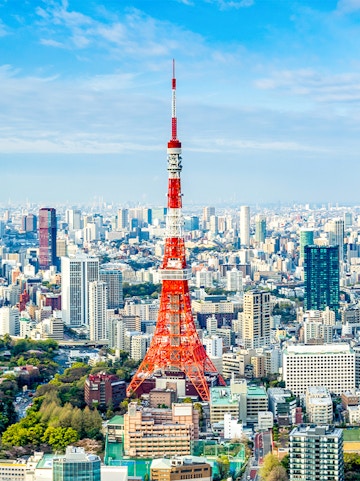
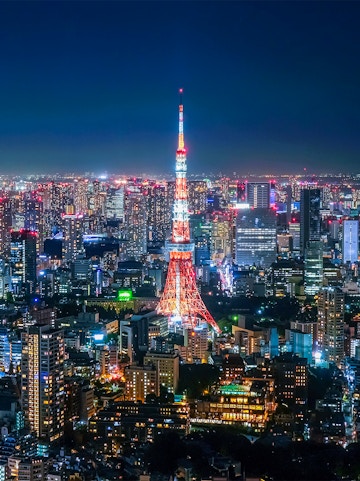
Tokyo cityscape from Tokyo Tower, showcasing skyscrapers and urban landscape.
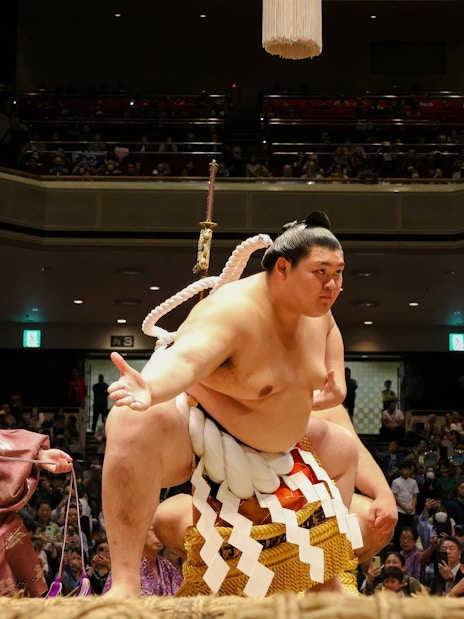
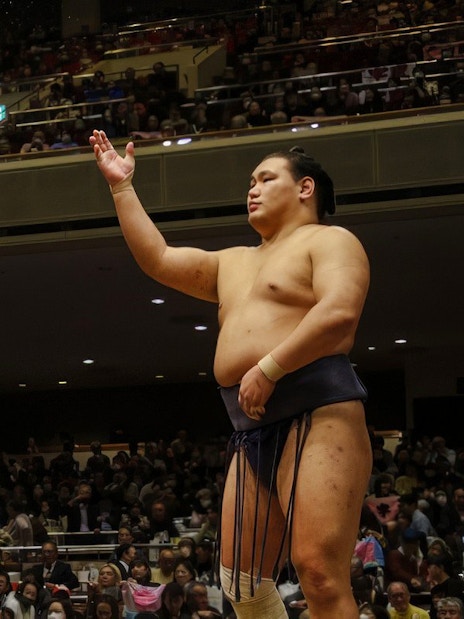
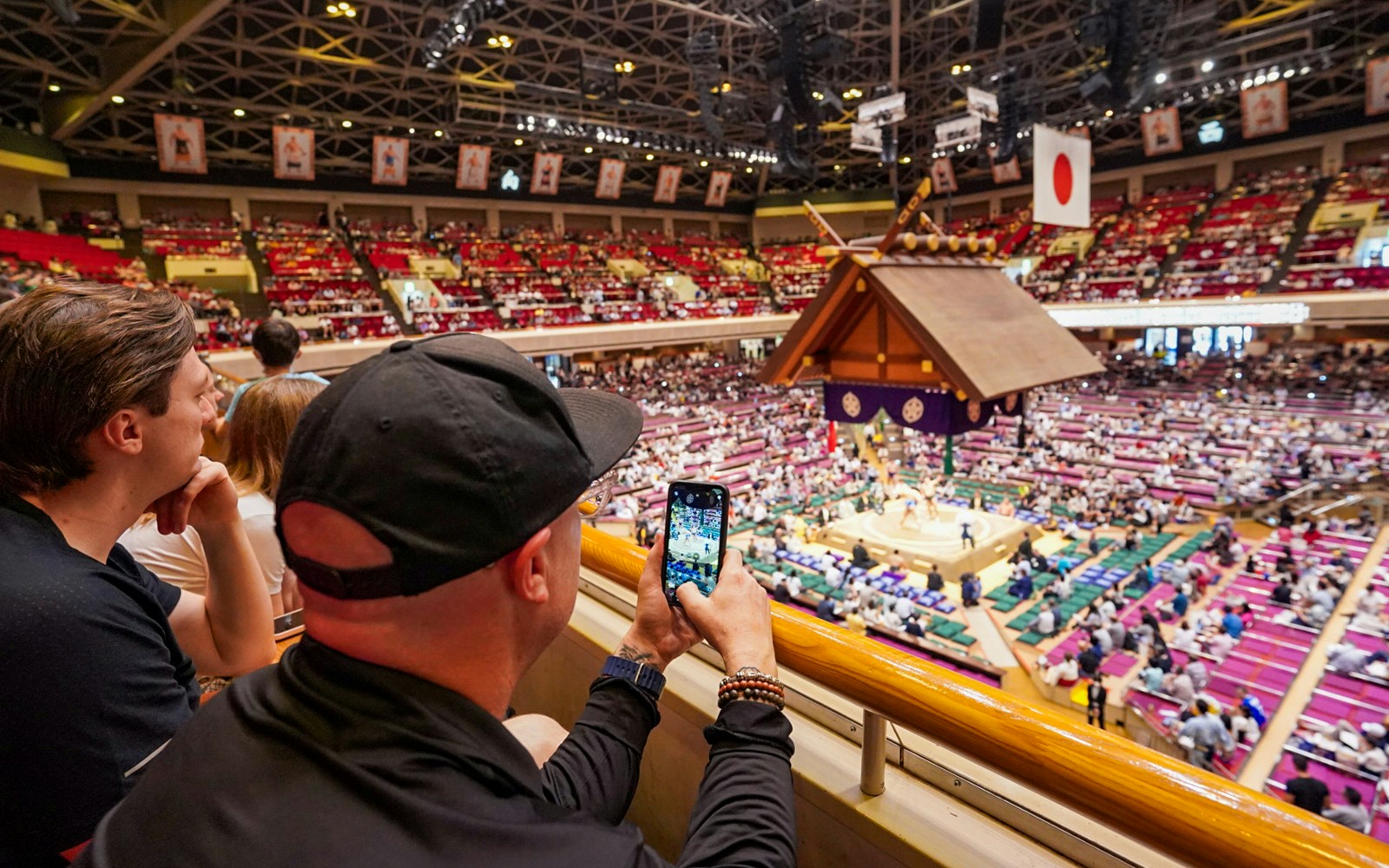
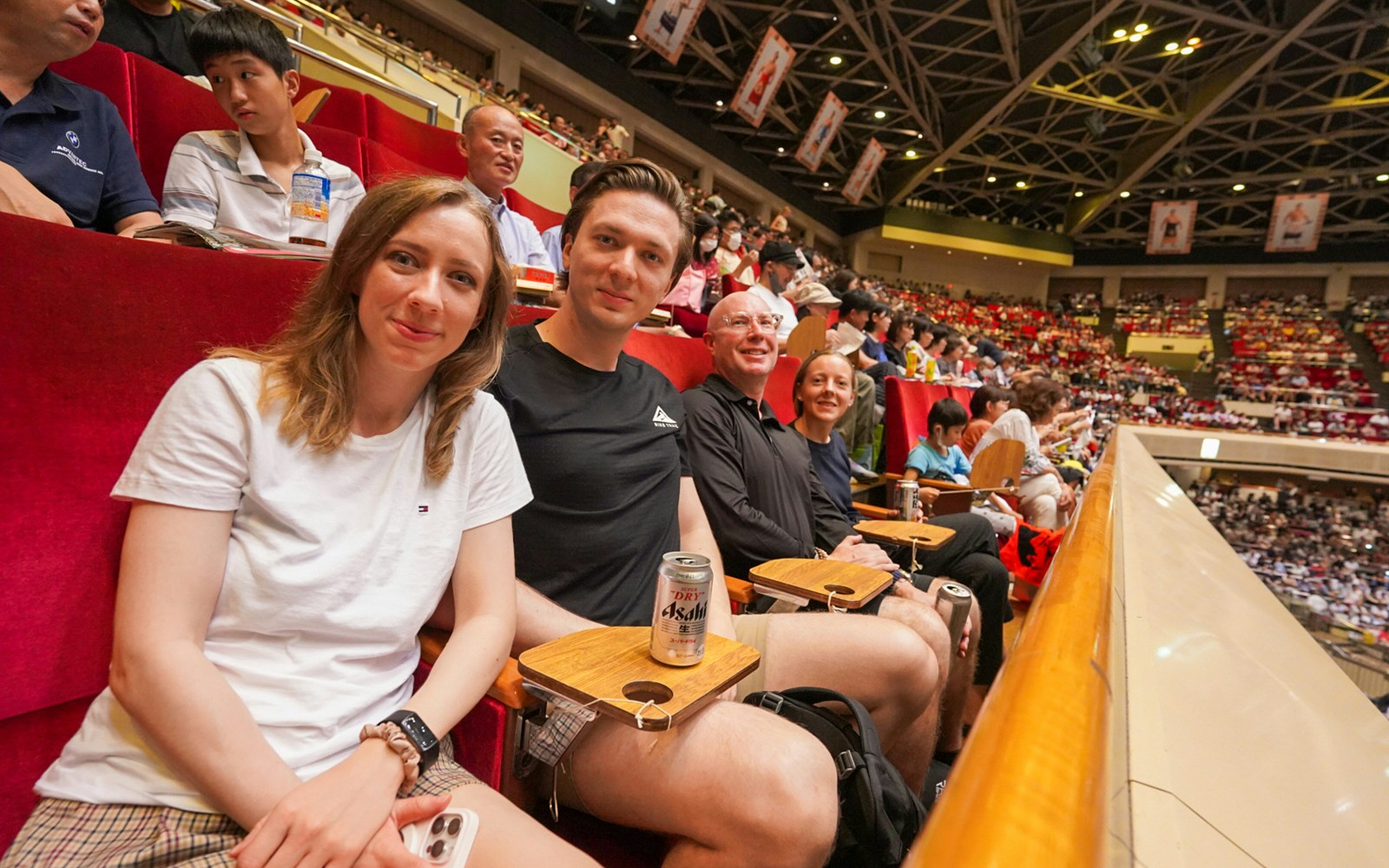
Spectators watching a sumo match at Ryogoku Kokugikan in Tokyo.
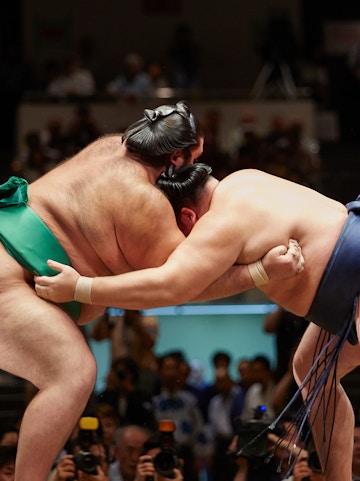
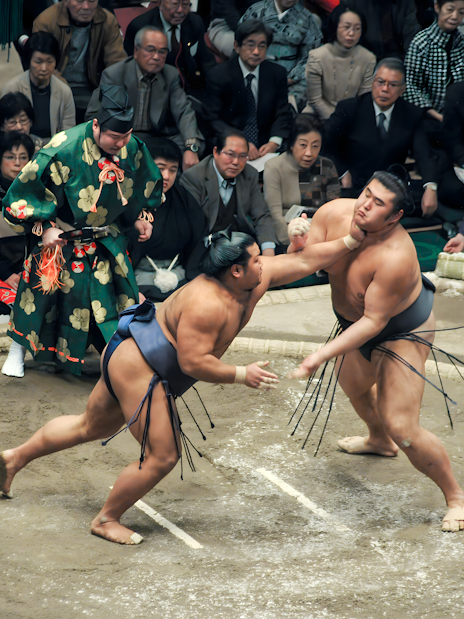
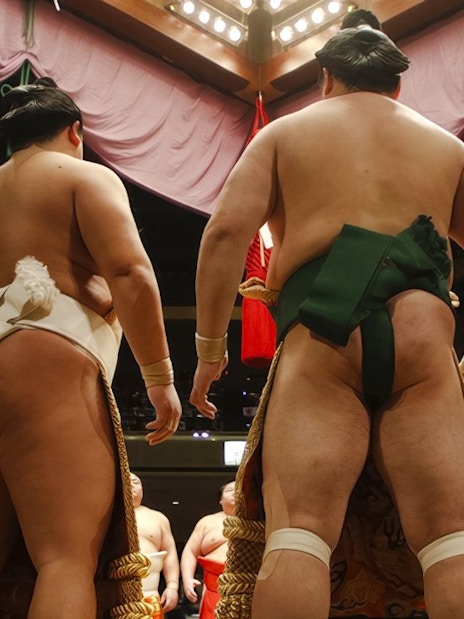
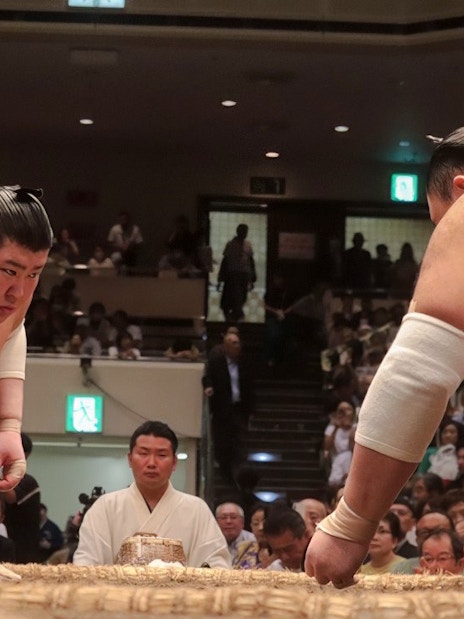
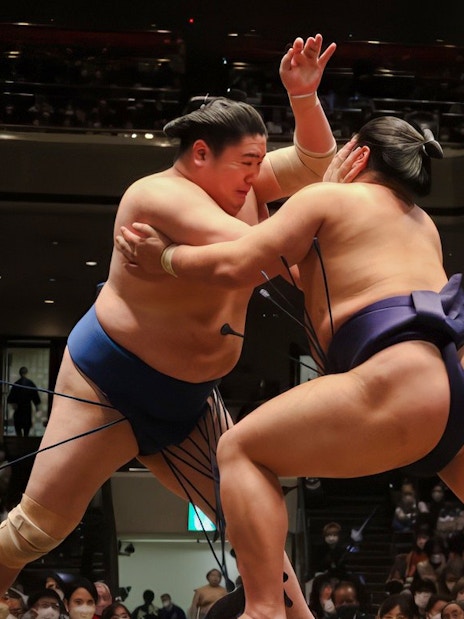
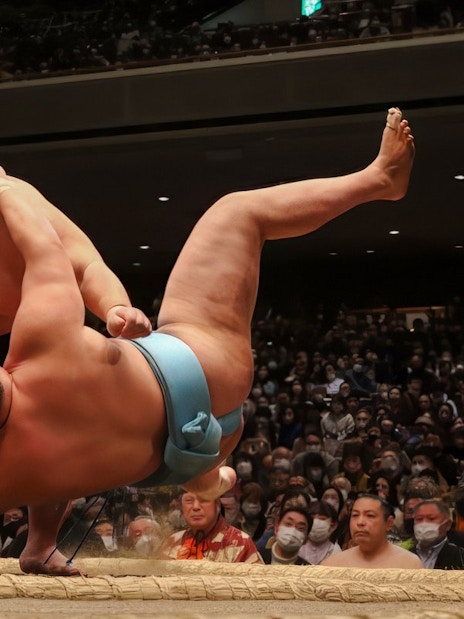
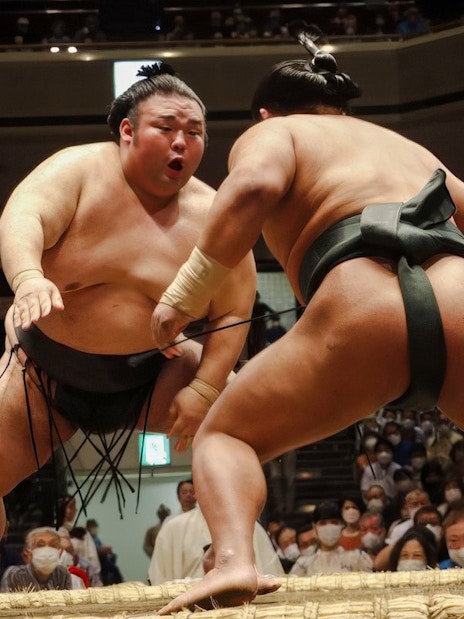
Sumo wrestlers face off at Tokyo Sumo Wrestling Tournament in Ryogoku arena.
Sumo wrestlers competing in Tokyo's Ryogoku arena during a tournament.
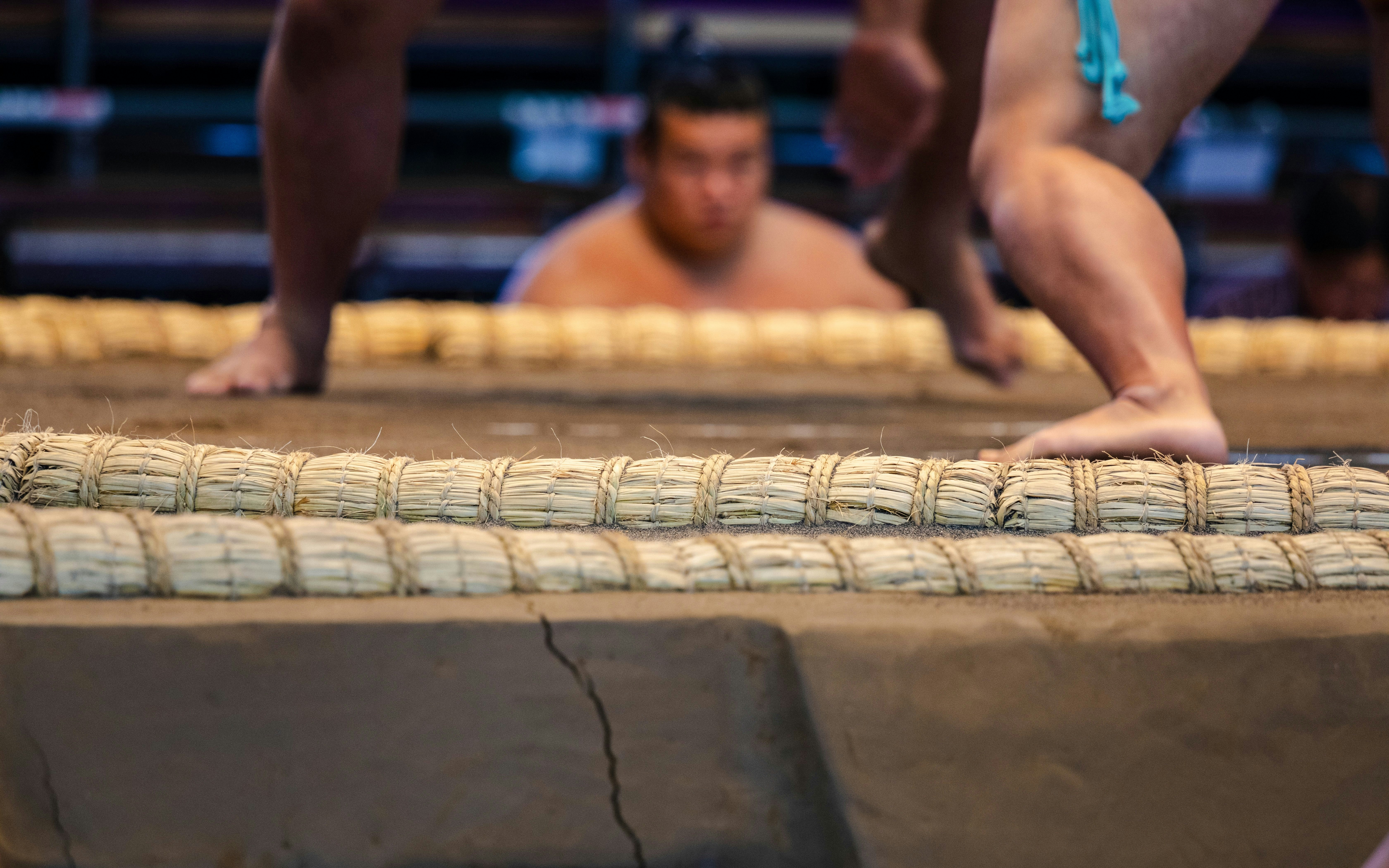
Visitors observing a sumo wrestling ring in Ryogoku, Tokyo, with traditional decor.
Spectators seated at Tokyo Sumo Wrestling Tournament in Ryogoku.
1/6

Sumo’s home ground

Tokyo hosts the Grand Sumo Tournament multiple times a year, making it the city where sumo feels most embedded in everyday life, not just a seasonal spectacle.

It happens where sumo belongs

From Ryōgoku’s historic arena to working stables tucked into neighbourhoods, Tokyo lets you see sumo in the spaces built for it.

Ritual sets the pace

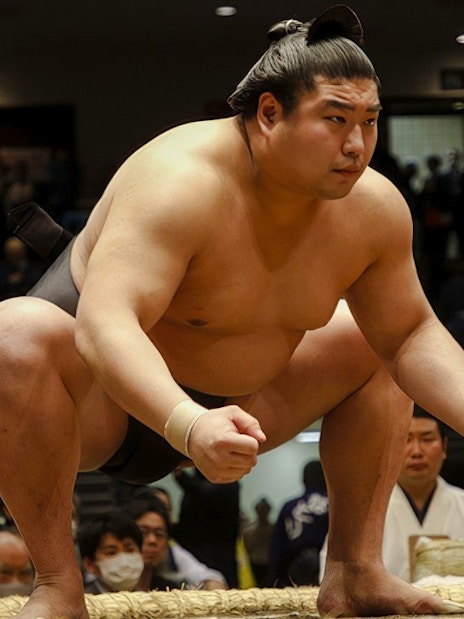
Ceremonial entrances, salt throwing, and deliberate face-offs stretch time—until bouts explode into action and end in seconds.

Details you don’t forget

The thud of feet on clay, referees in silk robes, the hush before contact—Tokyo’s settings make these moments feel immediate.

Context makes it click

English commentary, guided talks, and printed materials help decode ranks, techniques, and rivalries so you know what you’re watching.

Fits different travel styles

Pick interactive shows with drinks, real morning practice with lunch, luxury dinner performances, or fixed-date tournament seats, depending on time, comfort, and depth.

Things to know before booking your Tokyo sumo experience

  • Ticket availability & advance booking: Tournament tickets, especially A and S seats with guides, sell out early. Shows and stable visits are easier to book closer to the date.
  • Different ways to experience sumo: Options include entertainment-style shows, authentic morning practice at stables, luxury cultural dinners, and the official Grand Sumo Tournament.
  • Shows vs tournament: Shows and practice tours explain rules clearly and allow interaction. Tournament tickets focus on live competition and rituals, with no interaction.
  • Guided vs unguided: Some tournament tickets include licensed English guides and pre-event lectures; others provide seat access only. Choose based on how much context you want.
  • Meals aren’t standard: Kaiseki, wagyu, or chanko-nabe meals are included only with specific shows or stable tours. Tournament seats never include full meals.
  • Dates & cancellation rules vary: Tournament tickets are fixed-date and limited. Many shows and practice experiences offer free cancellation closer to the visit.

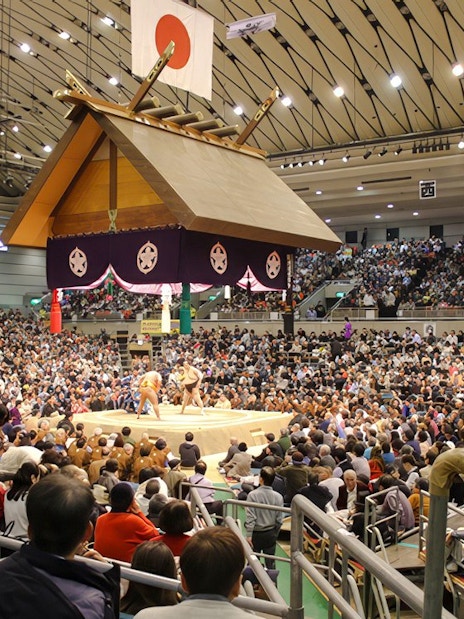
Official schedule: 2026 Grand Sumo Tournaments in Japan

DatesCityVenue

January 11 – 25, 2026

Tokyo

Ryōgoku Kokugikan

March 8 – 22, 2026

Osaka

Edion Arena Osaka (Osaka Prefectural Gymnasium)

May 10 – 24, 2026

Tokyo

Ryōgoku Kokugikan

July 12 – 26, 2026

Nagoya

IG Arena (Aichi International Arena)

September 13 – 27, 2026

Tokyo

Ryōgoku Kokugikan

November 8 – 22, 2026

Fukuoka

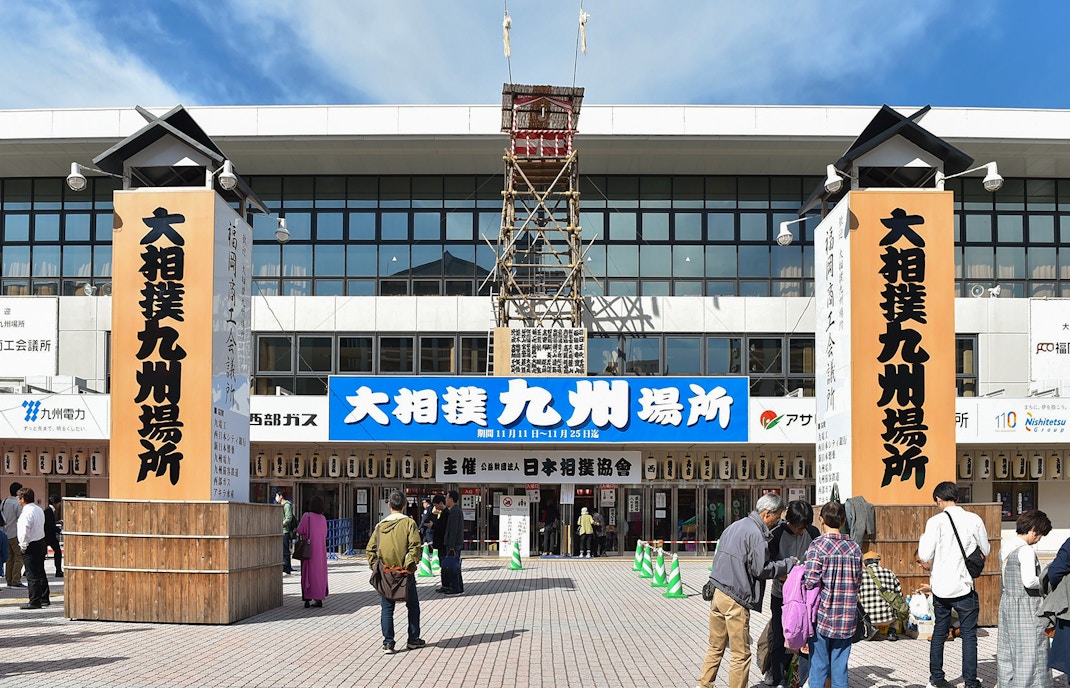
Fukuoka Kokusai Center

Highlights of your Tokyo sumo experience

Sumo wrestlers in a clay ring, preparing for a match under bright lights.

Clay ring under bright lights

The dohyo sits at the center like a stage, packed earth glowing under spotlights. You feel the tension before anything moves, with every eye fixed on that small, sacred circle.

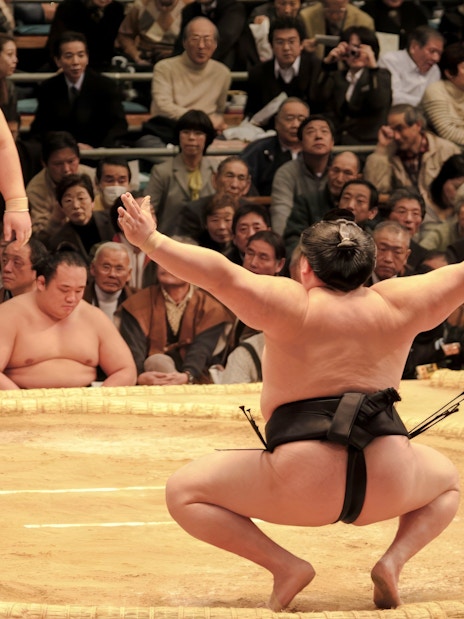
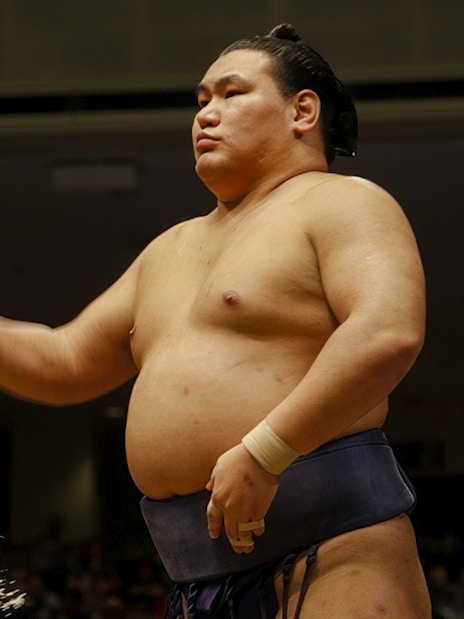
Sumo wrestler throwing salt during a traditional ceremony in Japan.
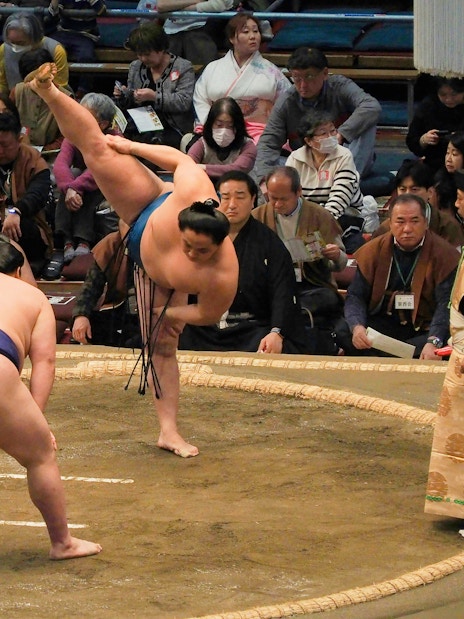
Sumo wrestler executing a move against opponent in a Japanese arena.
Sumo wrestlers practicing at Asakusa Sumo Club, Tokyo.
Sumo wrestlers practicing morning exercises in a traditional Japanese sumo stable.

Plan your Tokyo sumo experience

Sumo wrestlers grappling in a traditional match in Japan.
  • Operating windows: Sumo shows typically run in the afternoon or evening. Morning practice tours start early in the day. Grand Sumo Tournament sessions are daytime-only during tournament months, including May in Tokyo.
  • Duration: Expect about 1–2.5 hours for sumo shows, around 4 hours for stable practice tours with lunch, and 5–6 hours for a full tournament session with a guide.
  • Best time to go: Tournament action intensifies later in the afternoon as higher-ranked wrestlers appear. Evening shows are shorter, more structured, and easier to fit into sightseeing days.
Visitors entering Ryogoku Kokugikan for Tokyo Sumo Tournament guided tour.
  • Where it begins: Experiences take place at sumo halls in Ginza or Shinjuku, working sumo stables in Tokyo or nearby Kawasaki, or at Ryōgoku Kokugikan for tournament days.
  • Meeting style: Most shows and stable visits are meet-at-venue. Guided tournament tickets usually meet first at Ryogoku View Hotel, then proceed together to the arena.
  • Arrival planning: Arrive early for check-in and security. Late arrivals may be refused entry, especially for timed shows, workshops, and guided tournament sessions.
Wheelchair user exploring an accessible museum gallery.
  • Tournament venues: Ryōgoku Kokugikan involves stairs, narrow aisles, and dense crowds. Wheelchair users must notify in advance and may be directed to designated areas; assistance inside the venue is limited.
  • Shows & stable visits: Venues are smaller with tight layouts. Some experiences involve floor seating, low chairs, or standing during interactive segments.
  • Wheelchair access: Limited and varies by venue. Some shows and halls are not wheelchair accessible at all; advance confirmation is essential.
  • Strollers & large aids: Strollers are not permitted inside seating areas. Storage, if available, is limited and often unattended.
  • Who should reconsider: Guests needing step-free access throughout, or those with significant mobility constraints, may find options restricted—short, seated shows are usually the most manageable.

Tips for booking your Tokyo sumo experience

  • Decide how much context you want: If you are new to sumo, tickets with an English-speaking MC or a licensed guide and pre-event explanation make rituals, ranks, and bouts much easier to follow.
  • Book tournament seats early: Tokyo tournament dates, especially in May, sell out quickly. A and S seats and guided options are usually the first to go, so book as soon as your travel dates are fixed.
  • Use shows as a fallback: English-led sumo shows and practice-style experiences run regularly and are the safest choice if tournament dates or preferred seats are unavailable.
  • Choose meals intentionally: Kaiseki, wagyu, or chanko-nabe meals are included only with select shows or stable tours. If food matters to you, confirm it is part of your chosen option before booking.
  • Plan arrival time carefully: Late entry is often refused for timed shows, workshops, and guided tournament meet-ups even with a valid ticket. Arrive early to avoid missing out.
  • Pick seats by stamina: Full tournament sessions suit standard or rear seating if you want flexibility to move around between bouts. Front rows work best for short, focused viewing.

Tokyo sumo tournament: About Ryōgoku Kokugikan

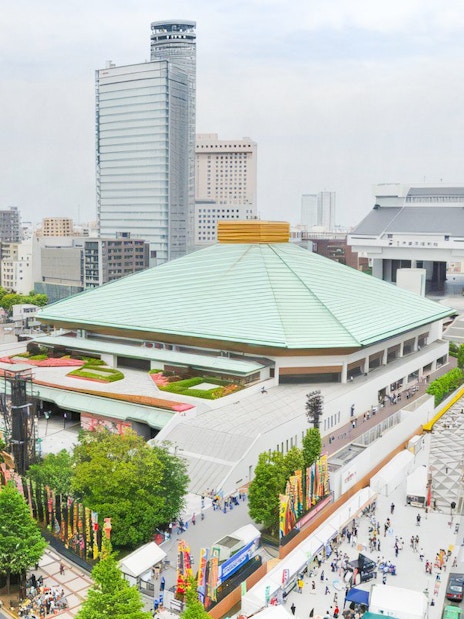
Ryogoku Kokugikan sumo arena entrance in Tokyo, Japan, with modern buildings in the background.

Ryōgoku Kokugikan is the spiritual home of sumo in Tokyo and the main venue for the city’s Grand Sumo Tournaments, including the May basho. It’s purpose-built for sumo, so ceremonies, chants, and bouts feel immersive rather than distant.

Seating circles the dohyo closely, with clear sightlines toward the ring and the ceremonial roof above it. As the day progresses and higher-ranked wrestlers enter, the atmosphere sharpens and the arena grows noticeably louder and more focused.

How to get there: Ryōgoku Kokugikan is located in the Ryōgoku district of eastern Tokyo. It’s a short walk from JR Ryōgoku Station (Sobu Line) or Ryōgoku Station (Toei Oedo Line). On tournament days, arrive early and allow extra travel time, as stations and surrounding streets can become crowded.

Things to do near Ryōgoku Kokugikan

Visit the Edo-Tokyo Museum area

Just outside the arena district, this neighborhood is steeped in old Edo character, with wide streets and museums that echo sumo’s historical roots.

Walk along the Sumida River

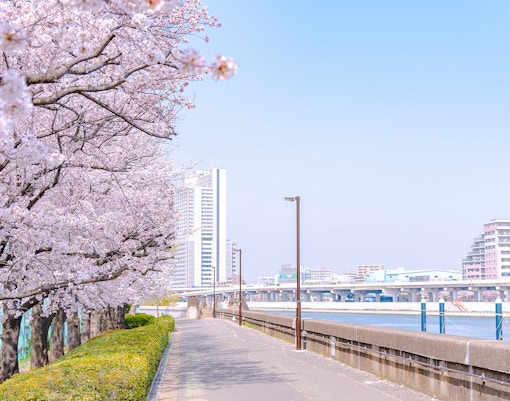
A short stroll takes you to the riverbanks, where quiet paths and open views offer a breather after the intensity of the matches.

Explore Ryōgoku’s sumo streets

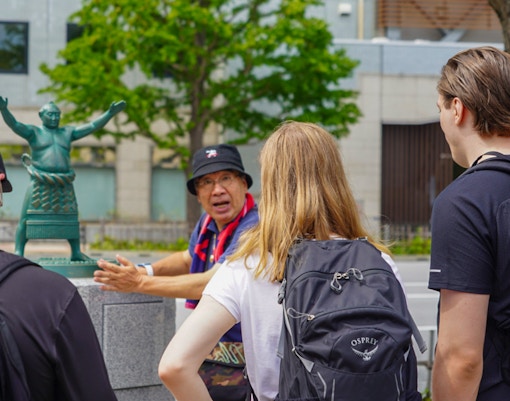
The area around the arena is dotted with sumo statues, banners, and wrestler-themed shops, especially lively on tournament days.

Eat chanko-nabe nearby

Ryōgoku is famous for chanko-nabe restaurants run by former wrestlers. Many are within walking distance and feel like a natural extension of the sumo experience.

Head to Asakusa

A quick train ride away, Asakusa offers temples, shopping streets, and casual dining, making it an easy next stop before or after the tournament.

Frequently asked questions about Tokyo sumo tournament tickets

All tickets include entry to the official Grand Sumo Tournament at Ryōgoku Kokugikan with a reserved seat. Guided options also include an English guide, pre-event lecture, booklet, and banzuke.

More reads

Osaka Sumo Tournament Tickets

Fukuoka Sumo Tournament Tickets