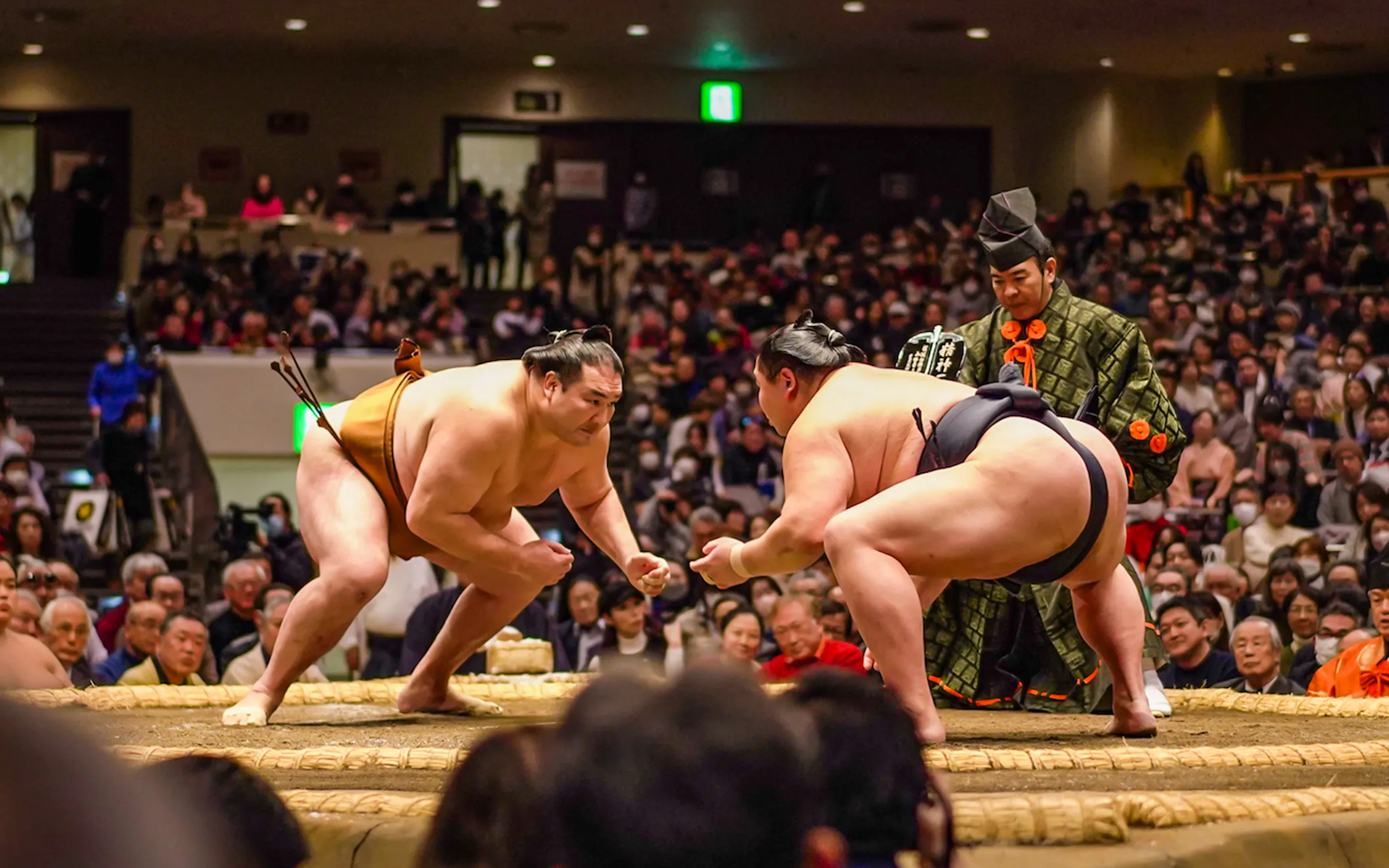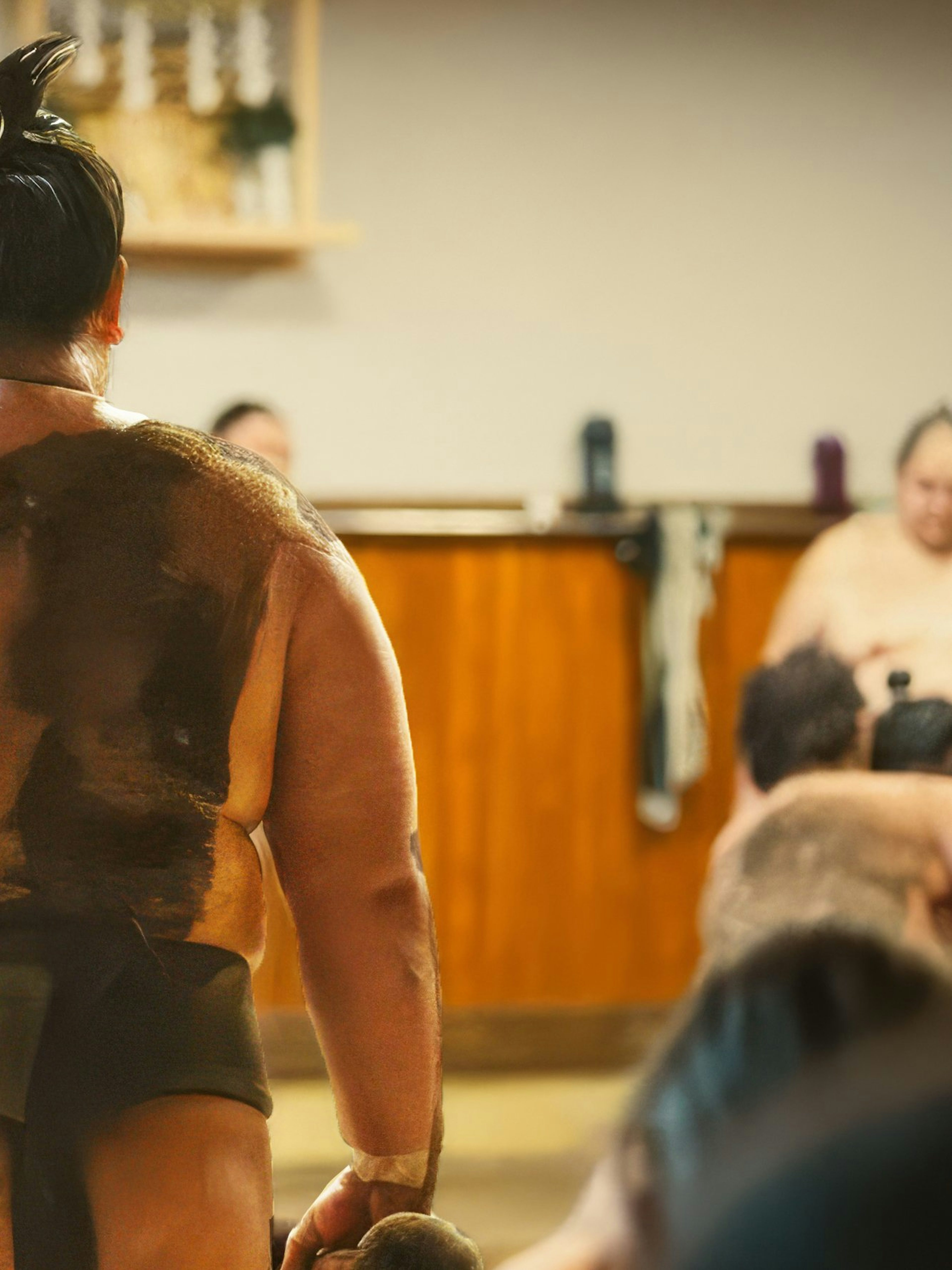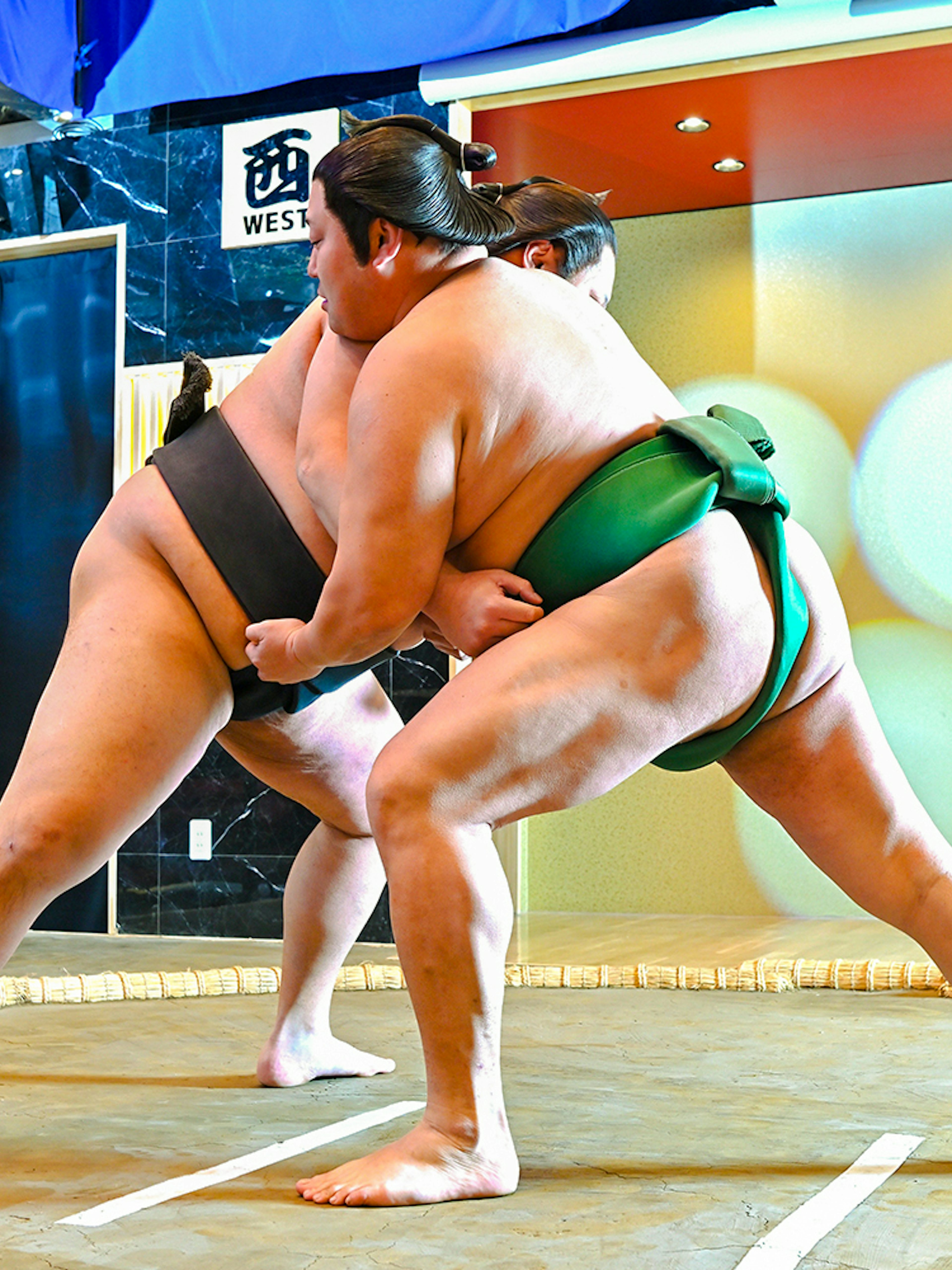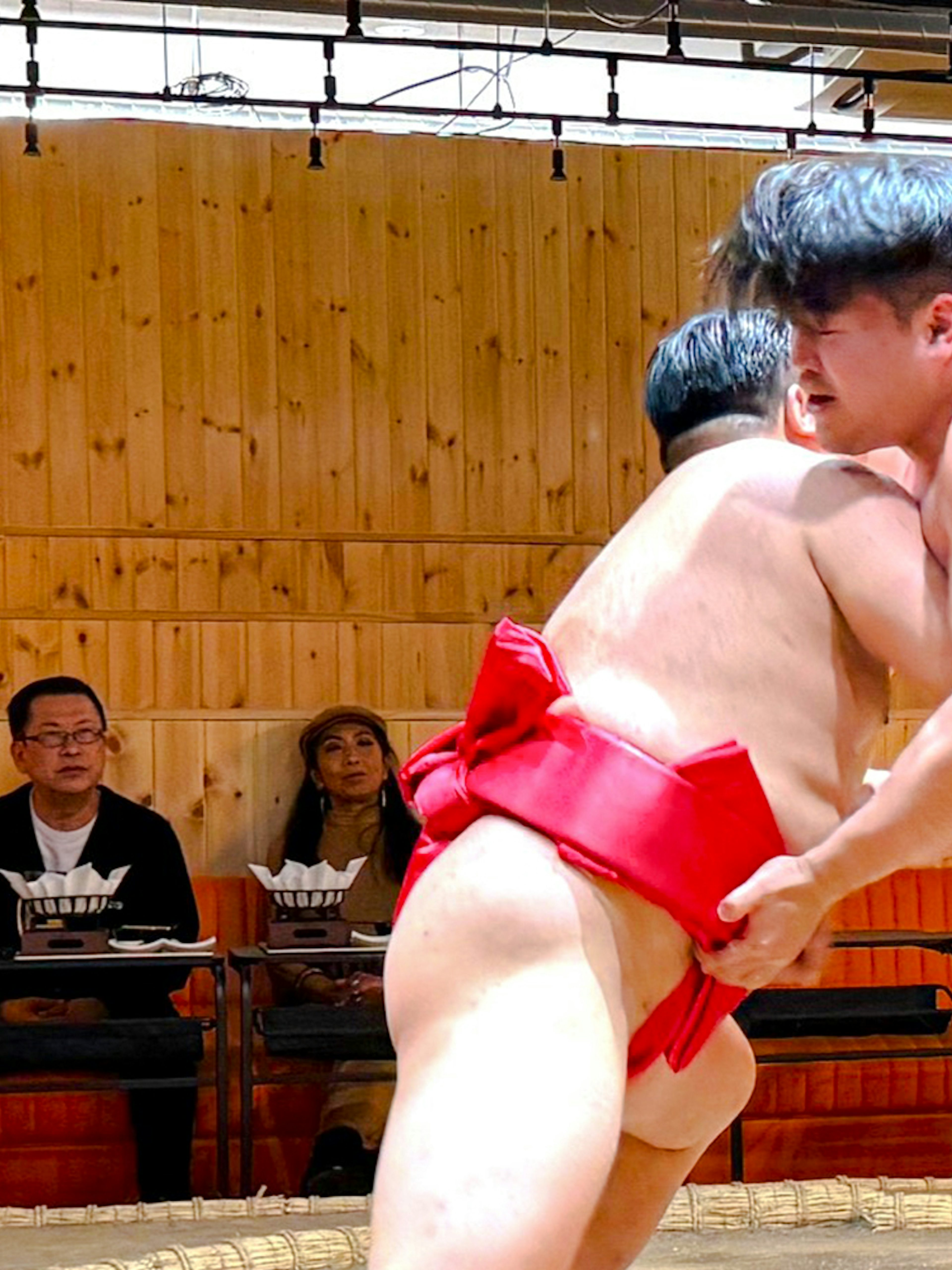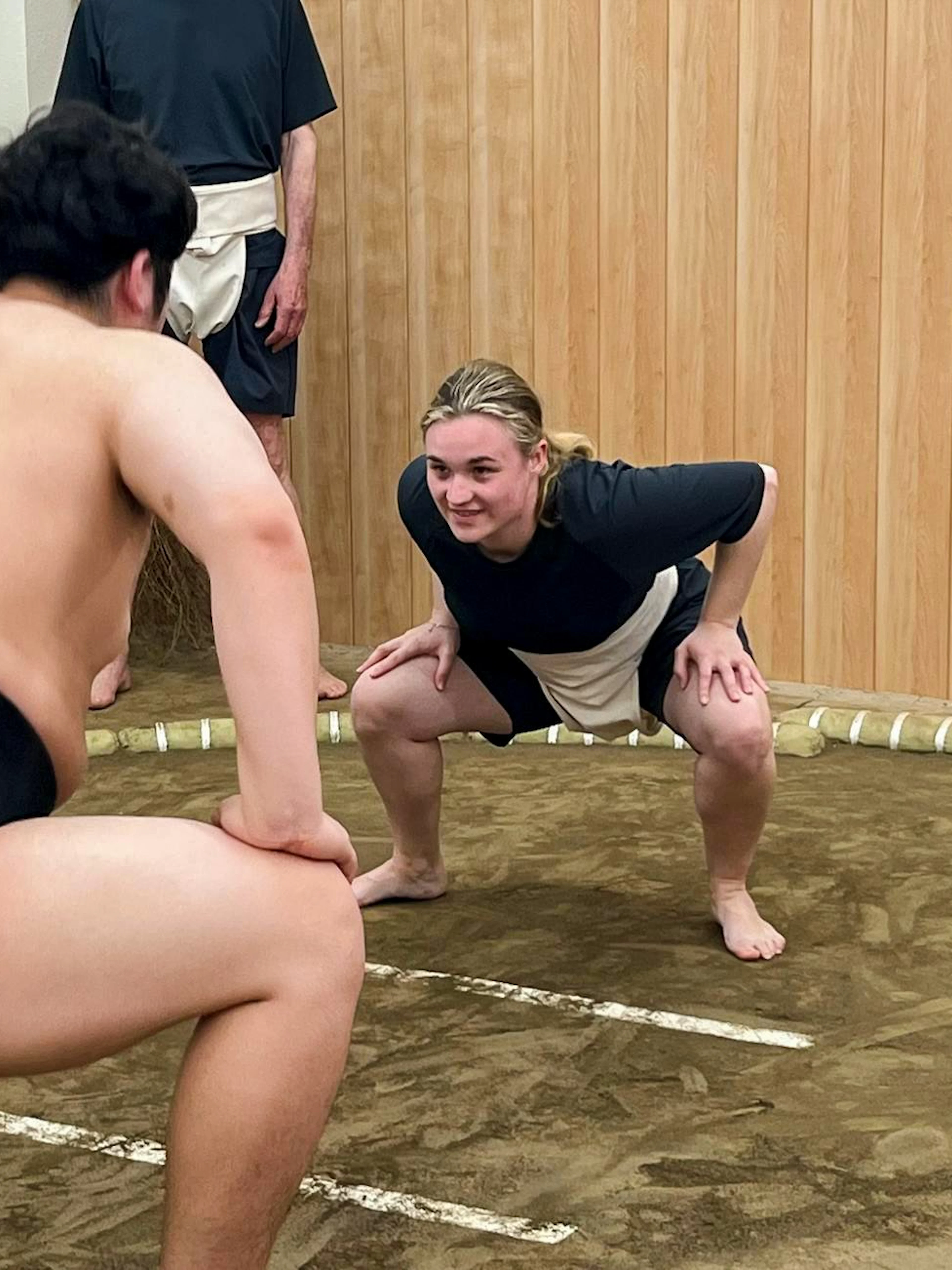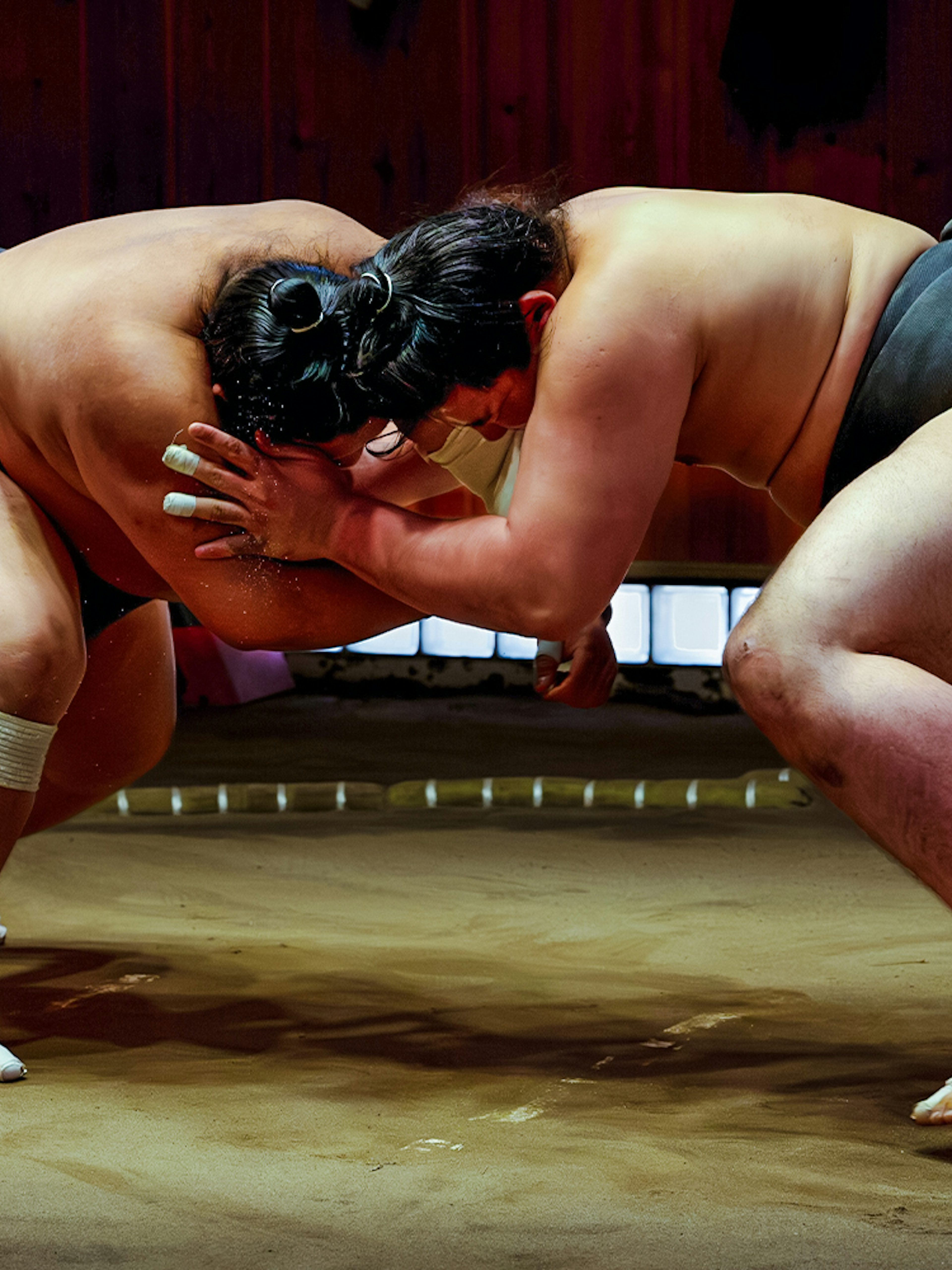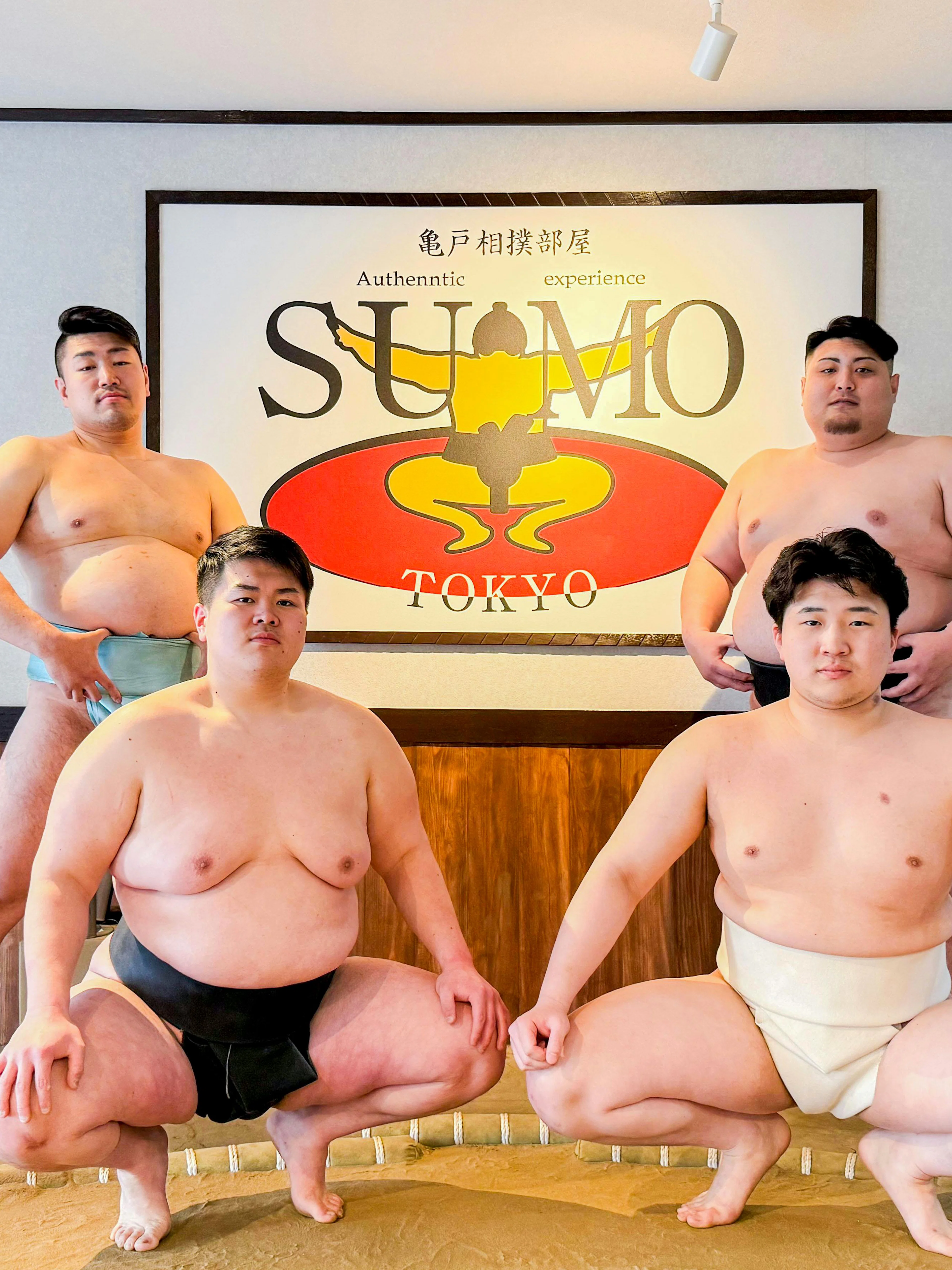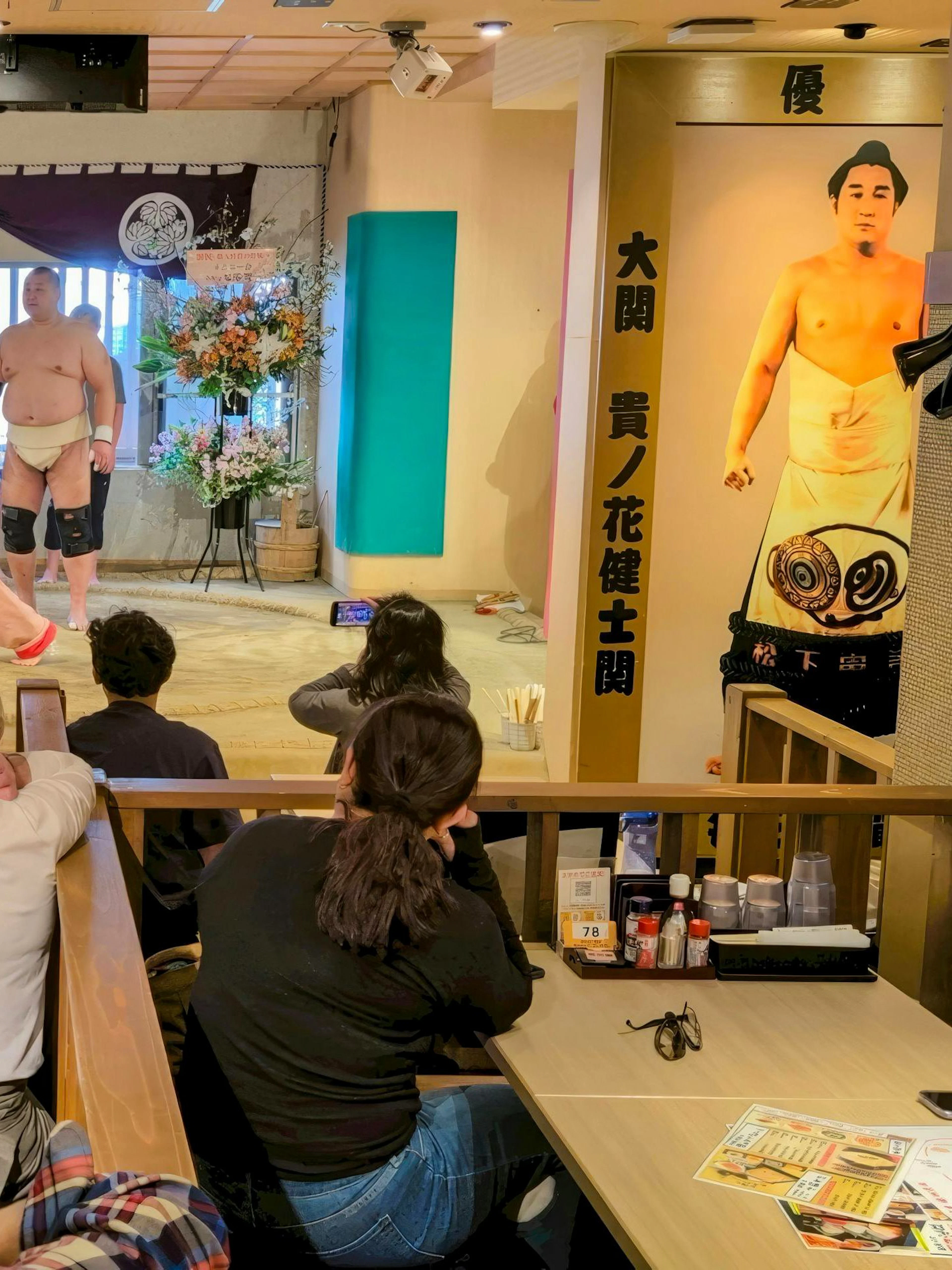





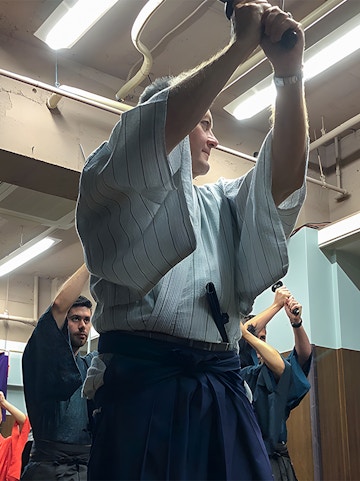
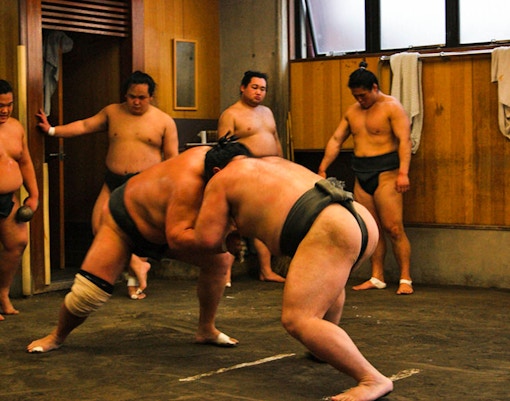
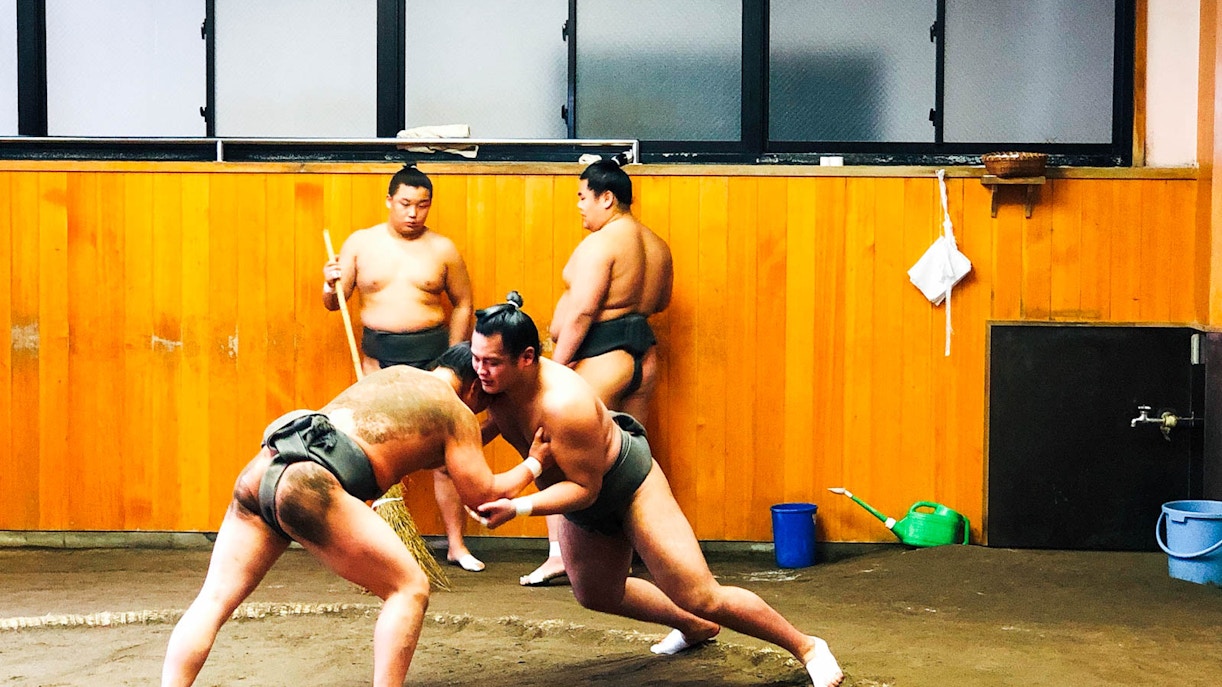
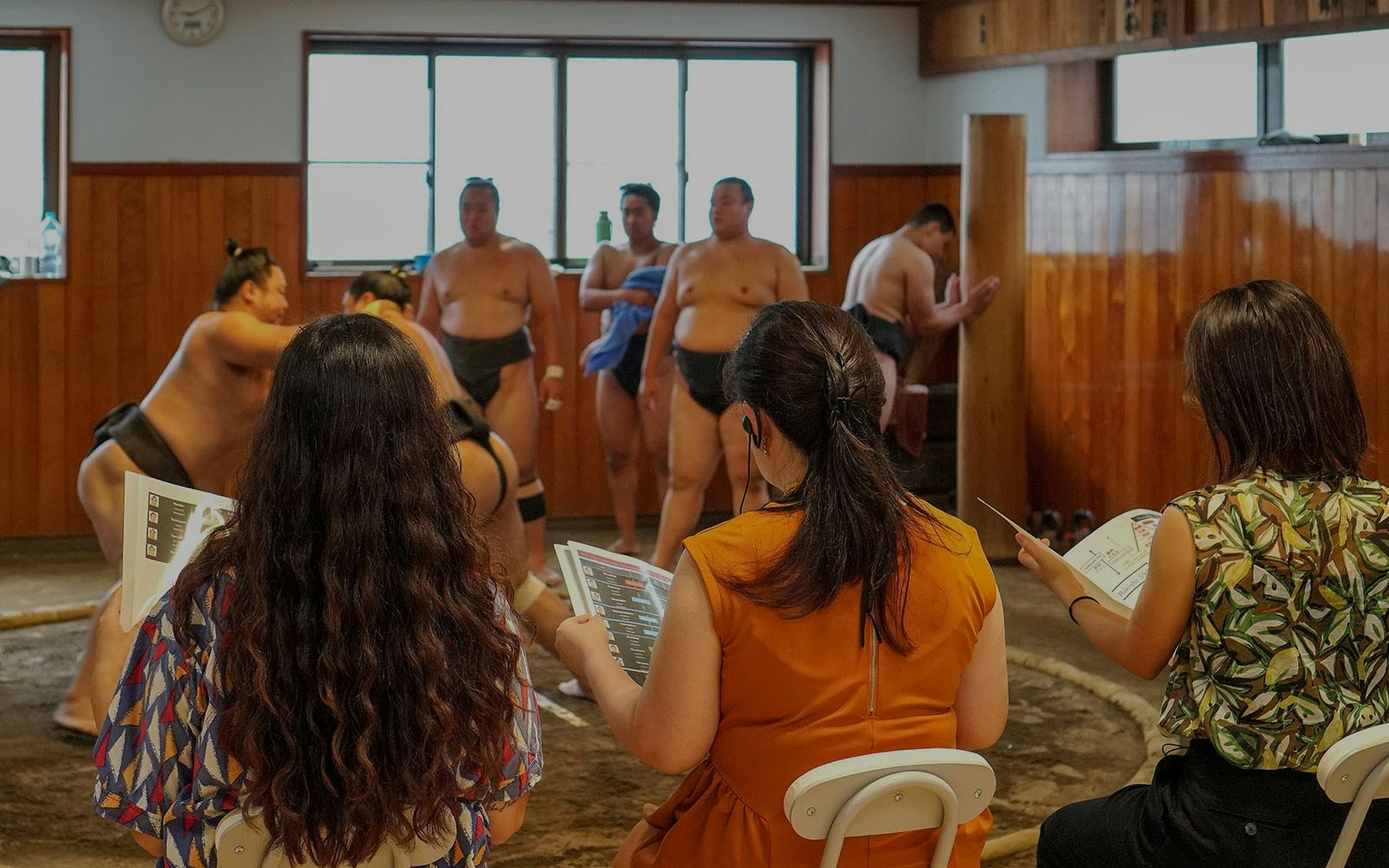
Step inside a real heya (sumo stable) and watch wrestlers during their morning practice. You’ll see how they train, follow their strict routines, and understand the discipline that defines the sport. Visitors sit close to the ring and observe everything from warm-ups to sparring sessions under a stable master’s supervision.
Top things to do in Tokyo
How Headout makes choosing experiences effortless
We curate the best ways to experience
We research and organise all unique experiences - from tickets to tours to special combos - so you get all the choices without the clutter.
We partner with the best
Every supplier is vetted for quality, reliability, and value so you only get top rated experiences. No surprises, no disappointments.
All the best options, in one place
Each experience is thoughtfully organised to give you maximum availability, great value and an easy way to choose.
Book with complete peace of mind
Free cancellations, Flexible payments, and 24/7 support - thoughtfully designed for flexibility, assurance, and total peace of mind.
Slide 1 of 41/4
Slide 1 of 4
Sumo Wrestling in Tokyo: Experience Japan’s oldest sport live
Sumo wrestling is Japan’s oldest sport, dating back over 1,500 years to Shinto harvest ceremonies, where matches were held as offerings to the gods for good fortune and prosperity. Over time, what began as a sacred ritual evolved into Japan’s national sport. In Tokyo, visitors can experience this living heritage up close by watching powerful rikishi (wrestlers) compete at the Ryōgoku Kokugikan arena during one of the city’s Grand Sumo tournaments, or by joining a sumo practice show at a local stable to see how wrestlers train, eat, and prepare for competition.
This page covers sumo wrestling tournament details, where to watch or join a sumo practice show, and the best times to experience it in Tokyo.
Why watching Sumo Wrestling in Japan is a must-do experience
1/6
Sumo at Ryogoku Kokugikan Stadium
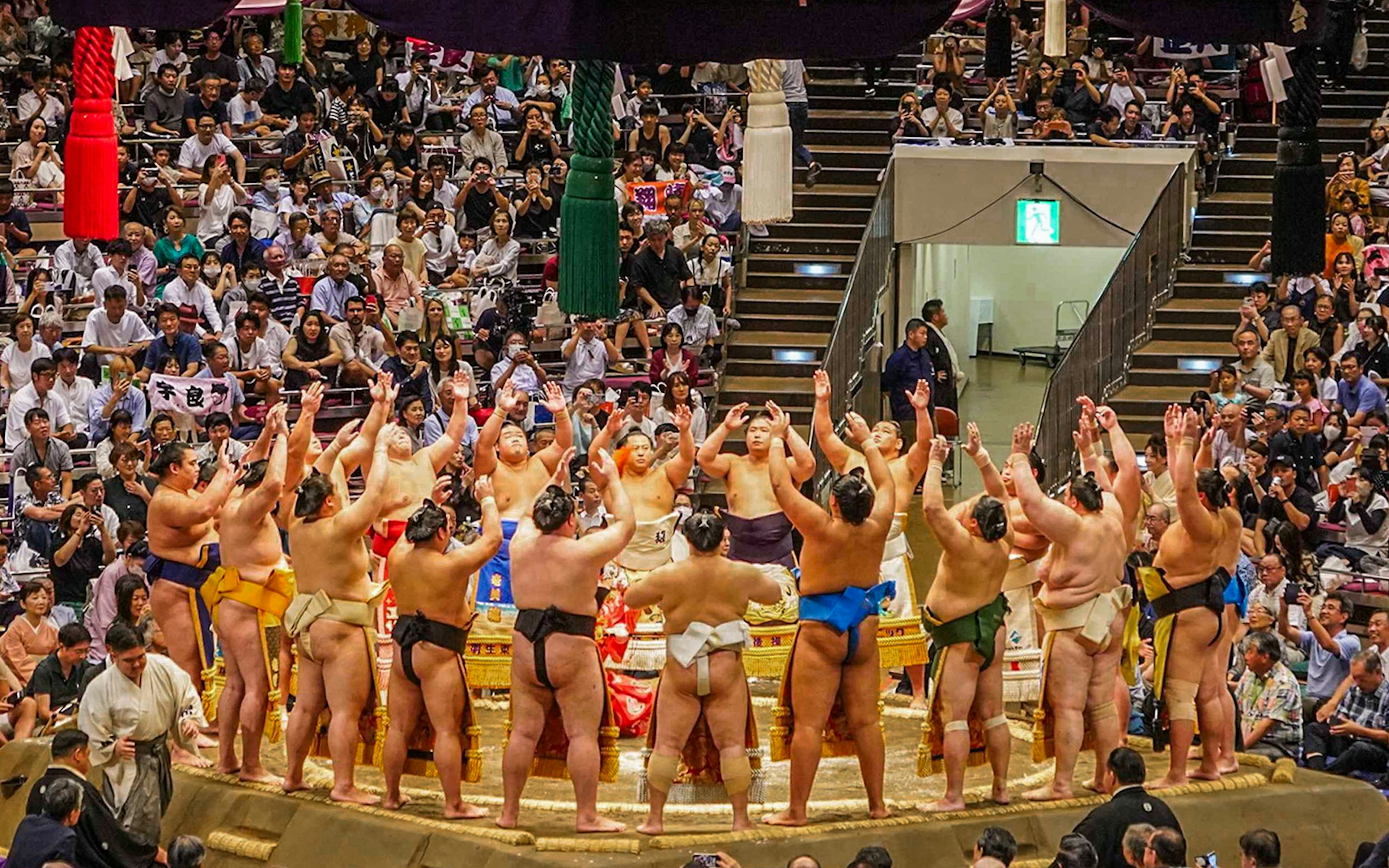
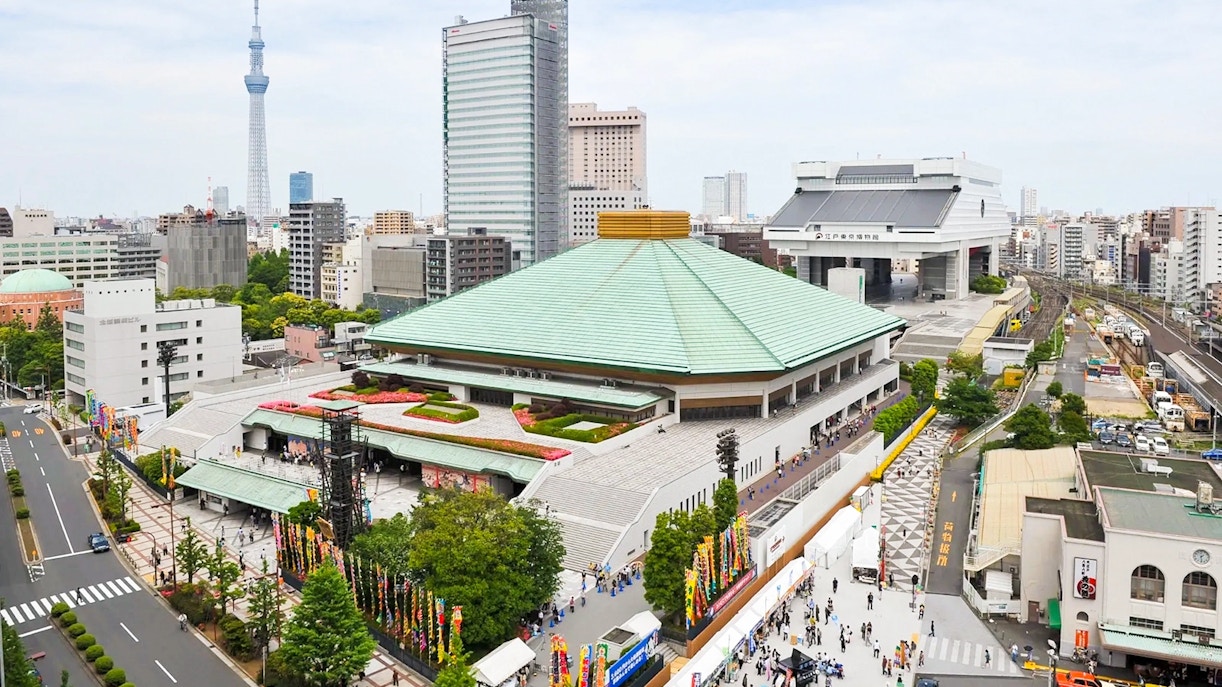
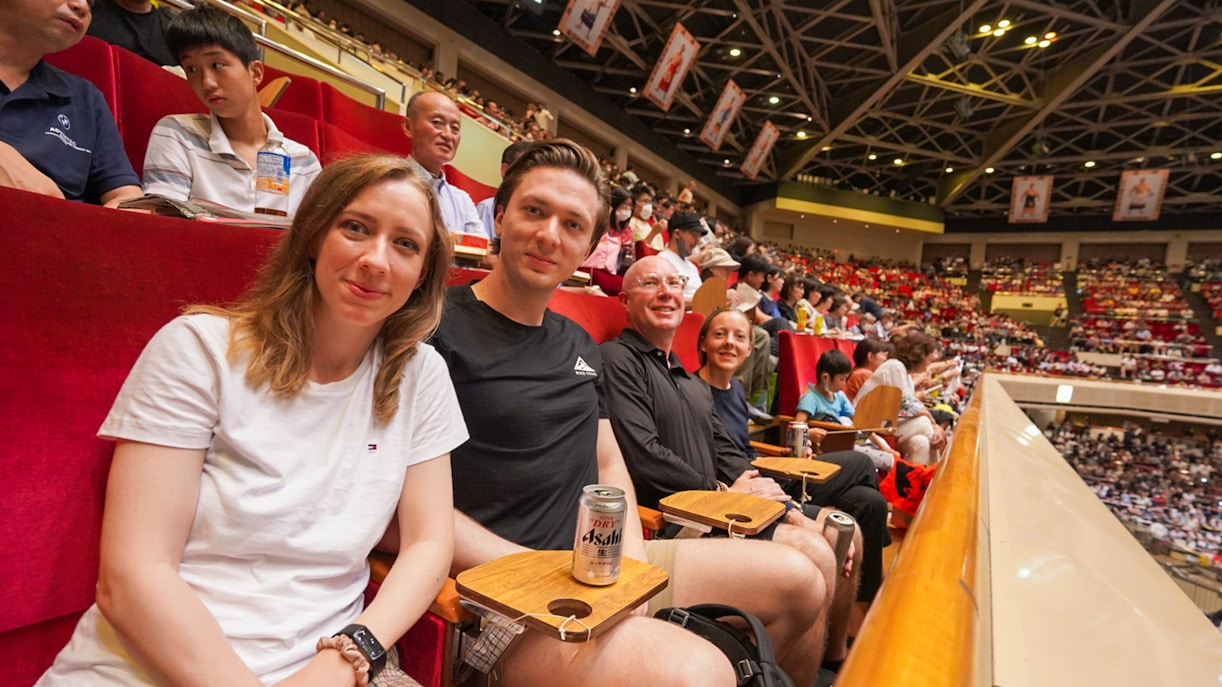
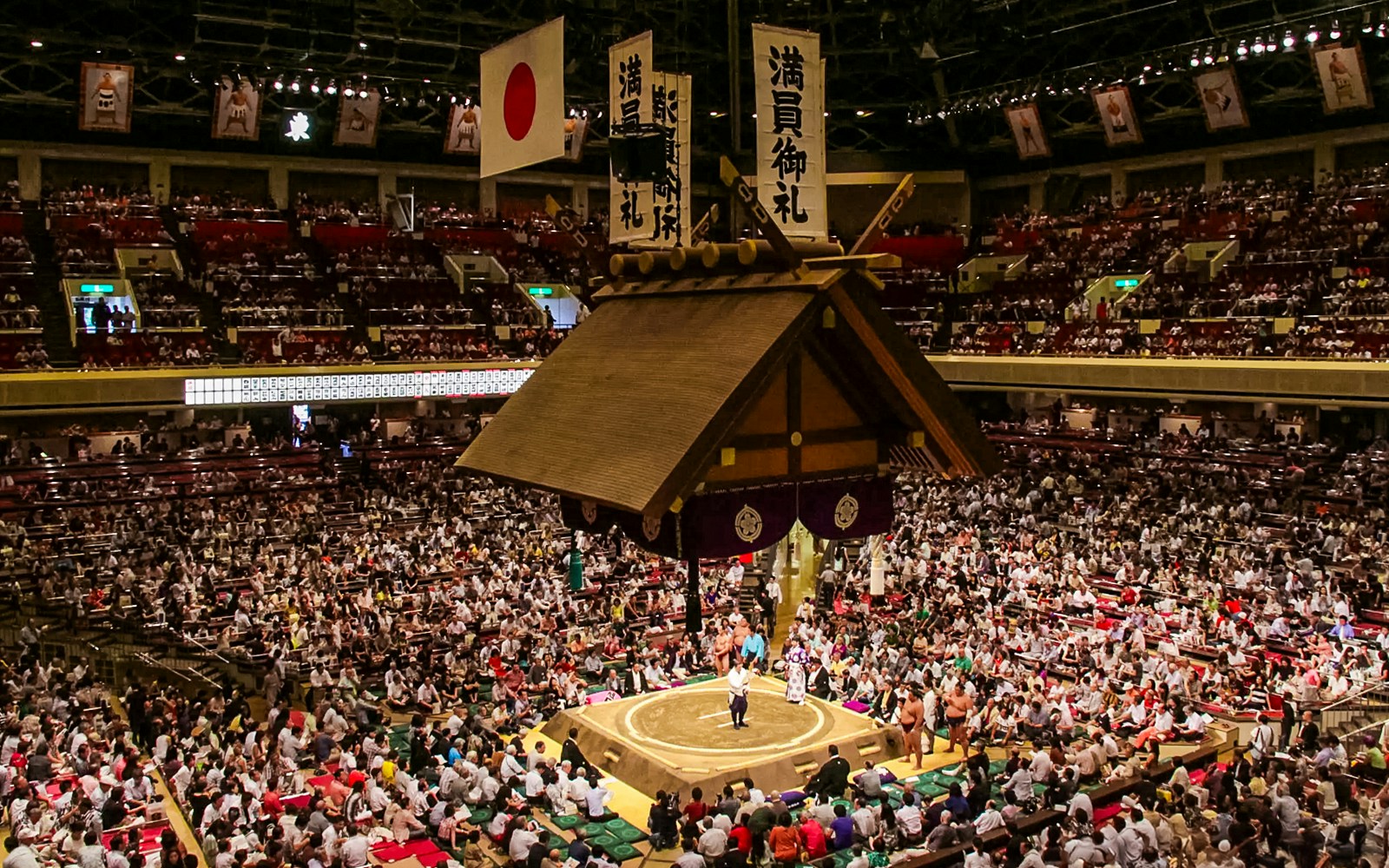
Only three of six official grand tournaments happen in Tokyo, all at Ryogoku Kokugikan. The stadium houses over 11,000 eager fans under its green, pavilion-style roof. Each 15-day tournament in January, May, and September draws crowds to watch wrestlers perform traditional pre-match rituals before intense, fast-paced bouts. Attending a tournament here offers a direct window into Japan’s national sport — where strength, discipline, and ceremony come together in one unforgettable experience.
Learn sumo wrestling at practice shows
If you’re visiting outside the official tournament months, don’t worry; Tokyo offers plenty of ways to experience sumo wrestling all year round. You can watch a morning training session at a local stable or join a guided tour led by sumo experts. Some experiences even let you step into the ring with a retired wrestler, pose for photos, and savour a bowl of chanko nabe, the protein-rich stew that fuels every rikishi’s diet. Whether you’re exploring in the afternoon or planning an evening activity, there’s a sumo experience in Tokyo to suit every schedule.
Luxury sumo shows with gourmet dining
Tokyo’s luxury sumo shows offer an evening of sumo, culture, and fine dining. Held in upscale venues such as Ryōgoku or Asakusa, these events feature retired wrestlers demonstrating techniques with English narration, followed by geisha performances, audience interactions, and a set meal that includes chanko-nabe, A5 wagyu sukiyaki, and dessert. VIP plans provide front-row seating, unlimited drinks, and take-home souvenirs such as happi coats or photo sets.
Perfect for families with reserved seating
All sumo shows are family-friendly, whether you’re watching a grand tournament or attending a practice session. The matches are lively and easy to follow, and younger visitors are always amazed by the wrestlers’ sheer size and skill. Seating options include traditional box seats on tatami mats, comfortable arena chairs, VIP ringside spots, dining tables, or plush sofa seating at luxury shows.
Guided tour of Sumo Stable
Some tours offer guided tours of authentic sumo stables (beya). You’ll enter real training quarters where wrestlers live, eat, and train together under a single master. A local guide explains their strict daily routines, diet, and the rules that govern everything from hairstyles to manners. It’s a raw, fascinating glimpse into one of Japan’s most traditional communities.
Meet and take photos with real sumo wrestlers
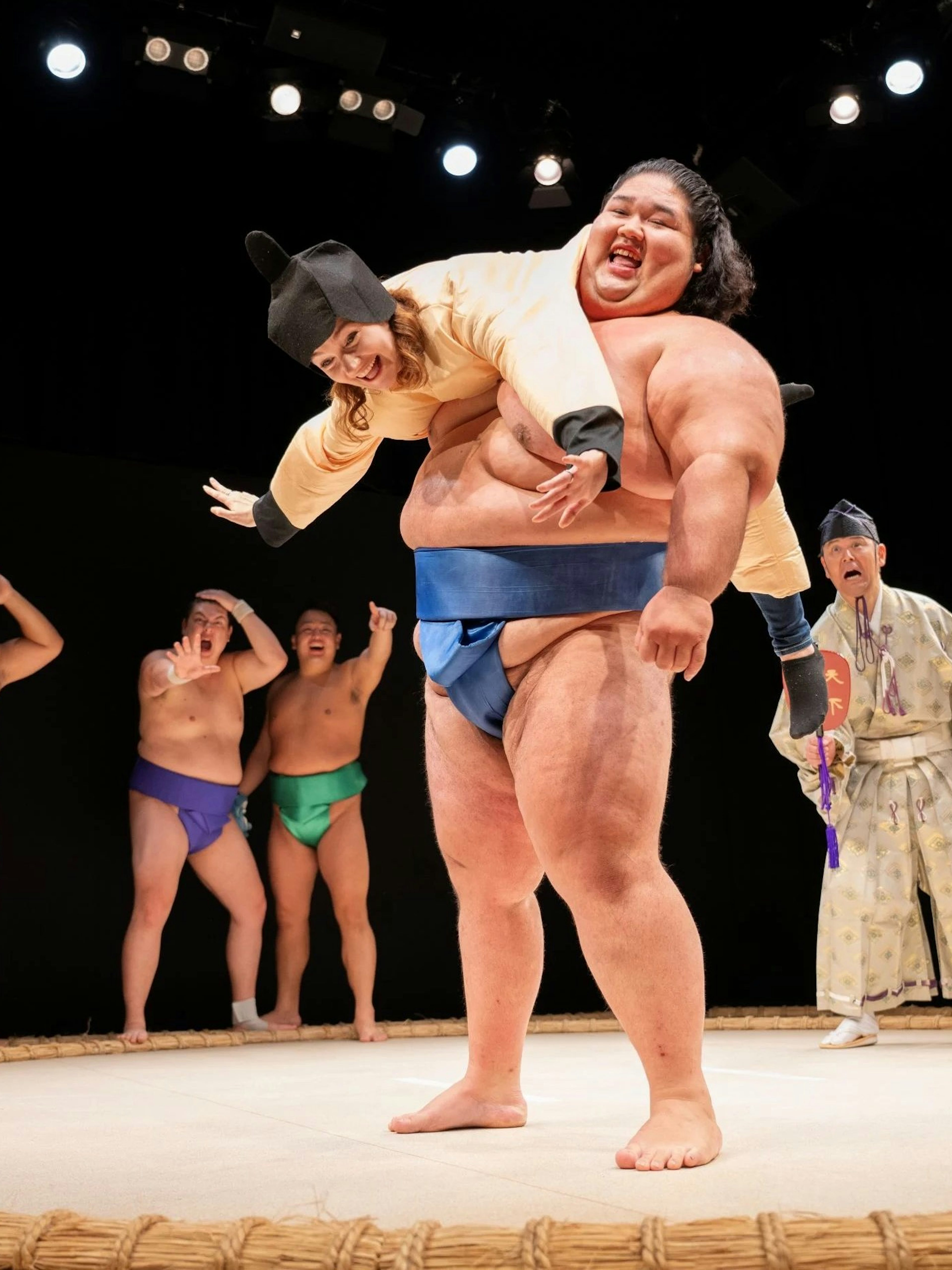
Many practice tours and shows conclude with photo sessions where you can stand beside a real rikishi (sumo wrestler); a moment that never fails to impress! Some experiences include souvenir happi coats, autographs, or even the chance to try a mock bout (if you dare).
Things to know before booking your tickets for the sumo wrestling experience
1. Choose your experience type
There are three main ways to experience sumo in Japan, depending on your itinerary:
- Grand tournament: January, May, and September are the only months when Ryogoku Kokugikan hosts grand tournaments in Tokyo (note that there are only six each year across Japan, and only three are held in Tokyo).
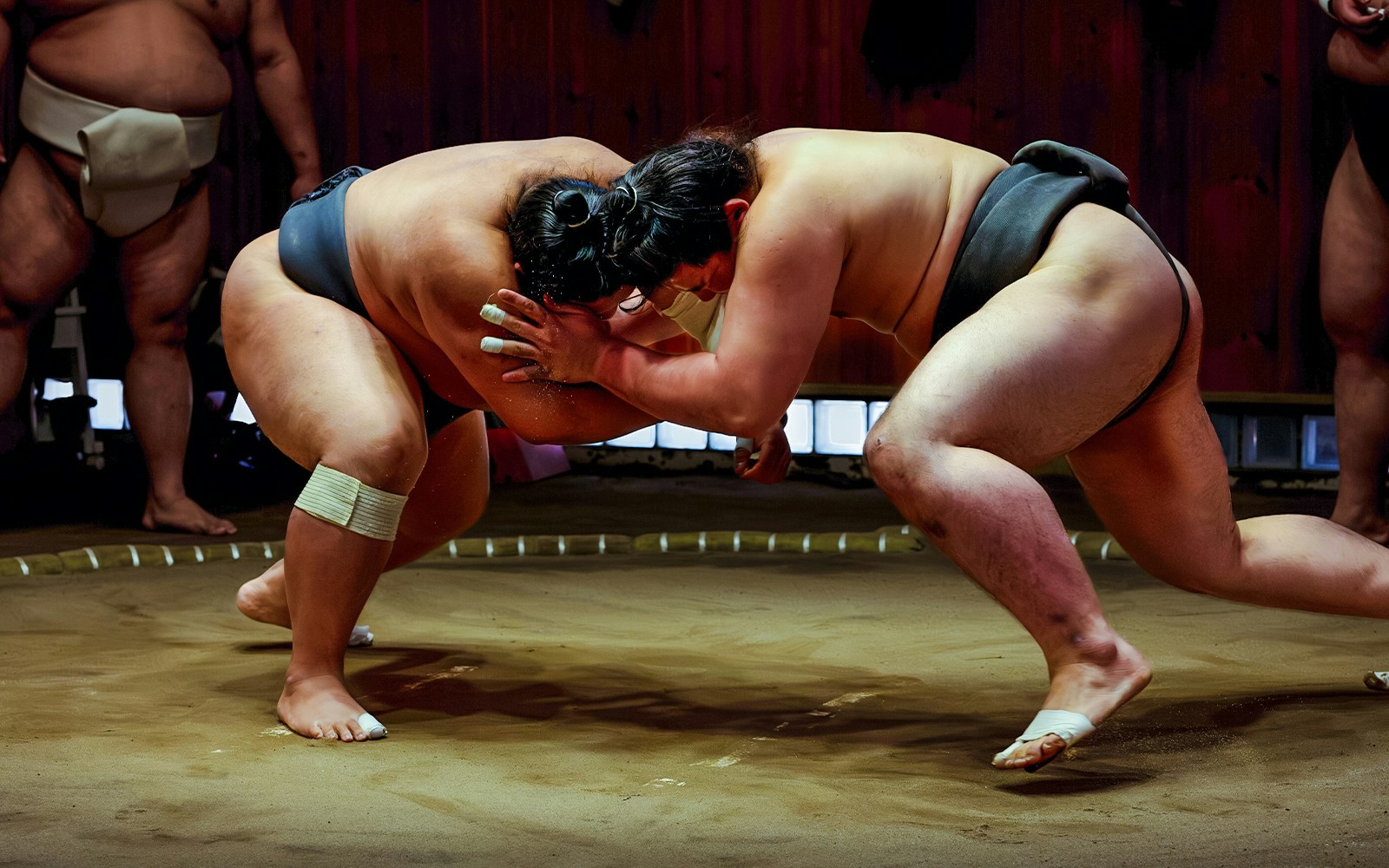
- Practice show: Visit a sumo stable in Tokyo or Kanagawa to see wrestlers train in real settings. You can learn basic techniques, enjoy a chanko-nabe lunch, and take photos with the wrestlers.
- Luxury private show: Attend a live sumo performance combined with dining. The show includes demonstrations, a wagyu or chicken hot pot meal, a geisha dance, and brief audience-participation sessions.
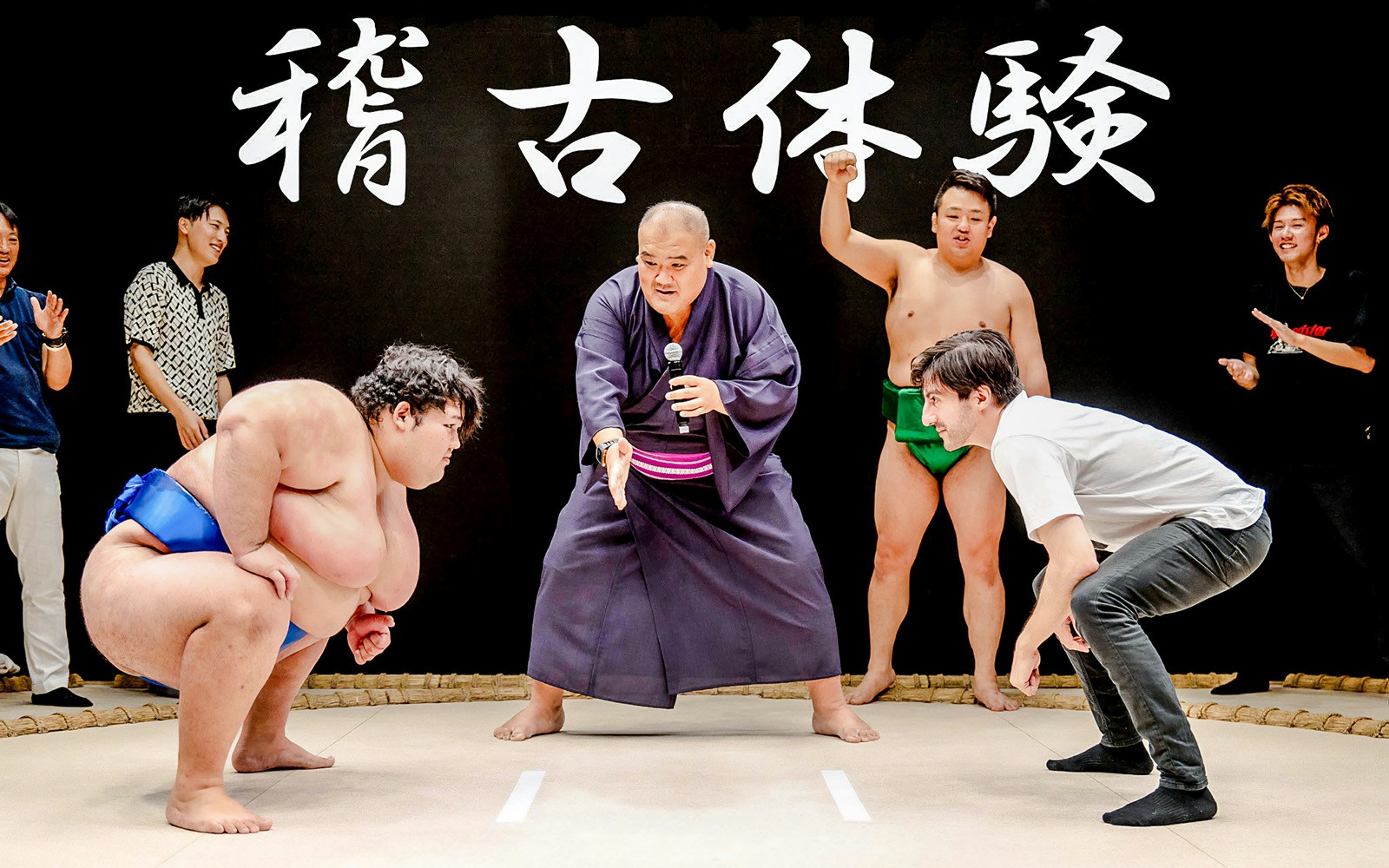
- Challenge retired wrestlers: Attend private sumo shows and get the opportunity to challenge retired wrestlers. Experience sumo practices up close, including shiko stomping, salt-throwing, and body-collision drills.
- Bilingual commentary: Enjoy insights into the rich history of sumo wrestling as a bilingual host provides lively commentary on the show and the included meal.
2. Check dates and duration
- Grand tournaments are held only during official months, while practice and private shows run year-round.
- Tournaments usually last around five hours. Practice and private shows take about two to four hours. Booking early is recommended, as seats sell out quickly.
3. Seating and upgrades
- All tickets include reserved seating.
- Tournaments: Reserved B or C class seats on the second floor of Ryōgoku Kokugikan
- Practice Shows: Standard or VIP front-row seats with close-up views of the ring.
- Luxury Shows: Business Class (second-row sofa) or First Class (front-row sofa) seating, which includes dining and souvenirs.
4. Language and guides
- All experiences include English-speaking guidance. Some also offer bilingual support. Guides explain sumo rules, rituals, and rankings, while practice and luxury shows feature live commentary during training or performances.
5. Inclusions
- Depending on your ticket type, your experience may include a chanko-nabe or wagyu meal, meet-and-greet sessions with wrestlers, photo opportunities, souvenirs such as a T-shirt or happi coat, and optional sumo ring challenges.
6. Etiquette and tips
- Arrive on time, especially for morning practice sessions starting at 7–8 AM.
- Remove your shoes before entering a sumo stable and keep quiet during training.
- Avoid using flash photography, and follow staff instructions. Most tickets offer free cancellation and book-now-pay-later options.
What to expect at your sumo wrestling experience
Visit a Sumo Stable
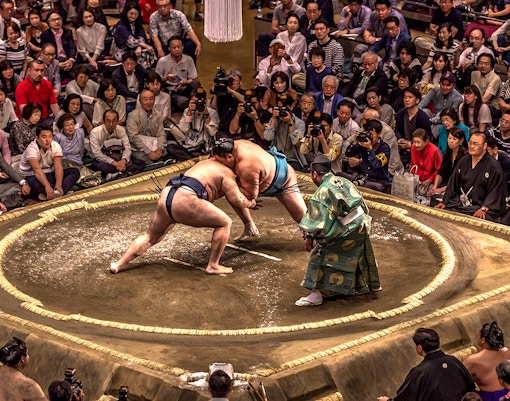
Watch matches between retired wrestlers
At private or luxury shows, retired wrestlers perform exhibition bouts that recreate tournament matches. These demonstrations show real techniques and strategies, but in a friendly, interactive setting. They’re a great way to see the power and precision of sumo without the intensity of official tournaments.
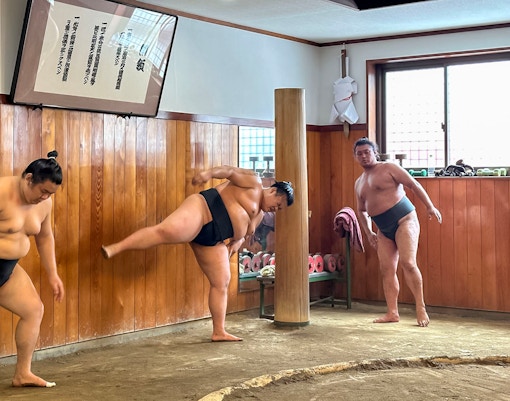
Learn sumo from former pros
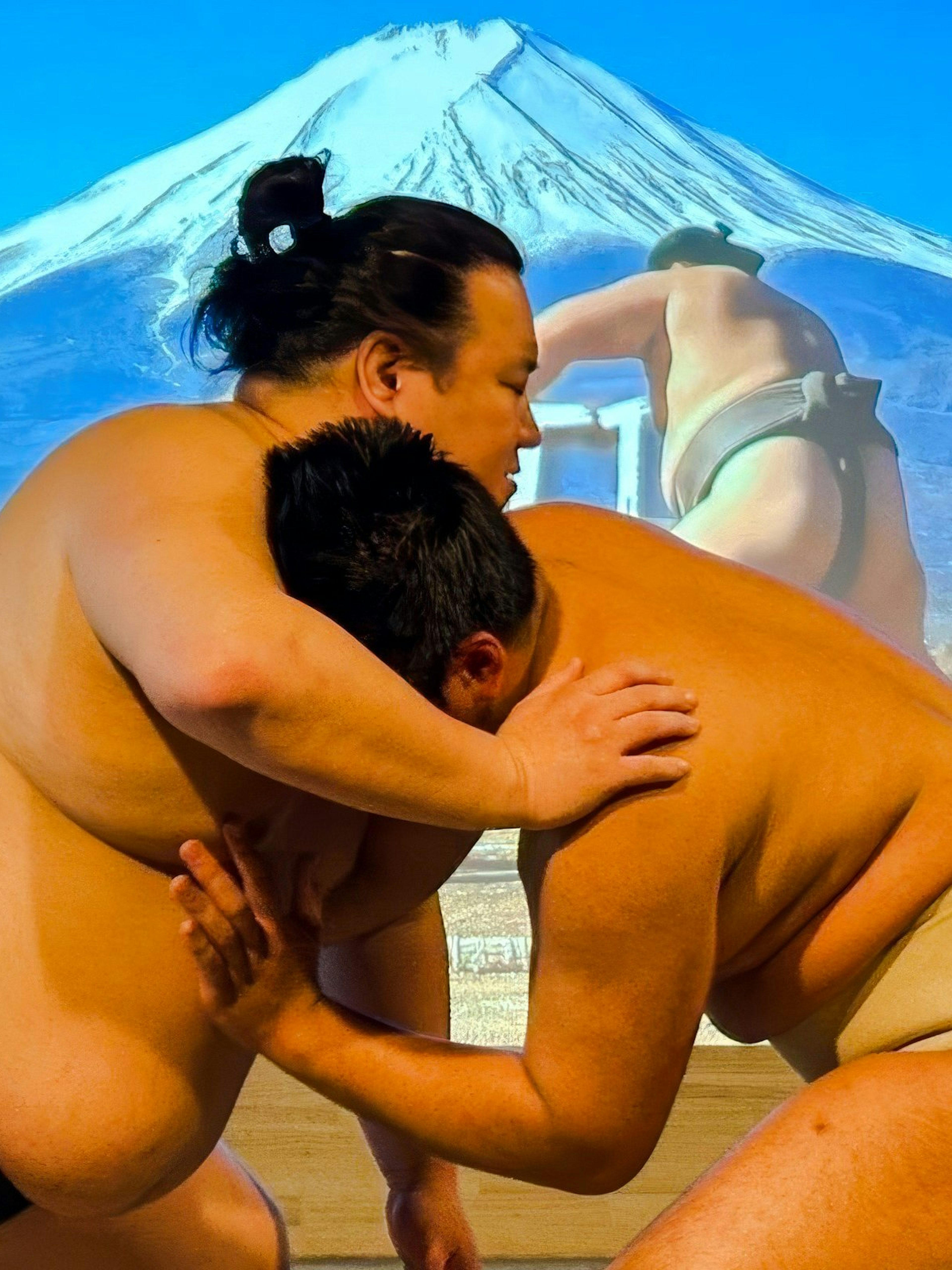
Former professional wrestlers guide guests through basic moves such as the shiko (leg stomp), teppo (pushing drill), and tachiai (initial charge). They explain the meaning behind each motion and help participants try them safely inside the practice ring or on soft mats.
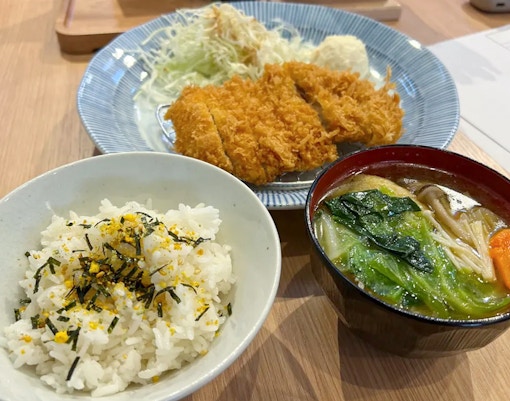
Enjoy a Chanko-Nabe meal or Wagyu Beef dinner
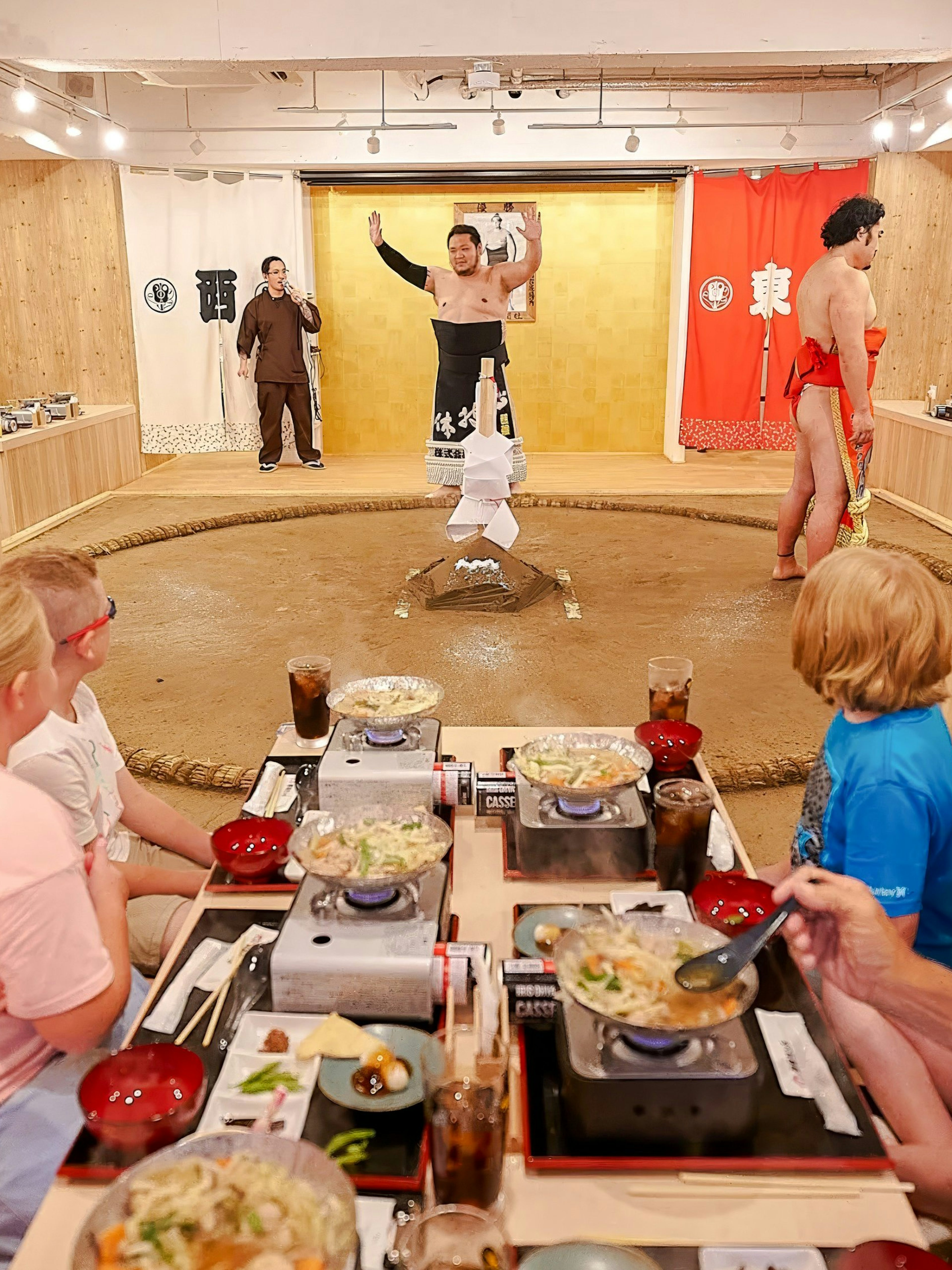
Most experiences include a meal shared with the wrestlers. Chanko-nabe, a hearty hot pot of chicken, tofu, and vegetables, is the staple diet of sumo wrestlers. Luxury shows may serve upgraded menus featuring A5 wagyu sukiyaki or tempura along with drinks and desserts.
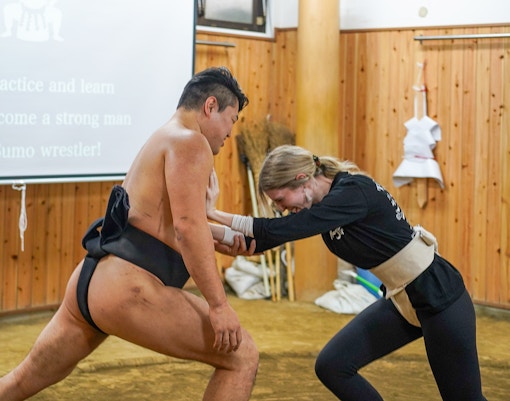
Join a sumo challenge
Guests can step into the ring and take part in a lighthearted sumo challenge against a retired or junior wrestler. It’s a supervised activity where participants test simple pushes or balance moves — more fun than competitive — and it’s suitable for both adults and children.
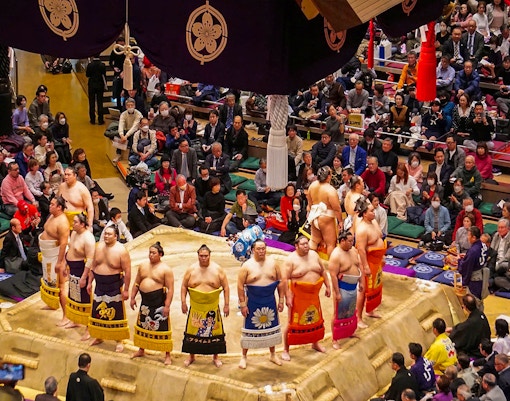
See interactive rituals before the match
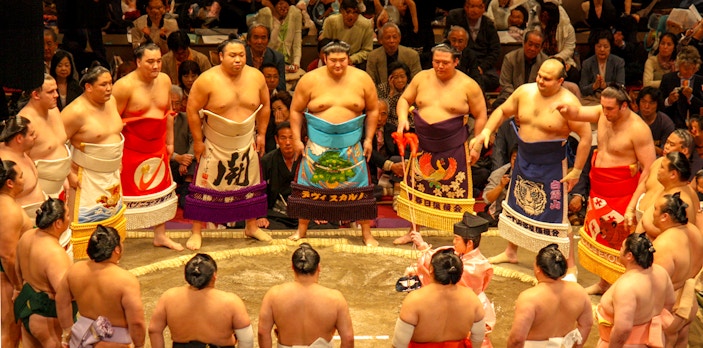
Before the matches begin, you’ll witness traditional pre-bout rituals like salt-throwing for purification, the ring-entering ceremony (dohyō-iri), and synchronized stomps to ward off evil spirits. These moments connect the sport to its centuries-old Shinto origins and give insight into Japan’s ceremonial culture.
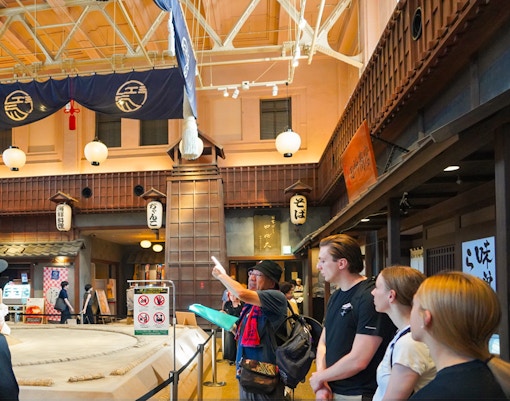
Watch a geisha performance
Many luxury sumo shows include short geisha performances featuring traditional dance and music. These performances offer a glimpse into Japan’s entertainment heritage and add a cultural layer to the overall experience.
Tokyo Grand Sumo Tournament 2026
Every January, Tokyo’s Ryōgoku Kokugikan transforms into the beating heart of sumo. Watch top-ranked wrestlers face off in thunderous bouts, framed by centuries-old rituals — from salt-throwing for purification to the elegant ring-entering ceremony.
What's included?
- Entry to the January 2026 Grand Sumo Tournament
- Reserved B or C Class seat (second floor, optimal view)
- English-speaking expert guide explaining rules, rankings, and rituals
📅 Dates: January 2026 ⏱ Duration: Around 5 hours
Secure your seat now
Your ticket options
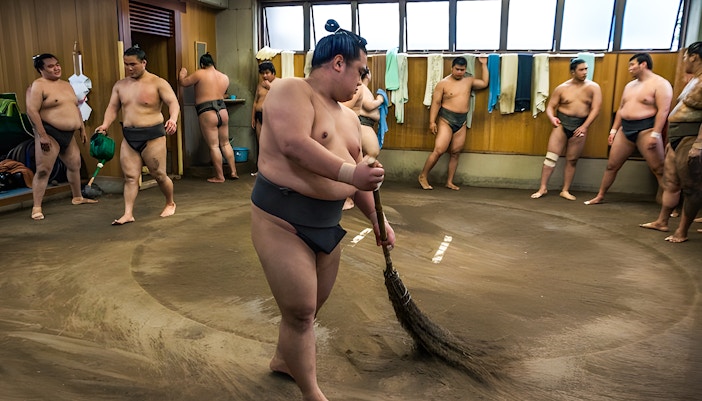
Kawasaki: Sumo Practice Show at Kanagawa
- Best for: Guests seeking an authentic behind-the-scenes experience with real wrestlers
- Duration & timings: 4 hours | 9:30am
- Includes:
- 4-hour guided tour of the sumo stable with an English-speaking guide
- Opportunity to challenge sumo wrestlers
- Dumpling making
- Chanko-nabe lunch with chicken dumpling
- Photos & t-shirt
- 4-hour guided tour of the sumo stable with an English-speaking guide
Sumo Practice Show at Kanagawa with Meal
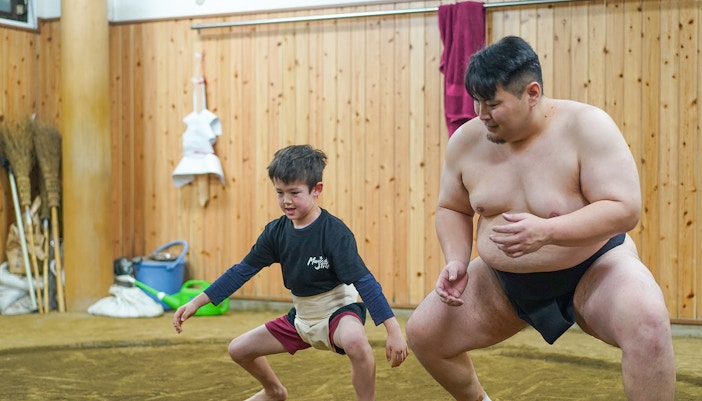
Tokyo: Sumo Practice Show with Meals
- Perfect for: Families and first-time visitors with different timings to opt from, as per the itinerary
- Duration & timings: 2 hours | 12:30pm to 8:30pm
- Includes:
- Standard seating/ VIP-seating with bilingual guide: English + Japanese
- Matches between former sumo wrestlers challenge a sumo wrestler & Japanese dance performance
- 1 drink
- All-you-can-eat chicken hot pot and Japanese dishes
- Printed souvenir photo with wrestlers & souvenir set
- Standard seating/ VIP-seating with bilingual guide: English + Japanese
Tokyo: Sumo Practice Show with Chanko-Nabe Hot Pot, Photo, and Souvenir Set
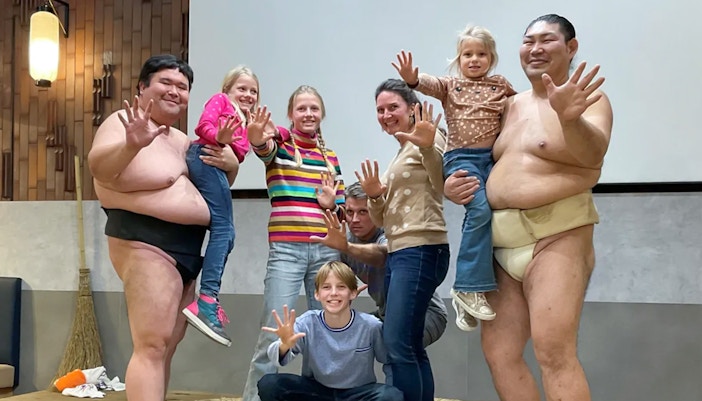
Tokyo: Luxury Sumo Show with Meals
- Perfect for: Travellers seeking a refined, cultural dining and entertainment experience
- Duration & timings: 2 hours | 12pm to 8:30pm
- Includes:
- Rear/Business Class/First Class seating with English-speaking guide
- Matches between sumo wrestlers, challenge sumo wrestlers & Japanese dance performance
- Chanko-nabe, beef sukiyaki bento, dessert, and one free drink (available for Rear Seats only)
- Chanko-nabe, A5 wagyu beef sukiyaki, tempura set, and unlimited drinks (available for Business & First-Class seats)
- Printed souvenir photo with wrestlers & souvenir set
- Rear/Business Class/First Class seating with English-speaking guide
Tokyo: Luxury Sumo Show Experience with Wagyu Beef, Drinks, and Geisha Dance
Ryogoku: Sumo Show with a Retired Wrestler, Chanko-Nabe & Mochi
- Perfect for: Travellers looking for an interactive cultural experience with food and traditional Japanese activities
- Duration & timings: 2 hours
- Includes:Dynamic sumo show with retired sumo wrestlers around the dohyo (sumo ring)English-speaking host/guide sharing insights into sumo traditions and ritualsChanko-nabe hot pot meal, the traditional dish eaten by sumo wrestlersInteractive sumo experienceStep onto the dohyo and try sumo wrestling with the wrestlersMochi pounding demonstrationLearn about the traditional mochi-making processMochi-making experienceMake mochi with the wrestlers and enjoy it as dessert
Ginza: Sumo Show with Souvenir Photos
- Perfect for: Travellers and families looking for a fun, interactive introduction to sumo wrestling in central Tokyo
- Duration & timings: 2 hours
- Includes:**Entertainment sumo show featuring demonstrations by retired sumo wrestlersEnglish and Japanese commentary by the MC explaining sumo rules, rituals, and techniquesInteractive sumo experiencesStep into the sumo ring and wrestle a retired sumo wrestler (participation may be decided by lottery if there are many applicants)Hands-on sumo training activitiesPractice sumo stomping (Shiko)Experience the salt-throwing ritual used to purify the ringTry sumo body collision practice with wrestlersSouvenir photo opportunity** to capture your sumo experience
Plan your visit
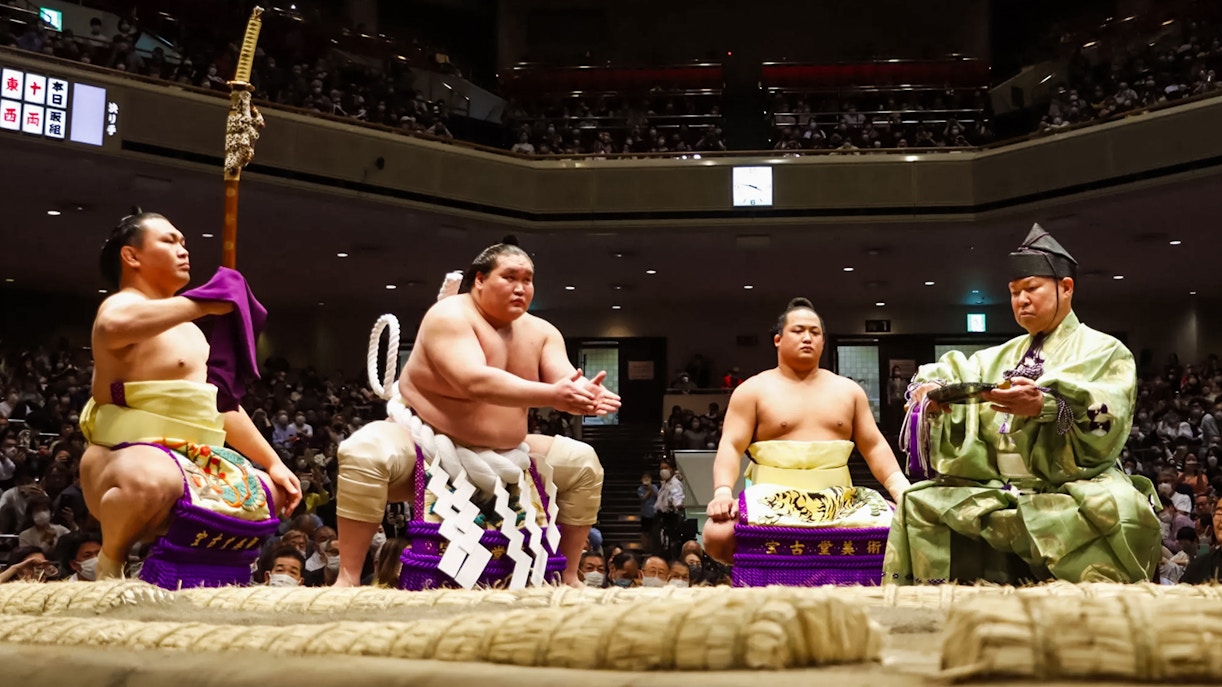
Sumo tournaments in Japan take place six times a year, beginning in January and then occurring every other month through November.
- January tournament (Hatsu Basho): Tokyo
- March tournament (Haru Basho): Osaka
- May tournament (Natsu Basho): Tokyo
- July tournament (Nagoya Basho): Nagoya
- September tournament (Aki Basho): Tokyo
- November tournament (Kyushu Basho): Fukuoka
Best time to visit
- The Grand Sumo Tournament in January marks the New Year Basho, one of Japan’s six major tournaments — a perfect time to witness professional sumo in full traditional grandeur.
- For practice shows and luxury performances, visit between late morning and evening (12 pm – 8:30 pm) when events are held across Tokyo and Kanagawa.
Timings
- Tokyo Grand Sumo Tournament 2026
- 📅 Dates: January 2026
- Duration: Around 5 hours
- 📅 Dates: January 2026
- Kawasaki: Sumo Practice Show at Kanagawa
- Timings: 9:30 am (4-hour tour)
- Timings: 9:30 am (4-hour tour)
- Tokyo: Sumo Practice Show with Meals
- Timings: Multiple slots between 12:30 pm and 8:30 pm (2-hour sessions)
- Timings: Multiple slots between 12:30 pm and 8:30 pm (2-hour sessions)
- Tokyo: Luxury Sumo Show with Meals
- Timings: Between 12:00 pm and 8:30 pm (2-hour experience)
- Arrive early: Sumo tournaments are punctual, and it’s respectful to be seated before the matches begin. Doors open hours before the top-division bouts, so arrive early to explore the venue and watch lower-rank matches.
- Dress respectfully: There’s no strict dress code, but neat, modest attire is appreciated. Avoid large hats or hairstyles that block others’ view.
- Stay quiet during ceremonies: Avoid talking, eating noisily, or moving around during purification rituals are solemn moments.
- No flash photography or loud videos: Photos are allowed, but flash or video lights distract both wrestlers and spectators.
- Avoid shouting or heckling: Support your favourite rikishi (wrestler) with polite applause — loud chants or whistling are considered disrespectful.
- Don’t change seats mid-bout: Matches are short, and any movement can block someone’s view or distract from the moment.
- Food inside the arena: At large tournaments like Ryōgoku Kokugikan, you can bring or buy bento, snacks, and drinks. But in smaller shows or close seats, eating may be restricted — check venue rules.
- Alcohol: Sipping beer or sake quietly is fine, but excessive drinking or rowdy behaviour is frowned upon.
- No approaching wrestlers: Wrestlers are considered revered athletes — don’t ask for selfies or touch them inside the arena. You can sometimes meet retired wrestlers at fan events instead.
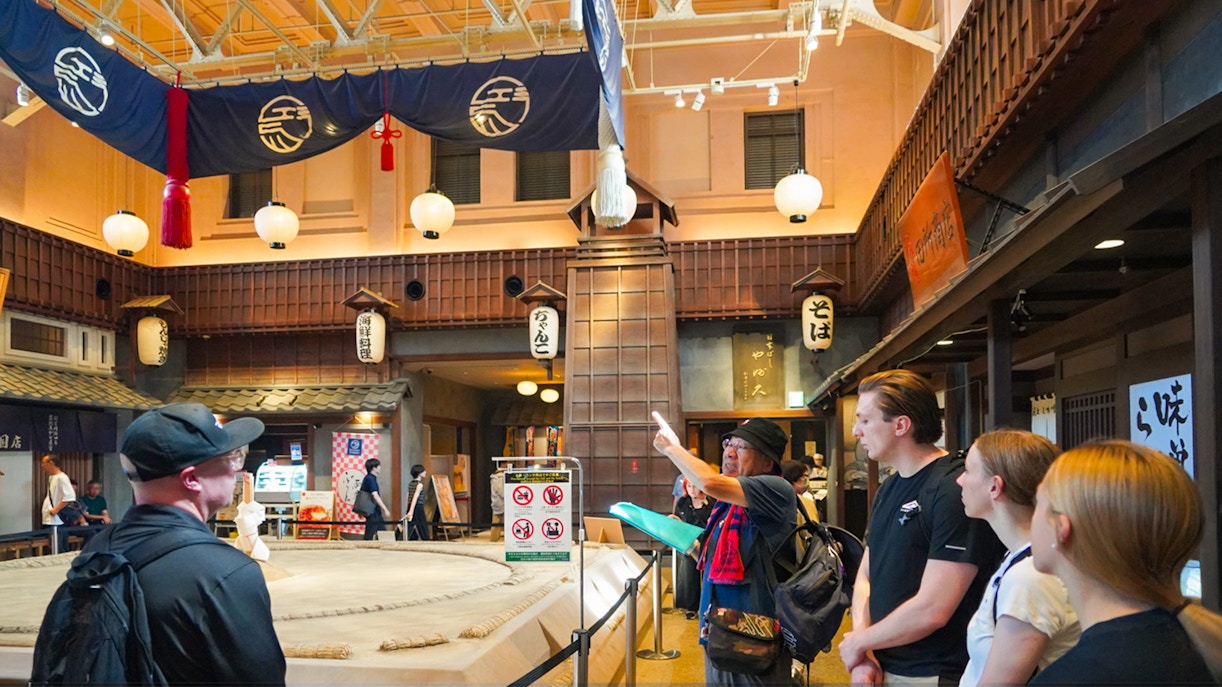
- Sumo Museum
Located inside Ryōgoku Kokugikan, the Sumo Museum showcases portraits of past yokozuna, ceremonial aprons, and iconic moments from sumo history. Entry is free, though access during tournaments is limited to ticket holders. - Ekōin Temple
Before modern arenas, tournaments were held outdoors at Ekōin Temple near Ryōgoku Station. A stone monument on the grounds honours generations of wrestlers and stable masters. - Chanko-Nabe Restaurants
Ryōgoku is dotted with eateries serving chanko-nabe — the protein-packed stew eaten by wrestlers. Many are run by retired sumo professionals, and some even feature small dohyō rings for photos. - Tomioka Hachimangū Shrine
Once a major venue for sumo during the Edo period, this shrine now displays monuments inscribed with the names of top-ranked wrestlers. Its small treasure house (¥300) holds old ranking charts and woodblock prints celebrating the sport’s rich past.
- Go early, stay late: Lower-division matches start from morning, and crowds build up toward the main bouts in the afternoon — perfect if you want a full-day experience.
- Try the food: Don’t miss chanko-nabe, the wrestlers’ signature stew, sold around Ryōgoku and even inside Kokugikan.
- Souvenir alert: Grab a sumo towel, miniature mawashi, or fan with wrestler portraits — they sell out fast during tournaments.
- Mind your seat: If you’re in box seating, shoes come off before stepping onto the tatami — comfy socks recommended!
- Stay for the rituals: The ring-entering ceremony (dohyō-iri) and salt-throwing are as iconic as the fights themselves.
- Watch the warm-ups: Arriving early lets you see wrestlers stretching, stomping, and psyching up — it’s part of the charm.
- Photo etiquette: Snap away, but no flash — and definitely no selfies with wrestlers mid-match.
- Explore after the show: Walk around Ryōgoku for museums, shrines, and sumo-themed restaurants — it’s like a living tribute to the sport.
Sumo Wrestling in pictures
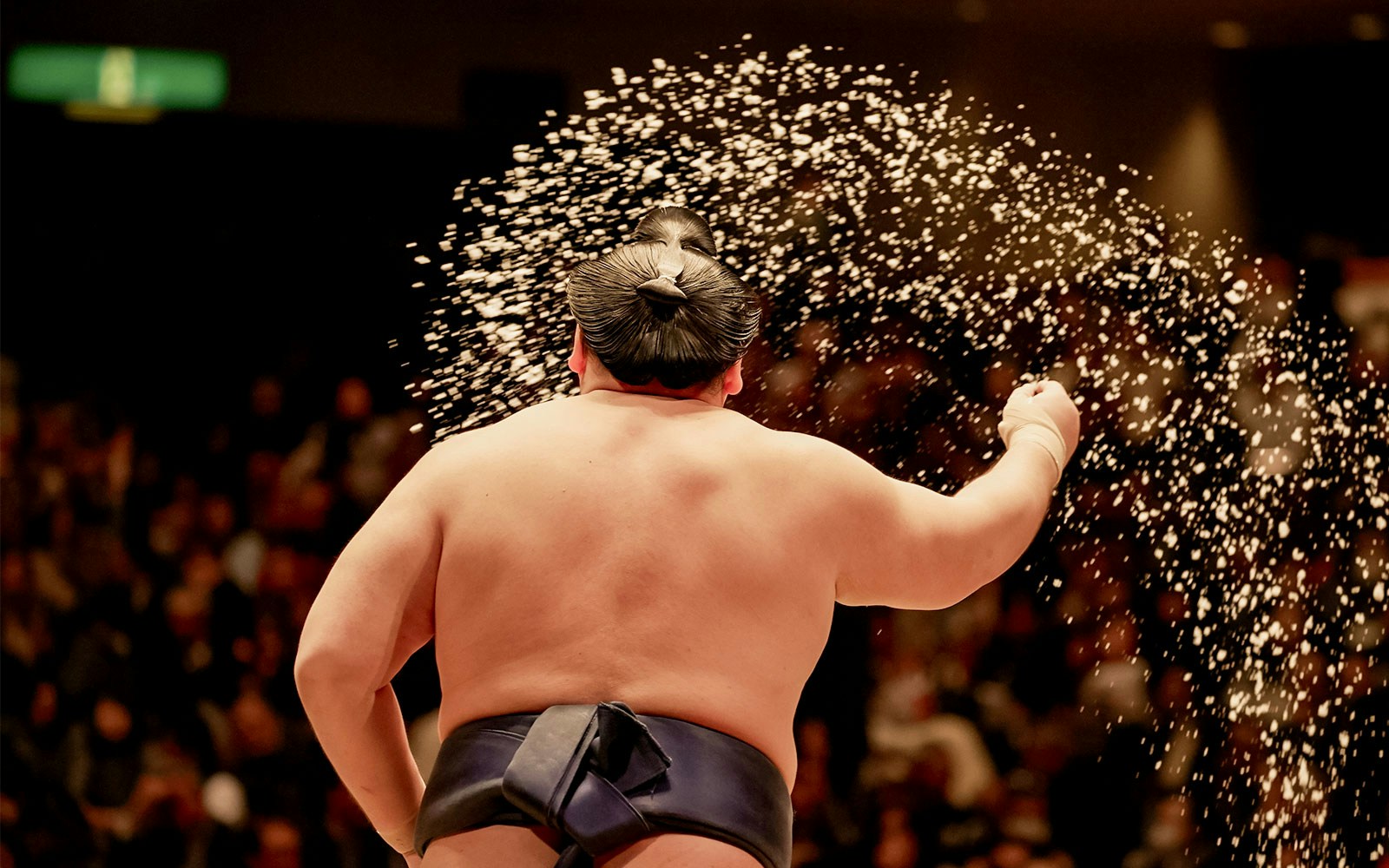
Before every bout, wrestlers purify the ring by throwing salt — a Shinto ritual symbolising protection and good fortune
Frequently asked questions about Sumo Wrestling in Japan
You can choose from live sumo tournament tickets with expert guides, interactive practice shows at dojos, behind-the-scenes stable tours with meals, and premium geisha performances paired with sumo wrestling — even luxury dining options with wagyu!
Yes! You can grab tickets to Tokyo Sumo Tournament LIVE at Ryogoku Kokugikan. It includes a reserved seat, live matches, and an English-speaking guide explaining traditions, ranks, and match formats.
Practice shows happen year-round and are often interactive, family-friendly, and hands-on. Tournaments are official, seasonal, and held at large stadiums with roaring crowds and full ceremonies.
Tokyo tournaments usually run in January, May, and September. These are your best bets for live matches at Ryogoku Kokugikan.
Yes! Most practice experiences include the chance to enter the ring, try basic moves, and chat or eat with retired wrestlers.
Expect gourmet meals (A5 wagyu + chanko nabe), unlimited drinks, geisha performances, ring rituals, VIP sofa seating, gifts, and even a happi coat. It’s the full cultural immersion — first-class style.
Yes! Experiences like the Tokyo Sumo Practice Show are very family-friendly, with interactive challenges and wrestler meet-and-greets. Ringside seats at live tournaments may have age restrictions, though.
Some venues offer limited accessibility. While stadiums like Ryogoku Kokugikan do offer accessible seats, sumo stables and small dojos may not be fully equipped. It's best to check with the specific tour provider before booking.
Yes. All experiences come with English-speaking guides, and some offer bilingual (English–Japanese) support. Premium tours sometimes include guides fluent in other languages too.
Not at all! Your guide will explain the rules, rituals, and wrestler rankings. It’s fascinating even if it’s your first encounter with sumo.
Comfortable clothes. For stable visits, you may sit on tatami mats or enter the ring barefoot. At luxury shows, casual-smart attire is perfect.
Yes, photos are encouraged — especially during meet-and-greets. Just be mindful during sacred moments like ceremonies and rituals
Experiences are held at real sumo stables (e.g., in Kawasaki), dedicated arenas like Ryogoku Kokugikan, and cultural venues or restaurants in Tokyo (like Asakusa or Shinjuku).