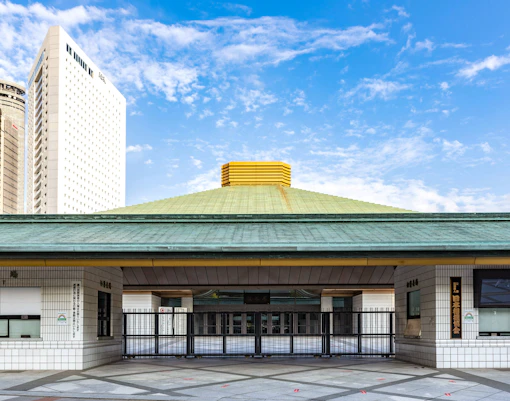
Tokyo’s Grand Sumo Tournament takes place at Ryōgoku Kokugikan in January, May, and September. The 2026 tournaments run January 11–25, May 10–24, and September 13–27. Your ticketed experience lasts approximately 5.5 hours, with the exact start time depending on your selected date.
Explore Grand Sumo Tournament in Tokyo | Highlights, visitor's guide and more
Crafted by Headout, a global experiences brand offering curated tours, tickets & experiences. Discover with ease, book with peace.Loved by over 56 million guests worldwide
What is Tokyo Grand Sumo Tournament ?
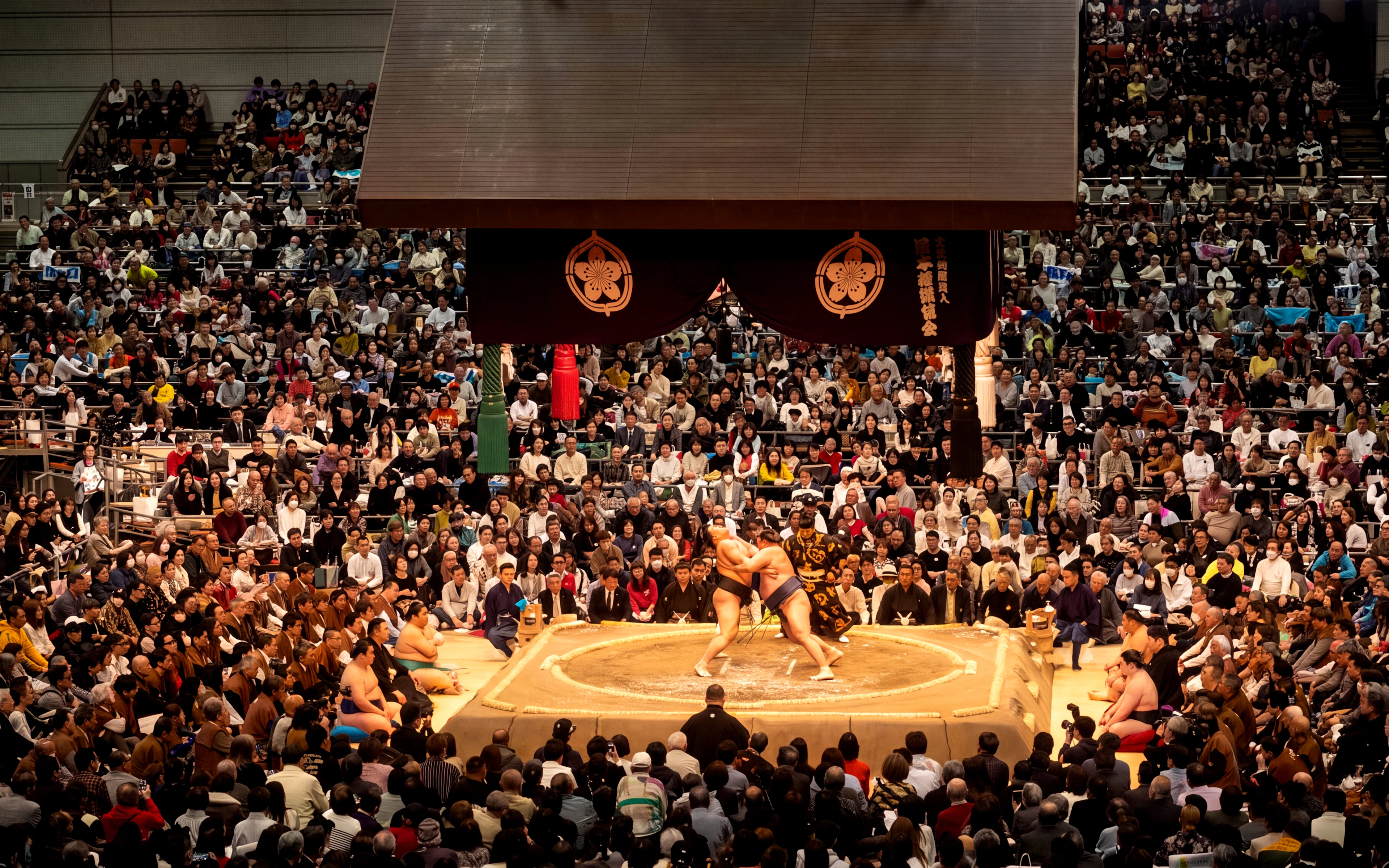
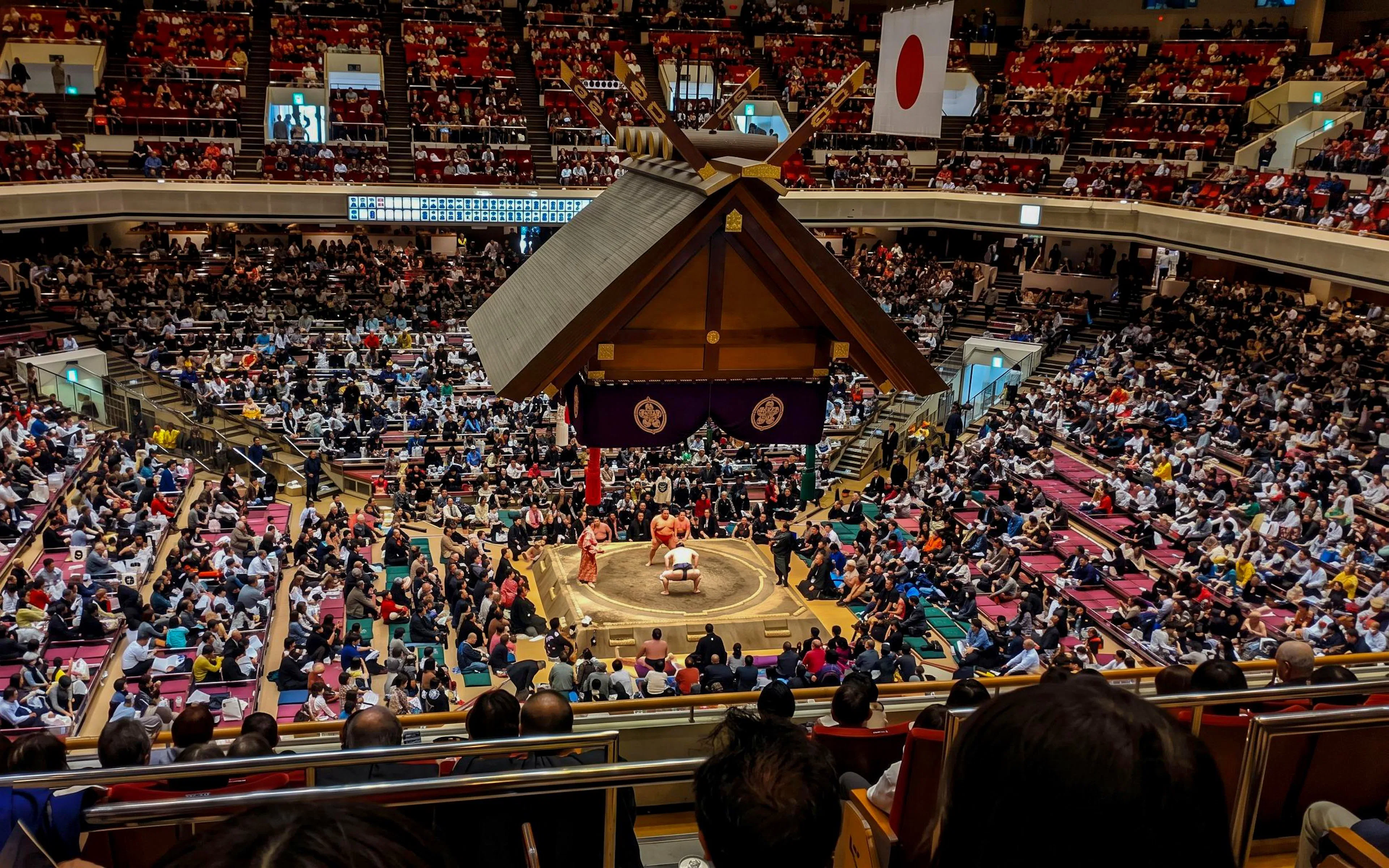
Sumo Tournament in Tokyo is a live sporting experience where visitors watch professional wrestlers compete in a sumo grand tournament at Ryōgoku Kokugikan , at the city’s dedicated Kokugikan sumo stadium. The experience combines powerful bouts with traditional rituals such as salt throwing, ring-entering ceremonies, formal calls, and pre-match movements. What makes sumo at Ryōgoku Kokugikan distinctive is seeing a sumo wrestling grand tournament unfold in an authentic arena rather than a staged show. Visitors meet at Ryogoku View Hotel before heading to the Ryōgoku Kokugikan sumo arena, with an English-speaking guide explaining the rules, rankings, and rituals. The experience lasts approximately 5.5 hours.
Why see the Tokyo Grand Sumo Tournament?
1/5
There are only 6 official tournaments a year
You’re not booking a staged cultural show. You’re entering an official ranked tournament that takes place only in January, March, May, July, September, and November.
Watch technique decide each bout
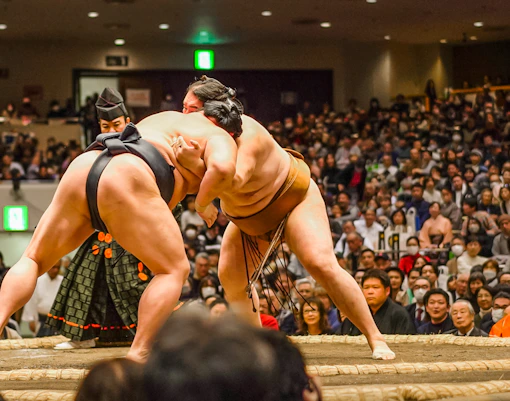
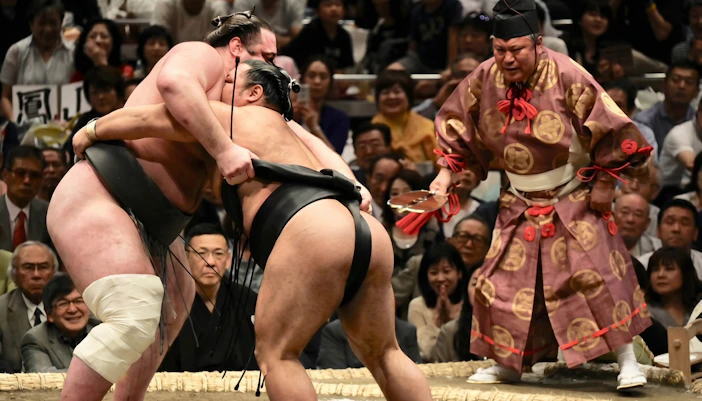
Sumo combines force, balance, timing, and footwork, with wrestlers trying to push or throw their opponent outside the dohyo.
See centuries-old rituals before the action
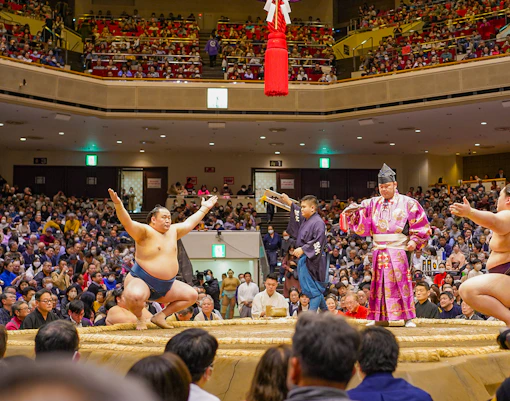
Salt throwing, foot stamping, ring-entering ceremonies, and formal calls create a structured ritual sequence before the physical contest begins.
Understand the ranking system
The banzuke-hyo shows wrestlers’ rankings, while an English-speaking guide explains how rank, matchups, and results shape the sumo grand tournament.
Bouts can change in seconds
Matches may last only seconds, shifting rapidly from a tense standoff to a forceful collision, grapple, or decisive push outside the ring.
Plan your visit to the Tokyo Grand Sumo Tournament
When it runs
When to go
For the widest choice of dates, plan around the January, May, or September Grand Sumo Tournament and book once your preferred date is available. The September 2026 Grand Sumo Tournament is coming up, running from September 13 to 27 at Ryōgoku Kokugikan. If you’re planning to attend, book your Tokyo sumo tickets early as popular tournament dates can fill up quickly.
Where to find it
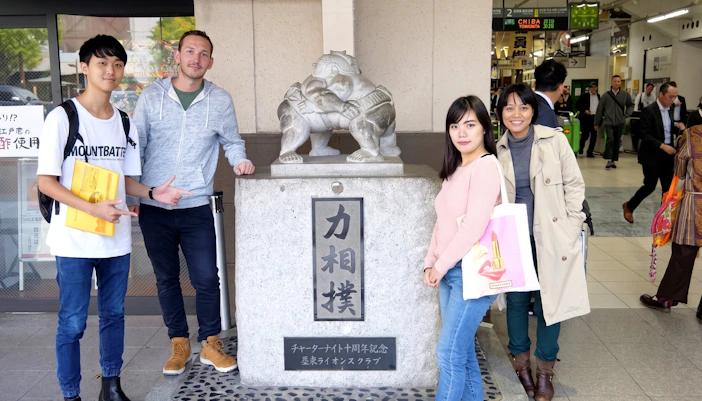
Your experience begins at Ryogoku View Hotel, 2-19-1 Ryogoku, Sumida-ku, Tokyo, before continuing to Ryōgoku Kokugikan. JR Ryogoku Station is about a 1-minute walk from the hotel; Toei Oedo Line Ryogoku Station is around 7 minutes away.
What the Tokyo Grand Sumo Tournament involves
Meet your guide and learn the basics
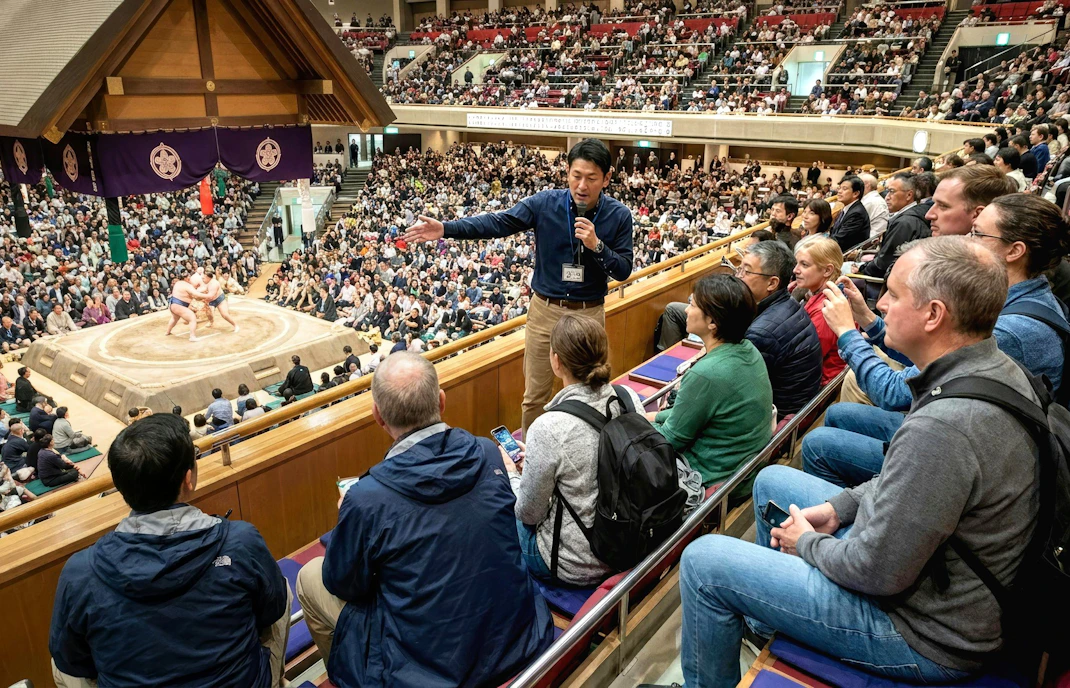
Begin at Ryogoku View Hotel with an English-speaking licensed guide who introduces the rules, rituals, and ranking system of sumo wrestling. The pre-event lecture gives first-time visitors context before entering the Ryōgoku Kokugikan sumo arena. Read the The Sumo booklet and banzuke-hyo ranking sheet beforehand to recognize wrestlers and understand their standings.
Enter Ryōgoku Kokugikan and take your seat
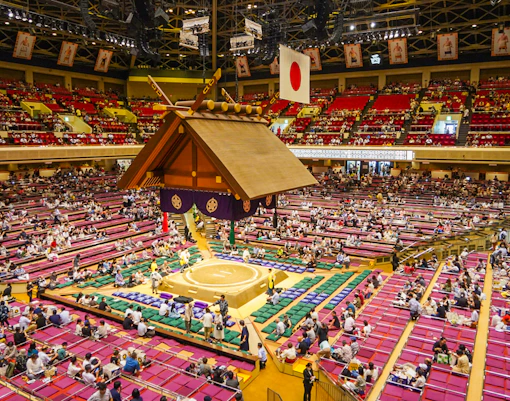
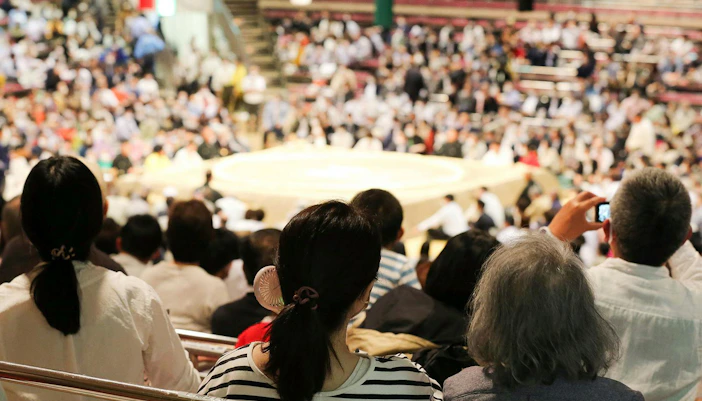
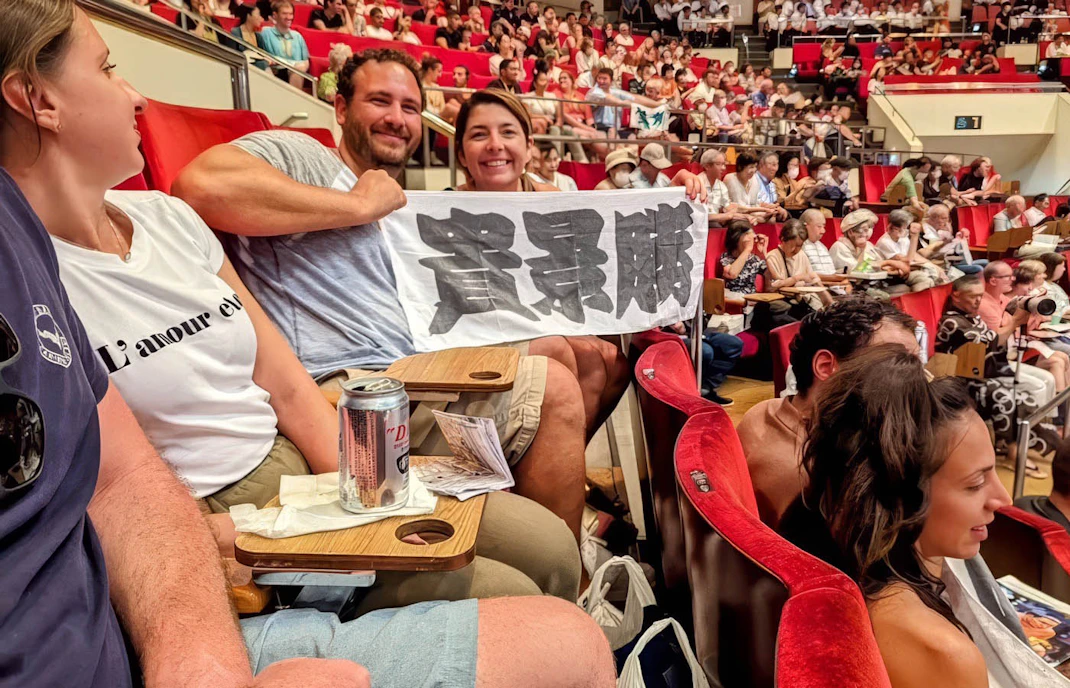
Continue to Ryōgoku Kokugikan, the Kokugikan sumo stadium and home of Tokyo’s official tournaments. Take your assigned B seat and settle in as the tournament atmosphere builds around the dohyo. Specific seat selection isn’t available, so arrive knowing your B seat will be assigned in advance and groups may be split.
Watch the rituals before each bout
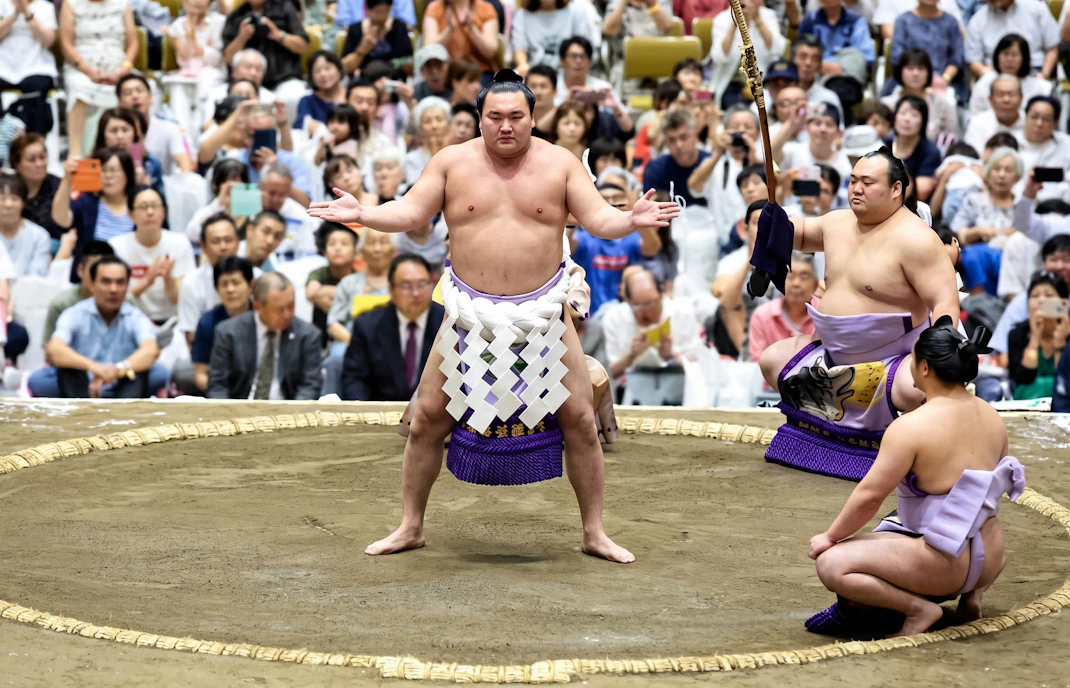
The tournament moves through formal pre-bout rituals, including ring-entering ceremonies, foot stamping, salt throwing, and the tense preparation before wrestlers clash. Your guide’s earlier explanation helps you recognize what each ritual means as the Tokyo Grand Sumo Tournament unfolds. Keep movement to a minimum during bouts and key ceremonies so you don’t obstruct nearby spectators.
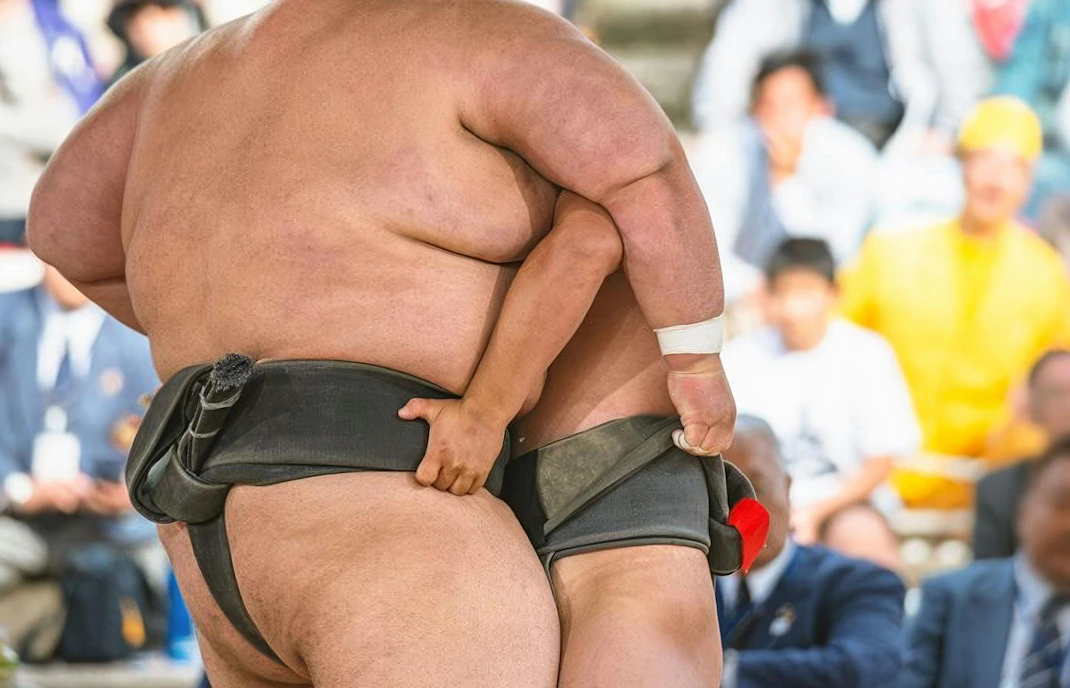
Follow the bouts as they unfold
Watch professional wrestlers push, grapple, and attempt to force their opponent outside the dohyo, with some sumo matches ending within seconds. The referee’s calls, crowd reactions, and changing matchups keep the action moving through the tournament. Use your banzuke-hyo to follow wrestler rankings, and remember that the complete experience lasts approximately 5.5 hours.
The context behind Sumo
Sumo has roots in Japan’s ancient ritual traditions, where forms of wrestling were performed as offerings to the gods and associated with Shinto practices. Over centuries, it developed into a professional sport with a strict hierarchy, formal ceremonies, and highly codified rules. These traditions remain visible at a sumo grand tournament today: wrestlers purify the dohyo with salt, perform ceremonial movements, and follow the established ring-entering rituals before competing. The banzuke-hyo ranking system also reflects sumo’s long-standing emphasis on rank and progression. Knowing this history helps explain why a modern sumo wrestling grand tournament combines athletic competition with such elaborate ceremony.
What to know before you book Tokyo Grand Sumo Tournament tickets
- Ticket type: Your ticket includes an assigned B seat, English-speaking licensed guide, pre-event lecture, The Sumo booklet, and banzuke-hyo ranking sheet.
- Seat allocation: Specific B seats cannot be selected in advance, and groups may be seated separately.
- Restrictions: Outside food and bottled or canned drinks aren’t permitted. Strollers aren’t allowed in seating areas.
Accessibility: Ryōgoku Kokugikan has stairs, narrow aisles, and dense crowds; wheelchair users should notify the operator in advance.
- Arrive prepared: The guide’s introduction happens before the tournament, so arrive at the designated meeting point on time to avoid missing the explanation.
- Follow the rankings: Keep your banzuke-hyo handy during the tournament; it makes it easier to identify wrestlers and understand their rank.
- Book early: Tokyo sumo tickets for popular tournament dates can be limited, so secure your preferred date in advance.
Frequently asked questions about Tokyo Grand Sumo Tournament
The Tokyo Grand Sumo Tournament is known for traditional rituals, ranked bouts, and professional wrestling at Ryōgoku Kokugikan, the city’s historic sumo hall. It combines formal ceremony with fast-paced competition.
The January, May, and September Grand Sumo Tournaments are Tokyo’s three annual tournaments. For current availability, check the tournament calendar before choosing your date, especially if you’re planning to buy sumo tickets in Tokyo.
Yes. Sumo wrestling Tokyo tickets with an English-speaking guide can be particularly useful for newcomers. A pre-event lecture explains the rituals, rules, rankings, and bout structure before you watch the tournament live
B seats are assigned in advance, so you cannot select a specific seat when booking. Your position within the Ryogoku Kokugikan seating chart depends on the assigned ticket, and groups may sometimes be seated separately.
Availability depends on the tournament and date, so last-minute sumo match tickets may not always be available. If you have a fixed travel schedule, booking ahead is the safer option than relying on remaining seats
Accessibility is limited by the venue’s stairs, narrow aisles, and crowded seating areas. Wheelchair users should notify the operator before booking so suitable arrangements can be confirmed for their Ryogoku Kokugikan experience.